July: America, Americans and wonderful Durban winter

July: America, Americans and wonderful Durban winter

I flew from the United Kingdom to Durban on Monday, 11 June. It was the long daylight flight from Amsterdam so as well as working I saw the film  Warhorse. After an overnight stay at the Intercontinental Hotel in Johannesburg and I flew to Durban on Tuesday. I went straight to the office and got a lift home at the end of the day. The next morning was an early start, I went back to Johannesburg, met up with colleagues from the British Department for International Development’s (DFID) office in Pretoria. We drove down to Swaziland where we spend 24 hours in meetings talking about a possible regional HIV and AIDS program. This included a dinner with members of Swazi civil society.

I had less than a week in Durban and then headed for Florence for a UNICEF meeting. On the Wednesday I flew out on the Air France A380, the biggest plane in the world (and it is quite fantastic), to Paris and changed for the flight to Italy. I was rather exhausted when I got in and so slept for part of the day before going out and wandering around the city. The weather was perfect, and it is without doubt one of the most spectacular cities I know. The two day meeting on child well-being was deeply interesting. We finished at about three o’clock on Saturday and I headed for the airport to get back to Paris, Johannesburg and Durban. The EUFA cup game between France and Italy was being broadcast in the lounge. I was the only one who cheered when Italy scored – and they won. I had one night in Durban and then flew to Cape Town to visit the Children’s Institute.

In Cape Town I managed to both deliver a birthday present to my niece in Hout Bay and meet up with my uncle, aunt, cousins and second cousins for dinner. Uncle Fred was one of those people who was an absolute role model for me. He and June live in a retirement home in Pinelands just outside Cape Town. They originally bought two units expecting to be allocated ones adjacent to each other so they could create a decent living space. The elderly lady who owned the one changed her mind about moving. They spent at least a year living in two separate apartments on two floors. When the lady died they were finally able to consolidate. I knew the whole story and happened to be visiting on the day that they got the news of the woman’s death. I am afraid that my reaction was:

“Oh good now you can settle in properly”, which is exactly what they have done.

The University of Cape Town put me up in a nearby guest house. After checking in and having a shower I went back to the reception and took a manager to my room to point out all the things that were wrong with it. These ranged from the steps into the room without a guard railing, actually quite dangerous; through to blankets on the bed – good establishments have duvets which can be washed between every guest, that doesn’t happen with blankets; a faulty shower and a number of other minor issues that were annoying. It was a rather twee establishment and they had a blackboard in the reception area with a quote on it, something like “happiness is a state of mind” and as I walked past it with the manager I pointed out that happiness only has only one ‘p’. Afterwards I thought ‘and so does pedantic’.

I then had less than two weeks in Durban before heading back to the United Kingdom and on to Washington for the international AIDS conference. It was very busy. The buzz in the office, as people prepare for the conference: writing papers, making posters, planning the stand, sending material  and generally getting ready, is exciting and rewarding. HEARD will have a significant contingent and it will be great to see how they do. Probably the best part of my job is seeing people grow and develop.

I was invited to the United States Consulate General’s home, along with several hundred other people to mark the 4th July. He, sensibly, arranged parking at a primary school down the hill and had a shuttle bus taking people to the house. There was a significant police presence as the guests included the provincial premier, various members of his cabinet, the American ambassador, King Zwelithini and other dignitaries. I decided to walk back to my car. Two Metro Police driving past saw me strolling down the hill. They knew where I had been, and asked if I wanted a lift. I have not yet been in the back of a police car and did not feel this was an appropriate time to start so thanked them very much and walked on. I slightly regret this now.

I was planning to return to Norwich on Tuesday. Our university decided to migrate our e-mail system to Microsoft outlook over the weekend. On Monday and Tuesday there were to be teams going around our campus ensuring that the changeover went smoothly. It did not! My PA spent most of Monday at the walk-in center with my laptop trying to get it set up to work on the new system. On Tuesday I went down with her and we kidnapped one of the technical people and brought him back up to the offices to try and sort things out. It took nearly all day. The level of stress was considerable and I correctly made a call that it would be better to delay travel by a day and ensure that I had all the technology that I would need for the next month. It does seem to be working now.

Coming through Amsterdam I had a really pleasant surprise. I used the business class lounge shower, and emerged wearing nice fresh clothes and feeling clean to bump into Father Michael Kelly, a Jesuit priest from Lusaka. He was a really critical part of our AIDS and education work 12 years ago. Apart from being a fantastically nice and thoughtful person he is an individual who I admire and who has mentored me over the years. He is now 83 so these encounters are extremely valuable and need to be savored. We had about 45 minutes to talk before he went off to catch his plane. He is one of the unsung heroes of the fight against AIDS, a most compassionate sensible man.

 The next posting will be after the Washington conference. There will be a great deal of activity on the HEARD website though – www.heard.org.za so you can follow events there.

 Films and books

Warhorse. The story of a horse Joey, requisitioned at the beginning of the First World War from a farm in Devon. The son of the farm, Albert, joins up. Towards the end of the war Joey, after being captured and ‘serving’ the German forces, gets caught up in the wire in no-man’s land. He is released by a German and British soldier in moment of armistice. He is to be put down but is reunited with Albert. The children’s book is by Michael Morpurgo was first published in 1982. The film was directed by Steven Spielberg. It is a moving story and is beautifully made. It is also complex and sometimes there seemed too many subplots for me to entirely follow. The message is war is hell!

A Thousand Words.  This was billed as a comedy drama starring Eddy Murphy. It is a simple tale of an literary agent who is cursed by words. It was badly reviewed, and deservedly so. However on the 23.20 flight from Johannesburg it was watchable and I saw the last 30 minutes over breakfast so did not feel it was wasted time. There are other films on the KLM flights I am looking forward to seeing.

Random Violence by Jassy MacKenzie, Umuzi, Houghton, 2008 238 pages. This is a novel set in and around Johannesburg that has been on my selves for some time. I found it, initially, very difficult to get into. However I persisted and was pleased I did. I hope that she writes more. She has the potential to develop into another good South African crime writer. The end is a bit too much ‘and with one bound he was free’ but in general it was believable, well observed and well plotted. It is set in the period leading up to the World Cup and MacKenzie catches the nation’s mood very well. The heroine is a private detective named Jade de Jong, the daughter of murdered white senior policeman, who returns to SA after 10 years away and gets caught up in a complex plot involving property development and crime.

The Role of the Fool

It is about a month since I last put anything on the website so this is timely. I travelled from Durban to Norwich early in May. The main reason was Douglas’s 18th birthday on 9 May, hard to believe that time has passed so quickly. I managed many other events and meetings. The first was a seminar on the ‘Political Economy and Social Drivers of the Epidemic’ held at the School of Oriental and African Studies in London. There was a public meeting the day before the main seminar and I was invited to present, along with Hein Marias, a South African colleague, who has written widely and wisely in this area. It was a smallish meeting and a chance to interact with a group of mostly United Kingdom-based academics. Perhaps the major lesson was we are still not taking enough notice of the political impact of AIDS. Obviously the epidemic is not homogenous and it will not have the same effect in every country, but it does have an important, and usually, ignored political impact. All the other meetings in the past month have reaffirmed this view.

After a few days in Norwich I flew to Berlin for a conference on Financing for Health and Social Protection. The title was: ‘A Global Social Protection Scheme – Moving from Charity to Solidarity’. It was organised by a friend of mine, Gorik Ooms, who is currently at the University of Antwerp. Among other things I was one of the examiners for his PhD, and he came on a course in Durban over 10 years ago. The main sponsors were Medico International and the Hélène de Beir Foundation with two  German Funders: Deutshe Gesellschaft für Internationale Zusammenarbeit (more easily known as giz) and Bundesministerium für wirsschaftliche Zusammenarbeit und Enteicklung (the Foreign Ministry, I think). These names are dreadfully long.

The idea being put forward is to develop a global compact to provide a basic level of social protection, as a right, to everyone across the world. It is a most interesting, but probably very difficult to sell, idea. The key point Gorik makes is, while today the rich world would expect to provide support to the poor, in years to come the situation might be that countries such as Brazil might be providing support to others. It works on the principle that the poor are not going to always be with us. This, of course, goes against many deep beliefs about how we operate. The Christian hymn ‘All things bright and beautiful’ included a verse.

The rich man in his castle,

The poor man at his gate,

He made them, high or lowly,

And ordered their estate.

The website where I got this, says of this stanza: “Most hymnals omit the following verse.” It points to the concept that wealth and poverty are divinely predetermined. Then there is the question of whether we need to feel better than people around us, materially and spiritually. Nonetheless I think there are very good arguments for the universal social protection and I shall, in my small way, be supportive of it. There is a role for people like Gorik to be bold and imaginative. The concept of the Fool in the medieval court was an individual who could tell truth to power, all the while in the guise of humour and fun. King Lear, which I studied for my ‘A’ levels, has a Fool who plays the role of commentator on the events around him. I think it is a part I play on occasion, certainly humour is important in messaging.

It is standard practice with meetings and conferences for there to be some kind of outing: a reward to the participants for their involvement. In Berlin this was a trip on the river through the centre of the city. We got on one of the tourist riverboats and went up and down the river for a couple of hours. There was food on the boat, German cuisine at its best, and this included sauerkraut, which I am very fond of, and plenty to drink. Perhaps the most striking thing was the remnants of the Berlin Wall. In one place, where the river had constituted the border between East and West, there were a number of crosses painted on the wall to commemorate those shot while trying to swim to freedom, very poignant.

On Sunday 20 May I flew to Toronto and was taken to the town of Waterloo. This part of Canada was mainly settled by Germans: Mennonites and Lutherans. The next town was originally called Berlin, but in 1916 the patriotic Canadians changed the name, calling it Kitchener after the British general who was Secretary of State for War. They turned their backs on the German heritage – but today it has (apparently) one of the best Oktoberfest’s in Canada. I will say more about this trip in a future posting. The town has two universities: Waterloo and Wilfred Laurier and is only about an hour and 20 minutes away from the international airport at Toronto, along an excellent road network. This was a pleasant surprise because I had thought it was a long way. I got back to Norwich on the Thursday and, as is usual with these transatlantic trips, it took me about a day to catch up with myself.

Then it was the Queen’s Diamond Jubilee! This was marked in a number of ways: in London there was a river pageant, concert, service of thanksgiving at St Paul’s and procession through the city. It was marked in the provinces by street parties and various festivities organised by the local communities, cities and counties. Many places were supposed to have street parties but sadly the weather was rotten: raining and cold. I watched the river pageant and was hugely impressed by the level of organisation, the number of boats and the sheer spectacle including many events on the banks as the royal barge passed by. That really was about all I saw of the whole thing. It struck me that the level of public involvement was rather lower than normal (and than expected). While the Queen is hugely respected, with good reason, the rest of the Royal family is rather letting her down. I hope she enjoyed it.

I went down to London on the second of the two public holidays, 5 June; to help run a meeting for the Rush Foundation www.rushfoundation.org This website is well worth looking at. Rush is a new foundation focused on funding disruptive, innovative ideas in the fight against HIV in Africa. The founders, Marina Galanti and Kim Duncan, set out to ‘provide fast, effective funding for alternative ideas to address the pandemic and its social effects’. They have, in two short years, managed a number of innovative initiatives.

The meeting was set up to ask: What is ‘A new economic framework for better HIV decision making in sub-Saharan Africa’? The basic underlying premise is there will have to be choices made on how to deploy money, especially in the context of declining resources. When we started thinking about who to invite to such an event we made a list of people we really wanted to see there. We sent out the invitations and to my delighted amazement nearly everyone accepted. We had Sir Roy Anderson from Imperial College giving the keynote speech. Peter Piot the current head of the London School of Hygiene and Tropical Medicine and former executive director of  UNAIDS and Paul Collier of the Centre for the Study of African Economies at Oxford University gave the opening presentations. Nearly everyone stayed for the full two days (as they should have). Careful planning meant that each person had something to do: presenting, chairing or reporting. Round tables also worked in ensuring engagement. The catering was the best I have had a meeting, not stodgy and very tasty. Even the coffee was reasonable.

The calibre of participants was exceptional and international. I was particularly delighted that there was representation from Swaziland, South Africa and Botswana. Everyone was invited in their personal capacities rather than representing institutions. The background paper, written by Chris Desmond who began his working career at HEARD, was excellent. The venue was the Royal Geographical Society, located opposite to Kensington Gardens. The room we used had a scale model of Mount Everest and the surrounding peaks. In addition there were photographs and portraits of explorers of earlier eras on the wall. It was a great place. I was pleased with the outcome of the meeting. There were both innovative and important new ideas, including some which can be put into action soon; it will be good to see some quick wins.

Our outing for this meeting was amazing and I don’t think anyone will ever be able to beat it. It was to go to the Royal Opera House in Covent Gardens to see the Royal Ballet performing ‘The Prince of the Pagodas’, choreography by Kenneth MacMillan and music by Benjamin Britten. This is the first full-length professional ballet I have ever seen. It was an amazing experience and we were treated like royalty. We arrived early and were given a backstage tour, taken to a private area for drinks, and our glasses were refilled in both the intervals. After the event we had a sit down dinner with members of the cast. There were two cast members on my table – one of whom had played the Fool. In the ballet his role is to orchestrate the events for the principles. The venue was plush and wonderful, there are some new bits and they have been well designed and built.

Details of the ballet can be found on Wikipedia (of course), and there are not very kind reviews in the press- the Independent’s here. Reading the review it struck me the reviewers know a huge amount about the art of ballet and the scores and their complaints are with Britten more than the cast and directors. However I thought it was amazing. The director of the Royal Ballet, Dame Monica Mason, joined us for dinner. Apart from having been with the company for 54 years (she retires in a few months), and being completely elegant and gracious, she was born in Johannesburg and came to London with her family to dance at the age of 16. The whole event: meeting, accommodation and outing were so well organised and it was an intellectual treat as well.

Films Reviews

The long haul flights to Canada gave me a chance to catch up with films.

Iron Lady

The story of Margaret Thatcher. In it she is shown as an old lady and it is a series of flash backs. As I lived through a part of the Thatcher Government it was most interesting to see this interpretation of the time. She took power in 1979 and was Prime Minister until 1990. I was in Botswana during the Falklands War (and my view was that of course they had to be taken back, but this was not everyone’s feeling). It was rumoured that when Argentine invaded the Islands the British High Commission was told to open their safe and take out a particular envelope. When it in turn was opened it had instructions on ‘what to do if the Falklands are invaded’. Meryl Streep is excellent as Thatcher especially the portrayal of the struggle with dementia; she deservedly got an Oscar for the part. It is actually quite sad to reflect how old age can, but not necessarily, rob a person of independence and a place in life.  Richard E Grant from Waterford and Swaziland had a part in the film.

J Edgar

A second movie about a powerful individual, this is the story of J Edgar Hoover who set up the Federal Bureau of Investigation in 1935, having been director of the Bureau of Investigation the predecessor to the FBI from 1924. He died, in harness in 1972 aged 77. The film was directed by Clint Eastwood and starred Leonardo DiCaprio. Part of the plot was the possible gay relationship between Hoover and his deputy; this was more than hinted at in the film. We learn from the film that Hoover’s mother was anti-gay and this clearly had a deep impact on him. The story of the Lindberg baby kidnapping was presented as one of the main reasons the FBI gained so much power through the use of science to track down and convict the kidnapper.  I found it a deeply fascinating story, but troubling to see how power can become the end rather than the means, and how, once it is entrenched, it is so hard to shift.
Relativity

Relativity

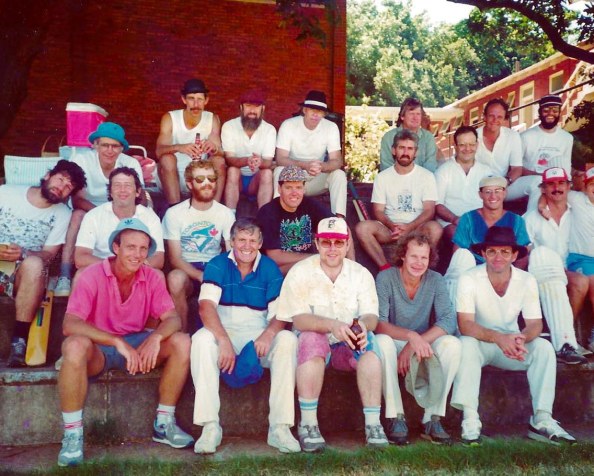
I think Durban is one of the nicest cities in the world. I have lived there for nearly 30 years. Ailsa and I bought our first house there and it is the place the children were born. The university has been, for me, a good work environment. At the beginning of my career I was well mentored and then given space and support to start my own unit. HEARD is going well with an amazingly good research output, high staff morale, adequate funding and a throughput of talented young researchers. All this is in our annual report, which will be on the website very soon.

In the middle of April I was in Nairobi, Kenya for a meeting on Efficiency, Effectiveness and Sustainability which the International AIDS Society organised. I am an elected Governing Council member and the Treasurer up to the International AIDS Conference in Washington in July (see www.iasociety.org.) It was a quick trip, flying up on Wednesday evening and returning to Durban on Saturday – I flew on the late flight from Nairobi to Johannesburg on Friday evening, slept at the City Lodge at OR Tambo airport and caught a flight down to Durban at a sensible time.  I used air miles to upgrade the ticket so it was relatively painless. I had a colleague travelling at the same time as me so we chatted and went to the airport together. He will remain nameless given the story I am about to tell.

A while ago I noticed that my Yellow Fever vaccination was about to expire and so went and was re-immunised. Just as well, my companion had forgotten the card. The check-in staff would not let him on the plane without one, and they were quite adamant about this. He had to go across the airport to the clinic and get the shot, paying above the odds for it. Of course it takes time to become effective but this is generally overlooked. Indeed we were not even asked for the certificates! However the South African authorities can be very fierce about this!

I had two nights in Durban and on Monday the HEARD team flew to Johannesburg for the biannual donor and board meetings held at the aforementioned City Lodge. These went very well, with an excellent turnout for both, only one board member was not able to make it. From there I flew, in economy class, to Cape Town, a long two hour flight on a packed plane. This was for a Council on Health Research for Development meeting on the theme of Beyond Aid… Research and Innovation as key drivers for Health, Equity and Development, all the details are the websites at www.forum2012.org and www.cohred.org. This was most interesting.

There is no doubt Cape Town is stunning. I think it is the most beautiful city in the world. Driving in from the airport at about 6 pm the evening light was an amazing rosy shade. Coming round the side of the mountain on de Waal drive and seeing the centre of the city, the harbour with the huge gantries like a row of storks silhouetted against the south Atlantic, and in the distance, Robben Island, was breathtaking. I feel I have a champagne lifestyle on a soda water salary. I get to travel, stay in great hotels, see new and interesting places and meet all sorts of people.

The conference started on the Tuesday, so unfortunately I missed the first day. I was staying at one of my favourite hotels, The Cullinan, they describe themselves as ‘stylishly grand and perfectly majestic’ and I think this is fair. It is just a few minutes’ walk from the international convention centre. The relative merits of Durban and Cape Town are very different. I must admit to being tempted by Cape Town, as one of my friends said it has “the mountain factor”. This must have been the magnet that has drawn my extended family there. Friday was a public holiday, Freedom Day, marking the end of apartheid and the new democratic government. I spent most of it visiting family.

My brother Derek Whiteside was away on business and so I took Lynn, my sister-in-law and my three nieces Emily, Sarah and Katie out for lunch in Hout Bay – to a restaurant called Dunes. It is a stunning setting looking out over the bay with a band of ultra blue water just beyond the breaking waves. In the last while the euphonious dunes have blown away and now the view is straight on to the beach. We were at the restaurant joined by distant cousin Neil Hodgson and his daughter Lisa. He is a captain with South African Airways. As I am silly about aircraft and flying it is always great to talk to him and I (a minority perhaps) find discussing airline routes and types of planes to be deeply interesting. From there I went to visit my Uncle Fred and Aunt June (also Hodgsons) who live in a retirement home in Pinelands. This is on the way to the airport which makes dropping on them very easy. We were joined by my cousin Linda and her daughter Hayley (who has nearly completed her PhD at the University of Cape Town) and her sister, my cousin Sandra who was visiting from Uitenhage. The most family I have seen in a very long time.

Perhaps this posting is not just about relativity but also about reflection. Fred was very senior in de Beers Diamond Company and I have always looked up to him as a role model. Nearly 20 years ago he had a hip replacement operation that went wrong. As a result now finds it difficult to get around. He has a mobility scooter for inside the flat and a more robust one for going out. I still see him as a role model because of his attitude and stoicism.

They moved into the home two years ago expecting to get a large apartment. That arrangement fell through and they ended up with two apartments on different floors. They lived a schizoid life until the space next to theirs became available. Now they have been able to consolidate and expand at the same time, and actually have a very nice warm set of rooms.

Part of the conference ‘package’ was an evening out at Groot Constania, the original wine estate in South Africa, the vines being planted by the first governor of the Dutch settlement of Cape Simon van der Stel. We were taken there by bus, the scenic winding route round the coast, which left me feeling quite ill! However I soon recovered. The food and wine were fantastic and the entertainment was provided by South African diva Yvonne Chaka Chaka. This is what I mean by a champagne lifestyle. Of course one of the questions is who pays, because at the end of the day someone has to. We were told that it was the World Bank, and yet they were hardly represented which was a great pity. Fortunately, after the copious quantities of alcohol and excellent food, we went back on the short straight route.

I learnt, at the meeting, that health is underfunded, but more worryingly the health people do not understand how to advocate for more funding. They think that the fact that their cause is noble, it’s sufficient and this, sadly, is not the case! We know from our work that ‘crowding-out’ is a real issue. If foreign money is given to health then governments will tend to reallocate domestic resources. This is good, basic and responsible public administration. It is not what donors intend! I shall have to reflect on the meeting and write up some notes, since I was there in an official capacity as a person from the Department for International Development, although I would not presume to speak for the organisation. What was interesting was to meet people from a different circle from the one I normally operate in.

Reviews

Music

There has been a lot of music in Durban recently. I went to the University Jazz Centre to listen to a folky duo from Cape Town Andrew James and the Steady Tiger, I was so impressed that I went to hear them again at St Clements, a cafe on Musgrave Road. Their style is great; both are excellent guitarists with mellow voices. I thought they spent far too much time tuning the instruments though and exchanged emails with them about this. Some of their music is on their website. On the Friday evening The Collective, a new venue in Durban, hosted The South Jersey Pom-Poms, which is lead by a colleague from the University.

Books

The suburb of Manor Gardens, which was beautifully and evocatively written about by Barbara Trapido in her book Frankie and Stankie (Bloomsbury 2003), is where we bought our second house. It was let to chaotic tenants for about four years and they left a month ago. When I first went to look at it my heart absolutely sank. There has been work going on and I went to check on progress on Saturday and then went to lunch at a new cafe in the neighbourhood. Exhibit owned by Eunice van der Vloet is a house with an art gallery, table chairs and a limited menu. It is an encouraging addition to the neighbourhood and I hope it prospers. Sadly the estate agents tell me Manor Gardens is a leafy green quirky suburb, and that is not what people want.

I have finally finished reading Catherine Hakim’s Honey Money: The Power of Erotic Capital, (Allen Lane 2011, 384 pages). I found it a thought provoking book. The two key points were: What is erotic capital and the idea of a male sexual deficit. It makes a number of rather challenging statements, but will certainly be of use in understanding behaviours and responding to AIDS.

Deaths and Departures April 2012

Easter is always a time of reflection: spring in England and autumn in Durban. I have reason to take stock. I arrived back in Durban on the 2nd of April. On the 3rd, I went to the funeral of Cosmas Desmond, an anti-apartheid activist, member of the Durban community, and father to one of HEARD’s first and highly appreciated members of staff – Chris Desmond. There is a touching obituary in the UK Telegraph at http://tgr.ph/IfXyZP . The service was held in the chapel at Nazareth House, a home for the elderly, just up the road from my flat. The service was Catholic and very formal. I hope, at some point, there will be a more intimate celebration of this remarkable man’s life.

The previous weekend was also contemplative as, five years after she died, we scattered my mother’s ashes. Brother Derek and sister Gill came to Norwich, from Cape Town and London respectively. On a sunny Saturday we drove, with Ailsa, to Weybourne, with a beautiful, tiered pebbled beach on the North Norfolk coast. It is not far from Sheringham where mum live happily for some years, and it seemed ideal for our final goodbye.

The occasion was not without stress because each sibling had to be consulted as fully and tactfully as possible. (And I am not tactful). Therefore, when I phoned the undertakers to ask they had the ashes ready for me to pick up I was dismayed to hear the receptionist say: “Do you want a scattertube?”
I was flummoxed, “A what?”
She explained it was a cardboard tube that allows the ‘scatterer’ to have some control over the process, rather than just dumping the ashes out of the urn/paper bag/or in South Africa a Ziploc plastic bag.
The she pointed me to the web and said, “Just type in scattertubes.”
The economist in me lead to the next question, “what do they cost?”
‘Our’ undertakers do not charge for them but you have to choose the design: ‘seaside sunset’, ‘forest glade’, ‘mountain view’ and so on.

I really did not want to have to make choices but after due thought I picked ; and my mother’s ashes were poured into the North Sea by a brave Gill, who stepped into the water to do this. The next question was what to do with the tube – we filled it with pebbles and seawater and threw it out into the sea where it will degrade overtime. I hope the tide was out when we did that, I never thought of that.

Prior to this Ailsa and I had some rare time away. We left Norwich on the evening of Sunday 11th March after supper, flying directly to Edinburgh using Flybe. We hired a car and spent the night at a Premier Inn near the airport. It was not too hard to find as Premier Inns have purple signage. They are basic but good and cheap hotels. On Monday we got on the motorway and drove north going across the Forth Road Bridge. It was great to see the famous railway bridge with its iconic tracing of girders next to us. http://en.wikipedia.org/wiki/Forth_Bridge Looking it up, I discovered that the famed “never-ending task” of painting the Forth Bridge, (“as soon as it is painted, the crew has to start again”) is in fact erroneous. Thank you Wikipedia!

We drove straight north past Perth and then through the upland area past Pitlochry to Inverness along very good roads, with the Cairngorms in the distance (some snow still visible but it was warm in the valley!). Ailsa remembers a small, windy road in the mid sixties, with the drama of the exceptionally steep, Devil’s elbow. We stopped on the way for an excellent cup of coffee at a modern glass and wood comfort stop just off the road in the middle of nowhere, a former tourist office. It was pretty, offered internet connection, good food and information.

Across from our vantage point on the next bridge, at Kessock, Inverness, did not look prepossessing: no more than a sprawling urban site on the coast although Ailsa remembers it as a mecca, which offered rare treats like dried bananas, oranges and Allinsons’ bread. We had no need to go in so don’t know what delights it has to offer now. For Ailsa, it meant the fun of putting the car on to the rather elderly Eilean Dubh ferry which must have gone constantly to and fro between the Moray and Beauley Firths, with the added frissson of making it back before the last sailing on the way home
We followed a small road through the tamed, peaceful countryside of the Black Isle and drove up to Fortrose through the pretty fishing village, Avoch.

We spent the middle of the day there looking at places Ailsa had known as a child. This included the beach on which the family camped an entire summer when they first moved there – it is now a caravan park. They later moved to a croft high up above Rosemarkie on the way to Cromarty. The esteemed Fortrose Academy is now a monstrosity of a building but the older stonework school is still there. It must be catering for students from across the whole of the Black Isle. New, glass fronted homes are being constructed to look over the shining Moray Firth. Retirement anyone?

We had lunch at a cafe named after the ferry which I thought must mean Black Isle in Gaelic. We then drove to Aberdeen going through, Nairn, Elgin and Inverurie. Inverurie, Ailsa found later was the area her paternal grandfather came from. It was a long day in the car, but worth it.

Aberdeen is called the Granite city and indeed it is a grey place, hilly, robust and provident. We found the hotel we were staying at: the Atholl Hotel, a small but friendly place and ate dinner in the bar there. On Tuesday morning Ailsa walked with me as I was giving a presentation at the University of Aberdeen in the Health Economics Research Unit. I met up with my host Mandy Ryan, had coffee, gave the seminar to a packed room, and was then taken for lunch. After this I took a taxi into town to meet Ailsa who had walked into town.

Ailsa had spent the day tracking down churches that her grandfather, Cannon Vane Walker, had been involved in and showed me two. Her grandfather was an Episcopalian minister who served in a number of locations in the north east of Scotland. One neglected little church, St Clement’s on the Quay, was surrounded by warehouses and located beside the docks within spitting distance of huge boats. It is now derelict, but the quaint building is still a haven with spreading trees, and a graveyard full of tragic stories and heroic individuals who depended on the sea for a livelihood. One grave stone particularly caught my eye.
“Erected by Thomas and Barbara Sinclair
in memory of their son James
who died 30th August 1873
aged 32 years
also their eldest son Thomas
who died of a fever
Also William and John who died in infancy And one of a day old”
They buried five children did not name or give the gender of the child who with in a day of the birth!
An inspiring place for Ailsa’s father to grow up; the Manse was hard by the church. Her mother has exercise books of stories of sea adventures and drawings of ships completed by him when a youngster which were found only recently, left at her parent’s family home when they went abroad. Too bad he is dead and never saw them again! They lie, untouched in Ailsa’s stepfather’s home.

Meanwhile, I was suffering badly from foot pain and was quite heroic, tramping onwards to visit the even quainter St Margaret’s church, high on its own hill in the midst of the city with a view far out to sea. I was grateful that one of the things we did was to buy supportive inserts for my shoes which have gradually made a huge difference – highly recommended for severe foot pain: although five minutes of exercise twice a day would be even better, but I find it really hard to make this commitment!

This grand dad seemed to have shifted about with churches in Cuminstown, Cupar in East Fife, and St Andrews. Not to mention St Ninian’s Cathedral, Perth.

Wednesday was a free day and we drove from Aberdeen to Edinburgh. Before we did this however we went to the Gordon Highlanders Museum. They were a famous Scottish regiment and were the first British troops to be deployed to Swaziland in 1963. I well remember as a six or seven year old walking along the road near our house and coming across two of the soldiers strolling past wearing uniform, which included of course kilts. We spoke to them but did not understand a word they said in reply. It made a huge impression on me and I was glad to have had the opportunity to visit the museum. It is also clearly a social hub for people who served in, or were linked with the regiment and there were many who wanted to help us. This I find a little embarrassing and so having been there, was quite happy to leave. We drove through the old town in Aberdeen, feeling that the place would merit a longer visit at some point.

Aberdeen is the third biggest city in Scotland and our limited impression is of a sprawling city. We drove along the coastal road looking for a place to have coffee and going through what must have been fishing villages, Stonehaven and Johnshaven until we got to Montrose where we stopped for lunch with a flurry of teenage school children in what appeared to be a medieval prison. In the summer or snow the drive must be really beautiful, but at the tail end of winter it was just a shadow of what it could be. We went through Dundee to St Andrews and walked around that university town. Again a place where Ailsa’s grandfather spent time. It is primarily a university town with the other major activity being golf. We had tea in a Christian centre attached to lovely Episcopalian a church and explored further but it was getting really chilly and there are only so many churches one can do in a day.

Then it was on through Edinburgh to find a place to stay near Queen Margaret University. Ailsa navigated and we were able to find a Premier Inn right next to the campus, again, purple lights were a stroke of genius. The next morning we went to the University, which is a new, self-contained campus in a green field site. We were met by our hosts and shown their working space. Quite bizarrely they have open plan offices for academics. This is completely contrary to anything I have seen before. I gave a seminar there on ‘the sustainability of the AIDS response’ to an interesting and interested audience.

We drove into Edinburgh to find our hotel which is part of the College of Surgeons building and is now a fantastic modern hotel ‘10 Hill Street’ in case anyone is looking for a good hotel which even had (limited) parking. As it was about five o’clock we walked down to Princes Street and the Royal mile and ambled around the city stopping for a bit of a disappointing pizza place.

On Friday, my commitment was to give a talk at Edinburgh University in the afternoon. This, as in Aberdeen, was on the ‘safe sex/no sex hypothesis’. There was a small audience, but to be honest at 15.00 on a Friday I was surprised there was anyone there at all. We had walked up to Edinburgh Castle on the morning and the overarching impression is of a city geared to tourism. In the evening we had dinner with colleagues from Queen Margaret University, Edinburgh University, and the Department for International Development.

The only Flybe flight to Norwich on a Saturday leaves at 06.55 it meant we have had to be up and out of the hotel by 05.00 to find our way to the airport and drop off the car. We managed to accomplish this task well. The plane took off on time and we were home by nine where we were met by Doug with the dog.

It was a great trip, enjoyed by both of us. Combining a certain amount of work with pleasure was absolutely the right way to go and I really enjoyed it. While I think learning to use a GPS would be a good move, Ailsa managed to navigate through the cities and countryside with considerable skill and patience. Scotland is on my list of places to go back to soon.

Wakes and Waterford Weekend February 2012

Wakes and Waterford Weekend February 2012

This past weekend I was in Swaziland. I went for two reasons: first to spend some time – Waterford Kamhlaba at my school, second to look at the current AIDS epidemic situation. On Saturday we celebrated the United World College (UWC) day. This was organised by students and consisted of entertainment in the wonderful amphitheater, then a food fair in the Newton-Thompson Multi-purpose Hall and on the field. Representatives of each country presented themselves and their countries, wearing their national costumes. Following the parade of nations there were a number of music and dance items. For food fair the groups of students cooked and sold food from their national cuisines. The South Africans did boerewors rolls and meat! I sampled the Chinese, Scandinavian and Indian stalls. The Chinese kids showed, in practice, what it means to be responsive to market forces – at the beginning of the fair a plate of food cost E20, by the end they were walking around selling it for E5 to any takers. The Scandinavian stall was mostly sweet food. The Indian meal was excellent!

I was flattered to be invited to give a short talk about what the UWC means for me and Waterford. The amphitheater is acoustically fantastic because if you stand at a certain spot then everyone can hear you and you do not have to raise your voice too much. It is the only facility that will seat the entire school. Currently there are just over 600 students, and it is bursting at the seams. There are photographs in the gallery on this site. The one of me speaking shows a number of students behind me. I invited the Kenyans, where I was born; the Swazis for obvious reasons; and the British, Batswana and South Africans as these are all countries where I have lived. I think the most touching group was the Burundians, who are mostly on scholarships, and have battled enormous odds to get to the College.

The second reason for the visit was to spend time with the staff of NERCHA and to try get a feel of what is going on with the AIDS epidemic in Swaziland. It is a confusing picture: on the one hand the numbers are horrible, on the other treatment, prevention of mother to child transmission and certain social services are getting through. One initiative I am very excited by is to try to get a Swazi special interest group at the Washington AIDS conference. We would like to ensure that everyone who is presenting work about or from the country is linked, and hopefully all who have an interest in Swaziland can join in.

I spent a night in Johannesburg on the way back. The flight was rather fun because I knew two of the three crew on the flight from Manzini to Joburg. The reason for this stopover was to meet my colleague Jonathan Gunthorp of the Southern African AIDS Trust.

I neglected to take my book out off my bag before boarding in Manzini and as it is a small plane, the bags get taken away and put in the hold. I looked at the in-flight magazine in particular the timetable for Airlink. I noted that during the week the first flight of the day is from Johannesburg just before seven o’clock in the morning. At the weekend it is much later. I asked the cabin crew member why this was.

“Yes,” she said, “at the weekend the airplane sleeps in Johannesburg.”

What a lovely image, it is also accurate because the crews will not necessarily stay over in South Africa. I wish I had had a bit more time as the flying school was having an open day, but sadly that was not to be.

I was back in Durban by midday on Tuesday but we were unable to get onto the university campus because the students were rioting. On Wednesday I went in really early and got on to the campus without too much trouble. Most other people were not able to get to work despite a heavy police presence. As I sat in my office we could hear the sound of tear gas canisters being fired near the residences. Because we are on the top floor with a very good view across the campus we also end up playing host to people who want to simply come and look at what is going on. By Thursday peace had returned. There are five campuses for this university, it was only Westville that saw these violent protests, I don’t understand why this was the case.

The week before the trip to Swaziland, on Saturday afternoon I went to the wake of my friend Mark Colvin. He died of a heart attack at the age of 54 years and four days. We gathered at his house on Durban’s Bluff to remember a friend and a remarkable man. Mark was a medical doctor, a surfer, an activist, a father and husband, and a person who knew how to live life to the full. Our community was and is quite devastated by his death. A year ago he wrote an articulate and moving e-mail describing what happened to him during and after his first heart attack. It is a classic of thoughtful introspective and useful writing. I asked him what this had meant for him and his comment was to the effect that it shows how transient life is.

The Colvin home overlooks the Indian Ocean. From the house it is possible to walk down through the thick bush to the beach. Golden sand and crashing white breakers, and then nothing but ocean for thousands of miles, the next land is the west coast of Australia. It is the ideal location for someone who loved nature, that sea, and surfing. The fly in the ointment is that it is also close to the oil refineries and industrial area of Durban so air pollution is an issue. Mark was involved in tackling this.

It is always a time of reflection when we lose friends. I was asked: ‘Was he a close friend”. The honest answer: “Not terribly close, but someone I had known a very long time”.

He was one of the first touch rugby players I knew. A group of us used to gather on a university field and play long and arduous games on a Monday evening. They could last for two hours or more. Years of doing that and you get to know your colleagues.

A while ago I realized that I am increasingly unsupple and stiff so decided to take up yoga. There is a yoga studio about 20 minutes walk away from my flat. With their advice I am doing one of the basic levels. It is hard and makes me realise how little flexibility I have. There are signs of improvement. As with most things I like being at the back. (When I get on a bus I tend to head for the last row of seats). It is no different in the yoga class and this was something for which I was very grateful. The back story is I am running out off gym shorts, I have only three pairs and I was therefore wearing shorts I do not normally use for sport or yoga. As we went in to the pose ‘Warrior 1’, which involves lunging with legs straddled, I became aware that there was a breeze where there should not be one. This presented a real dilemma, what to do? What is the etiquette? The one certain consequence is I am going to buy more shorts and make sure I use the appropriate ones.

This slideshow requires JavaScript.

Books

Michael Chabon, The Amazing Adventures of Kavalier & Clay, Harper Perennial, London 2000, 639pp

This book begins in 1939 and takes us through the Second World War into the 1950s. It is primarily the story of two men, Josef Kavelier and his cousin Samuel Clay. Joseph is the only member of his family to escape the persecution of the Jews in Czechoslovakia. In New York he works with his cousin to create a successful comic strip called The Escapist. As this is happening, Josef is waiting for his brother to escape from the Nazi programme in Prague. His lover Rosa falls pregnant, but before she can tell him, he learns that his brother was on a ship that was torpedoed in the Atlantic. Josef joined the forces ‘to kill Germans’, but ends up operating a radio in the Antarctic, without knowing Rosa is pregnant, partly because he stubbornly won’t open any of the letters Samuel and Rosa send him.

He is one of only two survivors when the team is wiped out by carbon monoxide poisoning. He and the pilot of the plane based at the station fly over to the German radio station, although on the way the pilot dies of appendicitis. Josef kills the sole surviving German radio operator, gets rescued and returns to New York. Samuel has married Rosa but at the end he leaves, so Josef is alone with Rosa and his son.

It is a complicated book, there are many themes and sub themes in it. Loneliness and being on one’s own are explored, the importance of family and Jewishness are constant. Samuel is gay but marries Rosa in order to give the child a father. The meaning of being gay in the 1940s is touched on. The book won the Pulitzer prize for fiction in 2001. There are some sub themes which are not fully developed for example, the Golem – a cultural icon which I don’t fully understand, is exported from Prague and ends up in New York years later by which time it has turned to dust, the mud of the river it was made from. This bit was far-fetched, and did not mean much to me. The theme of magic is in the background, Josef has been taught by a master magician in Prague.

David Guterson, The Other, Bloomsbury, London, 2008, 256 pp

In the beginning there was a race, 800 metres, not a particularly fashionable distance. The time is 1972, the place Seattle and the two boys who compete (with each other – not even for one of the first three places) are Neil Countryman from a working-class background and John William Barry, an only child from a professional family. The book covers the first years of the young men’s relationship in detail. It ends in 2006 and as I do not want to spoil the story I won’t give away much of the plot.

I really enjoyed this book. This is the story of an unhappy marriage and a long battle between John’s parents and the consequence is an upbringing that emphasises many underlying characteristics he has. It is the story of a happy marriage between Neil and his wife and the successful rearing of their two sons. John is present throughout the book and it is in part told through flash backs. Many of the sentences in this book are fiendishly complicated and it is beautifully written. I will certainly look out for more books by this author. When I have finished a book I usually reread the last few chapters a few times in order to cement the story in my head. I have done this with both the books reviewed above.

Christmas 2011

The end of 2011 was something of a blur. I got to the UK from Boston on 4 December, landing in London, and taking the train up to Norwich. Because the flight from Boston to London is so short I had not bothered to try sleep. I was quite lucky because there were no major delays on the underground or the mainline trains, although there was a commuter train to Ipswich instead of the usual comfortable Inter-city carriages. Normally on Sundays the engineering work is carried out, and in the worst case, instead of trains, there are buses.

I had barely unpacked my bag when I repacked (a smaller bag though), to travel up to Glasgow for an ‘away day’ with the team at the Department for International Development (DFID). This was great fun and, as always, I learnt a lot deal from everyone, and hope I was able to contribute.

Having travelled up to Glasgow with colleagues on the train from Euston, I had to return to Norwich via London. The day I travelled saw gale force winds and flooding in Scotland and the North West of England. The train was three and a half hours late arriving in London and there were times when we were progressing at just five miles an hour. An interesting psychological twist is that to be moving forward, even very slowly, gives the impression of progress, and is better than standing still. It also gave us plenty of time to look at the muddy rivers in full spate, the extensive stretches of water where they had burst their banks and the sodden and deserted countryside.

Because we were so late into London I had to get a peak time train up to Norwich and I did not have a ticket for this. It is much more expensive to travel at this time. I was so impressed when the people from the train company (Virgin Trains, and given my moan in my last posting about the airline, it is nice to be able to say something nice about a Virgin company), simply stamped the back of my ticket at Euston. The conductor on the train to Norwich, a different rail operator, since the railways were privatised and broken up, accepted this without question.

All travel to Scotland and the north of England was severely disrupted and there was a little vignette on the tube that impressed itself on me. Standing opposite me was a businessman who was talking on his phone. He was probably in his mid-40s and it was clear from the conversation that he was supposed to be travelling to Edinburgh by air from one of the London airports, Stansted.

“I don’t know if the planes are flying,” he said, talking to his personal assistant. “But I have to get to Edinburgh tonight. Please will you call the airline and let them know I am on my way.” Pause! “Yes I know that won’t affect the chances of the flight, but please do it anyway.” At the end of the call his eyes filled with tears and his chin wobbled as he gazed blankly through me. I wonder what the back story to that was.

Another quick chance to unpack and repack and I went down to London for a two-day meeting of United Kingdom Funders of Health Systems, hosted by, among others, the Welcome Trust, DFID and the Economic and Social Research Council. This was deeply interesting. The UK-based organisations face the same problems we do at HEARD with regard to getting research into policy and practice. I think though that we are a ‘best practice’.

I got back to Norwich on 14 December knowing that I would be here for a decent period of time. There was still a fair bit going on: two conference calls, one of which lasted two hours, and general thinking about management, both what we have done and what we need to do. After all this was done then I was able to take time for other things.

I can’t say I did very much that was productive from an academic point of view in the run up to Christmas. However I completed the gathering of material for my UK tax return. Because I have an income, and am considered a resident in South Africa and the UK, I have to furnish returns in both countries. I find it extraordinarily stressful. Gathering all the pieces of paper, receipts, details of where I have been and when (which is required for making judgements on residential status) and all that goes with this makes me sweat. I had lost one of vital piece of paper and had to make a number of phone calls to get duplicates. As I say, huge stress, obviously this is not totally necessary, but avoiding it would require careful thinking all year and a system of gathering information. I do not think I am capable of that sadly.

My sister Gill came up to Norwich from her home in London on Thursday, 22 December and stayed with us for just under a week. We did not do as much with her as we could or should have, but we did do some interesting things. The current pro Vice Chancellor of the University of East Anglia Tom Ward lived in Swaziland with his family in the 1970s and was at Waterford Kamhlaba School at the same time as Gill. They had reconnected via Facebook, and he very kindly invited us over for dinner. His family live, it turns out, about four streets away from us in the same suburb and the children went to the same schools all the way from the first school to sixth form college. We had a most interesting evening which involved a great deal of reminiscing about the school and Swaziland. We were so lucky to grow up there.

On Christmas Eve we went to the Christmas procession with carols at Norwich Cathedral. This is an amazing building. The foundation stone was laid in 1096, over 1000 years ago. It is huge and complex and was built from gorgeous Caen sandstone quarried in Normandy, France, shipped over to Yarmouth, and then brought up the river to Norwich. There was a special canal which led directly into the masons’ yard. There is a good website www.cathedral.org.uk which gives a picture of the history of the cathedral and a tour of it as it is today.

When I look at buildings like this I always wonder about the vision that went into planning and executing it. The people who designed it knew they would not live to see it completed, yet they still went ahead. I really enjoy the cathedral and was delighted to see it was absolutely packed; the citizens of Norwich making use of it. The way the service worked is that the choristers, cathedral officials and clergy, Mayor of Norwich, and Bishop processed through the building, stopping at various points for readings and hymns. It was quite a sight. Although we had to stand for the first part of the service we were allowed to sit where the choir had been as they progressed though the church.

The second reading was from the Nave Pulpit. From here they made their way to the Pelican Lectern in the Crossing for the third reading. This is where the two transepts meet across the nave: the cathedral is built in the shape of a cross, and the 95 metre spire is above this. This caused me some amusement because a pelican crossing is a piece of street furniture and the juxtaposition of the words was I suspect unintentional.

On Christmas day we went to the Baptist church attended by Tom and his family. The days of hymn books appear to be over in most churches because they now project the words on a big screen above the Alter. I find this slightly disturbing, but I do appreciate the large print that is easy to read. The background music was provided by the expected organist, but there were also two violins. It was a real family service, was short, and alarmingly the sermon was illustrated with Power Point slides, using the screen! We then went home, opened gifts and enjoyed the Christmas meal. The first year I have not listened to the Queen’s speech.

On Boxing Day Gill was invited to visit friends from London staying in Gunthorpe Hall about 20 miles away from Norwich. It can be seen at www.gunthorpehall.co.uk . This is a magnificent hall used for weddings and corporate functions. Over Christmas the owners had over 30 personal friends as guests. Gill had been to visit two years ago when she last came to Norwich for Christmas. What a contrast, then we had snow and the roads were quite icy, on this occasion the temperature was about 10°c. The small problem is that the car has a highly computerised engine system and it is very sensitive. We drove over a cattle grid and now the electronic warning signs are telling us we have an engine fault. The mechanic will diagnose is a displaced sensor I suspect. Rowan has an older and simpler Peugeot, and she remarked that she much prefers a car which ‘just breaks down and does not tell you it is going to’. Ailsa and I went to collect Gill and had a cup of tea in the large, almost industrial-style kitchen. Apparently one of the notable features of the Christmases is the amount of food that everyone eats.

spent some time over the past few days cutting wood for our fire and managed to nearly asphyxiate everyone by putting some very green logs on it. We had to open all the windows and doors which rather defeats the object of having a fire in the first place. It takes a long time to cut logs to a size that means they can be burnt; it is alarming how little time it takes to burn them. We have trees and fence posts that can be used as firewood, but given that the woodburner is quite small it takes a lot of work. Douglas considers himself to be in charge of making and lighting the fire and keeping it burning. He and I have been cutting wood together as I want him to appreciate how much effort it takes to get the logs in the first place.

My sister left on the 28th, but we were not off the hook because Douglas’s girlfriend arrived from the North of England to spend a week in Norwich. She is actually a very bright young woman; I had not met her before but at our dinner conversation she held her own on feminist literature which was pretty impressive. She is a year younger than Douglas and seems confident and personable.

In the last few days before 2012 I am going to spend time cleaning out my office, planning my year ahead, and even thinking further than that. I have always enjoyed the opportunity to make plans. A new diary and blank calendar fill me with eager anticipation. The sad part is to come to the end of the year and realise how little was actually achieved in terms of what one had intended. Nonetheless I have every expectation that 2012 will be an important year and a number of critical decisions will be made. I am reaching the point when I know there is a countdown factor in my working life – rather like the builders of Norwich cathedral there are some things that I need recognise will have long lead times, for example taking on PhD students.

It is alarming to realise how vulnerable people are. We have watched our neighbour across the road become rapidly less capable. She was admitted to hospital the week before Christmas and will have been there for over two weeks by the time I send this posting off. Her husband died 18 months ago. I thought that she was the stronger person in the relationship but it has become clear that she was very dependent on him for many things. It is by no means certain that she will be able to return to home. She has two young dogs that need care. Although her two children take it in turns to let them out and feed them they have to drive some distance to do this. We are going across to give them company. We also take them for walks with Deedee. She (Deedee) is not impressed with these two interlopers and growls at them and generally demonstrates she is ‘top dog’. They are powerful little animals and have managed to cause me to pull a muscle in my arm.

And so the last posting of 2011, this was finished on Saturday 31st December 2011. Perhaps though it would be more accurate to describe it as the first posting of 2012. I will have a good look at this website with the view to making some improvements to it towards the end of January. If you have read this far then please do come back and have a look in a couple of months.

Books

Michael Lewis, The Big Short: Inside the Doomsday Machine, Penguin Books, 2010 London 270 pp.

The first book I read by Michael Lewis was called Liars Poker and described his time in Wall Street in the late 1980s just before the first financial collapse. In this book he revisits the money market between 2000 and 2010. It is a story of irresponsible and criminal activity. The criminals are those who should have controlled the financial markets and failed to do so. In essence, as I read it, the financial markets created debt, and encouraged millions of Americans to borrow beyond their means. They then packaged this debt and sold and resold it. The whole activity was premised on the idea that house prices would continue going up, thus creating a sense of affluence even if it wasn’t real. And then the music stopped. Yet, as Lewis shows, people who benefited from this were not held responsible. I find this an extraordinary book and depressing beyond belief because there still seems to be no holding people to account. This, and indeed all his books, will reward the reader.

Jeff Shaara, To the Last Man, Ballantine Books, 2005 New York 635 pp.

Shaara provides a very interesting postscript where he discusses what happened to the characters in the book, obviously only those who survived. It is interesting to note that even the young men who lived through the war did not last long. I suppose part of the reason I enjoyed it so much was because of my and Douglas’s visits to the battlefields last year. Of course my father fought in this ‘war to end all wars’. I think he was deeply scarred by the experience and it came out in various ways which I could not begin to understand.

Richard Russo, That Old Cape Magic, Vintage Books, 2010 London 339pp.

I have really grown to enjoy the writing of Richard Russo; most recently I read and reviewed his book Empire Falls. This, his latest story is set on Cape Cod, in the North East of the United States. It begins during a wedding of a friend of the daughter of Jack and Joy Griffin, who honeymooned here are some 34 years previously. The story is told mainly from the viewpoint of Jack the husband. At the beginning of the book he reflects on his parent’s dysfunctional marriage. In the course of the weekend he manages to alienate his wife to the extent that they separate. A year later they are back to see their daughter, their only child marry and have to be polite to each other during this time. The book ends with a feeling of hope because Jack recognises his boorish behaviour, and asks for a second chance. There is a great deal about how couples relate, the inevitability of some of the gendered dance that goes on: for example, as I read recently somewhere, “women need to feel loved to have sex; men need to have sex to feel loved”. It is astutely observed but gives those of us who struggle to understand ourselves and each other little comfort. Russo raises big questions about what happens to us in the course of a lifetime; how we grow up and relate to our friends and parents; how we partner; and ultimately what happens towards the end of our lives as we grow old and introspective. Interestingly the main characters in his books seemed to be only children, perhaps an artifice that allows for more reflection. With siblings the edges get knocked off and families are very much more complicated. I recently had lunch with a long standing friend who described his family as ‘emotionally incontinent’; the converse of this is ‘emotional constipation’. Wonderfully apt.

Kjell Eriksson, The Princess of Burundi, Allison and Busby, London 2006, 410 pp

This is the latest of the Scandinavian crime books I have read. Set in Uppsala in winter, it is a murder and police procedural novel. It was an enjoyable read and I shall look out for more by this author (and translator). There is not much more to add to this as it was a light read (in as much as Nordic crime can be light)

Pirates and Snow

I was invited to give a plenary presentation at the Caribbean AIDS conference in Nassau in the Bahamas in November 2011. I had never been there, reason enough. An additional incentive was that Roger MacLean, of the University of the West Indies, who invited me, is someone we have worked with in the past and he is a really solid academic. It was too good a chance to pass up. Of course it fitted in very well with other travel plans – invitations to New York and Boston and a meeting HEARD was hosting in Washington. I had a week between meetings and was wondering what to do with the time, as I did not want to travel back to either the UK or Durban. It takes about six days for me to get over the jet lag, and then it would be time to set off again.

Continue reading

Christmas 2011

The end of 2011 was something of a blur. I got to the UK from Boston on 4 December, landing in London, and taking the train up to Norwich. Because the flight from Boston to London is so short I had not bothered to try sleep. I was quite lucky because there were no major delays on the underground or the mainline trains, although there was a commuter train to Ipswich instead of the usual comfortable Inter-city carriages. Normally on Sundays the engineering work is carried out, and in the worst case, instead of trains, there are buses.

I had barely unpacked my bag when I repacked (a smaller bag though), to travel up to Glasgow for an ‘away day’ with the team at the Department for International Development (DFID). This was great fun and, as always, I learnt a lot deal from everyone, and hope I was able to contribute.

Having travelled up to Glasgow with colleagues on the train from Euston, I had to return to Norwich via London. The day I travelled saw gale force winds and flooding in Scotland and the North West of England. The train was three and a half hours late arriving in London and there were times when we were progressing at just five miles an hour. An interesting psychological twist is that to be moving forward, even very slowly, gives the impression of progress, and is better than standing still. It also gave us plenty of time to look at the muddy rivers in full spate, the extensive stretches of water where they had burst their banks and the sodden and deserted countryside.

Because we were so late into London I had to get a peak time train up to Norwich and I did not have a ticket for this. It is much more expensive to travel at this time. I was so impressed when the people from the train company (Virgin Trains, and given my moan in my last posting about the airline, it is nice to be able to say something nice about a Virgin company), simply stamped the back of my ticket at Euston. The conductor on the train to Norwich, a different rail operator, since the railways were privatised and broken up, accepted this without question.

All travel to Scotland and the north of England was severely disrupted and there was a little vignette on the tube that impressed itself on me. Standing opposite me was a businessman who was talking on his phone. He was probably in his mid-40s and it was clear from the conversation that he was supposed to be travelling to Edinburgh by air from one of the London airports, Stansted.
“I don’t know if the planes are flying,” he said, talking to his personal assistant. “But I have to get to Edinburgh tonight. Please will you call the airline and let them know I am on my way.” Pause! “Yes I know that won’t affect the chances of the flight, but please do it anyway.” At the end of the call his eyes filled with tears and his chin wobbled as he gazed blankly through me. I wonder what the back story to that was.

Another quick chance to unpack and repack and I went down to London for a two-day meeting of United Kingdom Funders of Health Systems, hosted by, among others, the Welcome Trust, DFID and the Economic and Social Research Council. This was deeply interesting. The UK-based organisations face the same problems we do at HEARD with regard to getting research into policy and practice. I think though that we are a ‘best practice’.

I got back to Norwich on 14 December knowing that I would be here for a decent period of time. There was still a fair bit going on: two conference calls, one of which lasted two hours, and general thinking about management, both what we have done and what we need to do. After all this was done then I was able to take time for other things.

I can’t say I did very much that was productive from an academic point of view in the run up to Christmas. However I completed the gathering of material for my UK tax return. Because I have an income, and am considered a resident in South Africa and the UK, I have to furnish returns in both countries. I find it extraordinarily stressful. Gathering all the pieces of paper, receipts, details of where I have been and when (which is required for making judgements on residential status) and all that goes with this makes me sweat. I had lost one of vital piece of paper and had to make a number of phone calls to get duplicates. As I say, huge stress, obviously this is not totally necessary, but avoiding it would require careful thinking all year and a system of gathering information. I do not think I am capable of that sadly.

My sister Gill came up to Norwich from her home in London on Thursday, 22 December and stayed with us for just under a week. We did not do as much with her as we could or should have, but we did do some interesting things. The current pro Vice Chancellor of the University of East Anglia Tom Ward lived in Swaziland with his family in the 1970s and was at Waterford Kamhlaba School at the same time as Gill. They had reconnected via Facebook, and he very kindly invited us over for dinner. His family live, it turns out, about four streets away from us in the same suburb and the children went to the same schools all the way from the first school to sixth form college. We had a most interesting evening which involved a great deal of reminiscing about the school and Swaziland. We were so lucky to grow up there.

On Christmas Eve we went to the Christmas procession with carols at Norwich Cathedral. This is an amazing building. The foundation stone was laid in 1096, over 1000 years ago. It is huge and complex and was built from gorgeous Caen sandstone quarried in Normandy, France, shipped over to Yarmouth, and then brought up the river to Norwich. There was a special canal which led directly into the masons’ yard. There is a good website http://www.cathedral.org.uk which gives a picture of the history of the cathedral and a tour of it as it is today.

When I look at buildings like this I always wonder about the vision that went into planning and executing it. The people who designed it knew they would not live to see it completed, yet they still went ahead. I really enjoy the cathedral and was delighted to see it was absolutely packed; the citizens of Norwich making use of it. The way the service worked is that the choristers, cathedral officials and clergy, Mayor of Norwich, and Bishop processed through the building, stopping at various points for readings and hymns. It was quite a sight. Although we had to stand for the first part of the service we were allowed to sit where the choir had been as they progressed though the church.

The second reading was from the Nave Pulpit. From here they made their way to the Pelican Lectern in the Crossing for the third reading. This is where the two transepts meet across the nave: the cathedral is built in the shape of a cross, and the 95 metre spire is above this. This caused me some amusement because a pelican crossing is a piece of street furniture and the juxtaposition of the words was I suspect unintentional.

On Christmas day we went to the Baptist church attended by Tom and his family. The days of hymn books appear to be over in most churches because they now project the words on a big screen above the Alter. I find this slightly disturbing, but I do appreciate the large print that is easy to read. The background music was provided by the expected organist, but there were also two violins. It was a real family service, was short, and alarmingly the sermon was illustrated with Power Point slides, using the screen! We then went home, opened gifts and enjoyed the Christmas meal. The first year I have not listened to the Queen’s speech.

On Boxing Day Gill was invited to visit friends from London staying in Gunthorpe Hall about 20 miles away from Norwich. It can be seen at http://www.gunthorpehall.co.uk . This is a magnificent hall used for weddings and corporate functions. Over Christmas the owners had over 30 personal friends as guests. Gill had been to visit two years ago when she last came to Norwich for Christmas. What a contrast, then we had snow and the roads were quite icy, on this occasion the temperature was about 10°c. The small problem is that the car has a highly computerised engine system and it is very sensitive. We drove over a cattle grid and now the electronic warning signs are telling us we have an engine fault. The mechanic will diagnose is a displaced sensor I suspect. Rowan has an older and simpler Peugeot, and she remarked that she much prefers a car which ‘just breaks down and does not tell you it is going to’. Ailsa and I went to collect Gill and had a cup of tea in the large, almost industrial-style kitchen. Apparently one of the notable features of the Christmases is the amount of food that everyone eats.

spent some time over the past few days cutting wood for our fire and managed to nearly asphyxiate everyone by putting some very green logs on it. We had to open all the windows and doors which rather defeats the object of having a fire in the first place. It takes a long time to cut logs to a size that means they can be burnt; it is alarming how little time it takes to burn them. We have trees and fence posts that can be used as firewood, but given that the woodburner is quite small it takes a lot of work. Douglas considers himself to be in charge of making and lighting the fire and keeping it burning. He and I have been cutting wood together as I want him to appreciate how much effort it takes to get the logs in the first place.

My sister left on the 28th, but we were not off the hook because Douglas’s girlfriend arrived from the North of England to spend a week in Norwich. She is actually a very bright young woman; I had not met her before but at our dinner conversation she held her own on feminist literature which was pretty impressive. She is a year younger than Douglas and seems confident and personable.

In the last few days before 2012 I am going to spend time cleaning out my office, planning my year ahead, and even thinking further than that. I have always enjoyed the opportunity to make plans. A new diary and blank calendar fill me with eager anticipation. The sad part is to come to the end of the year and realise how little was actually achieved in terms of what one had intended. Nonetheless I have every expectation that 2012 will be an important year and a number of critical decisions will be made. I am reaching the point when I know there is a countdown factor in my working life – rather like the builders of Norwich cathedral there are some things that I need recognise will have long lead times, for example taking on PhD students.

It is alarming to realise how vulnerable people are. We have watched our neighbour across the road become rapidly less capable. She was admitted to hospital the week before Christmas and will have been there for over two weeks by the time I send this posting off. Her husband died 18 months ago. I thought that she was the stronger person in the relationship but it has become clear that she was very dependent on him for many things. It is by no means certain that she will be able to return to home. She has two young dogs that need care. Although her two children take it in turns to let them out and feed them they have to drive some distance to do this. We are going across to give them company. We also take them for walks with Deedee. She (Deedee) is not impressed with these two interlopers and growls at them and generally demonstrates she is ‘top dog’. They are powerful little animals and have managed to cause me to pull a muscle in my arm.
And so the last posting of 2011, this was finished on Saturday 31st December 2011. Perhaps though it would be more accurate to describe it as the first posting of 2012. I will have a good look at this website with the view to making some improvements to it towards the end of January. If you have read this far then please do come back and have a look in a couple of months.

Books

Michael Lewis, The Big Short: Inside the Doomsday Machine, Penguin Books, 2010 London 270 pp.

The first book I read by Michael Lewis was called Liars Poker and described his time in Wall Street in the late 1980s just before the first financial collapse. In this book he revisits the money market between 2000 and 2010. It is a story of irresponsible and criminal activity. The criminals are those who should have controlled the financial markets and failed to do so. In essence, as I read it, the financial markets created debt, and encouraged millions of Americans to borrow beyond their means. They then packaged this debt and sold and resold it. The whole activity was premised on the idea that house prices would continue going up, thus creating a sense of affluence even if it wasn’t real. And then the music stopped. Yet, as Lewis shows, people who benefited from this were not held responsible. I find this an extraordinary book and depressing beyond belief because there still seems to be no holding people to account. This, and indeed all his books, will reward the reader.

Jeff Shaara, To the Last Man, Ballantine Books, 2005 New York 635 pp.

Shaara provides a very interesting postscript where he discusses what happened to the characters in the book, obviously only those who survived. It is interesting to note that even the young men who lived through the war did not last long. I suppose part of the reason I enjoyed it so much was because of my and Douglas’s visits to the battlefields last year. Of course my father fought in this ‘war to end all wars’. I think he was deeply scarred by the experience and it came out in various ways which I could not begin to understand.

Richard Russo, That Old Cape Magic, Vintage Books, 2010 London 339pp.

I have really grown to enjoy the writing of Richard Russo; most recently I read and reviewed his book Empire Falls. This, his latest story is set on Cape Cod, in the North East of the United States. It begins during a wedding of a friend of the daughter of Jack and Joy Griffin, who honeymooned here are some 34 years previously. The story is told mainly from the viewpoint of Jack the husband. At the beginning of the book he reflects on his parent’s dysfunctional marriage. In the course of the weekend he manages to alienate his wife to the extent that they separate. A year later they are back to see their daughter, their only child marry and have to be polite to each other during this time. The book ends with a feeling of hope because Jack recognises his boorish behaviour, and asks for a second chance. There is a great deal about how couples relate, the inevitability of some of the gendered dance that goes on: for example, as I read recently somewhere, “women need to feel loved to have sex; men need to have sex to feel loved”. It is astutely observed but gives those of us who struggle to understand ourselves and each other little comfort. Russo raises big questions about what happens to us in the course of a lifetime; how we grow up and relate to our friends and parents; how we partner; and ultimately what happens towards the end of our lives as we grow old and introspective. Interestingly the main characters in his books seemed to be only children, perhaps an artifice that allows for more reflection. With siblings the edges get knocked off and families are very much more complicated. I recently had lunch with a long standing friend who described his family as ‘emotionally incontinent’; the converse of this is ‘emotional constipation’. Wonderfully apt.

Kjell Eriksson, The Princess of Burundi, Allison and Busby, London 2006, 410 pp

This is the latest of the Scandinavian crime books I have read. Set in Uppsala in winter, it is a murder and police procedural novel. It was an enjoyable read and I shall look out for more by this author (and translator). There is not much more to add to this as it was a light read (in as much as Nordic crime can be light).

Changing Seasons, Changing Continents: October 2011

I have had a good writing period. I have been trying to write a definitive Political Economy of Swaziland for a number of years and have finally made significant progress. I have almost completed the first five chapters, and am about 75 percent of the way through remaining five (or possibly six) chapters depending on how the final structure looks.

Everyone who knows me is well aware how much I want to write this book. Swaziland has such a special place in my heart. The book tells the story of the country over the last 100 years and tracks how, in some ways, the HIV epidemic was inevitable. It warns that it is ‘one minute to midnight’. I feel quite privileged to have the knowledge and links in Swaziland to write this. The publisher is looking for readers to go through the first five chapters in order to draw up a contract. Hopefully I can deliver it in the new year. My personal goal is to have it completed in January 2012, although the publication process will take at least another nine months.

I am giving the first option to the publisher who did my very first book, in 1989, James Currey. This was an edited collection with the, not very riveting, title Industrialisation and Investment Incentives in Southern Africa. I actually found it a very interesting project in 1987, how things change! I can’t help thinking how different the writing process was then and now. Today I write, and if I am missing a piece of information, go on the internet and get it. I think to myself, for example: ‘Swaziland does not have access to the IDA money from the World Bank does it’, so simply look it up and there is the material I need. The answer, by the way, is Swaziland is too rich to get IDA money. Back in 1988 everything was gathered, and then one wrote. I think both methods have their benefits, but I really enjoy being able to chase facts down with such ease.

As an aside I remember saying at the launch of the Industrialisation book, “When we arrived in South Africa in 1983, things were bad and they have since gotten worse.” I could not immediately work out why people found it funny. There are pictures of this launch in my personal archive and I will dig them out and post them. Book launches are now usually done in a fantastic second hand bookshop called Ike’s Books and Collectables on Florida Road (Durban, South Africa). The tradition is the author signs the wall with a thick black pen. I am delighted that my signature is there with JM Coetzee and many famous authors.

I went to Washington on Saturday 24th September for a meeting of the Copenhagen Consensus. This asked ‘How should we spend $10 billion over five years on HIV/AIDS in Africa to get the best returns’. I will post a separate note about the meeting on the HEARD and this website in a while. I was in Washington for nearly a week then had the weekend in Norwich before heading back to Durban in early October. It is good to get back to longer days, however the weekend in Norwich was most amazing weatherwise. On Saturday and Sunday it was 29°C, hotter than in Durban. Monday was slightly cooler, but not much. Rowan said it felt a bit like Armageddon, and there was a hot wind, similar to a berg wind.

Earlier we had a team of people from HEARD in the UK for a series of meetings and a conference. I played host, or part host, at four restaurants. The first, in London was in the area my colleagues were staying. I remembered a curry house called Salaam-Namaste near Coram Fields, (this is the play area where adults are only allowed if accompanied by a child). We walked over, were able to get a table, and were served an excellent meal.

We needed to host a formal dinner in a private setting. In the past the Royal Commonwealth Society (RCS) has provided an excellent venue and good food. I have to say that in terms of service and setting it would be hard to beat the RCS. Unfortunately the initial choice of wine was not available; apparently another function had bought all the bottles of South African wine. In addition, in their drive to nouvelle cuisine they have lost sight of the importance of taste and quantity.

In Norwich we had two meals. I had booked a table at the Belgian Monk for 10 people. When I made the booking I was told that it would depend on there being enough demand for the upstairs restaurant to be opened. My reaction was that with ten it would surely be worth it. When we got to the restaurant we faced two problems: the first was not all the party had arrived, one or two were still travelling up from London; and the second that one of our number had other engagements but wanted to sit and have a drink with us before going on. The staff member charged with looking after us was not helpful. She seemed quite unhappy that not everyone was there when we had booked for a given time. We were told people were not allowed to sit in the restaurant unless they were eating. Indeed we were even given instruction on what they had to order – not just a starter! We were told it was: “To do with the licensing laws”. So much for the service ethic!

Finally we went to Pizza Express with a very large party. My expectations were low, but I have to say I was hugely impressed. Not only was the food and service good, but the setting is superb. It is in the ultra-modern Forum building which is home to the Norwich main public library and an (horrible word but it fits) information hub. The Forum is right opposite St Peter Mancroft. This is a truly wonderful parish church. http://www.stpetermancroft.org.uk The present building was completed in 1455 but there has been a church on the site since 1075 – built by a Norman after the conquest of 1066 – I wonder what sins he was atoning for.

I want to post this to the website so let me end with one final snippet. I recently had an evening appointment at Howard College. I had to be on a telephone conference call and so drove up early and took the call on my cell phone, sitting in the quadrangle of the Memorial Tower Building. This is full of trees, greenery, and has a café. In the evening it is deserted. Unusually I was doing more listening than talking and was sitting very still. I was surprised and delighted to see family of banded mongooses, about 20 adults and babies appear. They are most interesting little animals, the Wikipedia reference is: http://en.wikipedia.org/wiki/Banded_mongoose. They pretty much ignored me as they dived into the rubbish bins to forage for left-over food. I wish I had had a camera as the sight of all the little furry faces with their bright button eyes and pointed noses, peering out of the black bin liner was quite unique. I felt blessed by having had that experience.

Film Reviews

Lots of long flights means both time to work and watch films so here are a number of reviews.

The Beaver is about a man Walter Black, played by Mel Gibson, sinking into depression, losing his family, seeing his company collapse and facing what Winston Churchill called ‘the black dog’. As he clears the family home he put many things including toys in the bin. But he goes back and picks out a beaver glove puppet, the euphonious Mr Beaver, of the film. Black is about to commit suicide, jumping from a window, when the beaver intervenes and becomes his alter ego. This relationship, with him mouthing the beaver’s thoughts, in a ‘wide-boy’ British/Australian accent, becomes increasingly complex. I won’t say what happens close to the end of the film in case you see it, but it was unexpected and violent. The movie ends with the main character in hospital and, it seems, slowly recovering. The reason I choose it was it was directed by Jody Foster, who played the long suffering wife.

Little Big Soldier is a Jackie Chan movie and was in Chinese. It is set during the pre-unification civil wars of the 2nd century BC. It follows the adventures of a farmer forced to become a soldier. He is the last survivor of three brothers and his goal is to settle down with ‘five acres of land’ – which is quite enough for him, and continue the family name. In the opening scene of the film two armies, the Liang and Wei factions, clash and Chan captures an injured general from the Wei army. The reward will be enough for his farm. The story follows them as they flee through the bandit ridden and fought over countryside so Chan can hand over the hostage in Liang. It was bloody and desperate but quite riveting. Probably on a big screen it would have fantastic because the country side in which it was filmed was quite spectacular. If that is what parts of China look like I really would like to visit.

Bad Teacher with Cameron Diaz and Justin Timberlake is about a woman driven by the need to have money. She is dumped by her fiancé and sets out to hook another man with (financial) assets and earn enough money for a boob-job to, pardon the expression, enhance her chances. It was mildly amusing. Her teaching style was benign neglect. I can imagine teachers like her, indeed I think had some, but the plot was weak. Definitely an aeroplane film only.

Black Butterflies is the biography of South African poet Ingrid Jonker, and was deeply moving. She was born in the little town of Douglas near Kimberley in 1933. This means she will have had an upbringing that my mother would have understood well, since my South African family moved to Kimberley in the 1890s. There is a Wikipedia page but the link I will give is http://southafrica.poetryinternationalweb.org/piw_cms/cms/cms_module/index.php?obj_id=11226 as this also gives access to some of her poetry. The first stanza of one featured most often in the film, and quoted by Nelson Mandela in 1994, is below.

The child who was shot dead by soldiers in Nyanga
The child is not dead
the child raises his fists against his mother
who screams Africa screams the smell
of freedom and heather
in the locations of the heart under siege

Book Reviews

Gillian Butler and Freda McManus Psychology: A Very Short Introduction, Oxford University Press, Oxford 2000 176 pages.

I am a great fan of the VSI series since they published my one on HIV/AIDS. The idea is that each book offers a concise yet cogent introduction to a particular subject. They are supposed to be written by experts, not exceed 37500 words and give pointers for further reading. I really enjoyed this book. The reason for reading it is that Douglas is doing AS level psychology and I wanted to get my head round the subject. I shall probably look for other readings they suggest.

Richard Russo, Empire Falls, Knopf, 2001, 496 pages 

A few months ago I finished Bridge of the Sighs published in 2007. I so enjoyed it that when I was in Washington I went back to my favourite second-hand bookshop to see what other books they had. I picked up Empire Falls which was his Pulitzer Prize winning novel, first published in 2001. I enjoyed it but it is extremely interesting to see how his writing skill has developed. Without a doubt the 2007 novel is better written and observed. It left me wishing it were longer. With Empire Falls I was glad to finish it. It is the same theme; a small town in New England, but in this case one that is in rapid decline.

Jussi Adler-Olsen, Mercy, Michael Joseph 2011,400 pages.

Continuing in the tradition of Scandinavian crime fiction, here is a Danish author. I think it is the first of the books to be translated. It has an improbable hypothesis to begin with, a woman imprisoned in a diving bell for year, and discovered and released through careful detective work by a troubled Danish policemen Carl Morck. He has been assigned to investigate cold cases, and takes this on. It took a little getting into but I will be happy to read other works by this author. Are crimes worse in Scandinavia – certainly they are very much more complex and darker than in other countries’ detective fiction.