Saturdays Starting 2 July 2011 (An Attempt at Writing Around a Day)

Saturdays Starting 2 July 2011 (An Attempt at Writing Around a Day)

I was asked a week or so ago if I still wrote and posted items on my website. This provided the incentive for a new posting, so here it is. The finest description of a squash game I have ever read is in Saturday by Ian McEwen. The whole book is about the events of just one day. It is generally brilliant, but the squash game stands out. As I sat and thought about this letter/blog the book came to mind. My experiment is to centre it on Saturdays. I begin with 2nd July, the day I left Montreux.

The big event in the city was the 45th Jazz Festival, but that, sadly, is not why I was there. I was attending a consultative meeting, organised by the Global Fund for AIDS, TB and Malaria, to look at their new strategy. While interesting, and a chance to catch up with many old friends it was not as entertaining as the jazz. The town was crowded with people having a great time: old Americans of all colours who looked as though they had played with Louis Armstrong; young French men and women both wearing the minimum clothing; and everyone in between.

I was unusually sensible when checking into the hotel. On one side of the building was a stage where some of the music events were going to be held. Having made a mental note of this, I said to the check-in clerk: “Please can you put me on the street side – I would rather have sirens, trams and traffic, than music until the small hours.”
He did, and the traffic was not too bad. Judging by the bleary eyed expressions of a number of the other delegates, this was a good decision!

I travelled from Durban, leaving behind a city engulfed in (for Durban) cold weather. It was so cold that it marked two firsts. It was the first time I have ever had a heater in my office! I borrowed one of the electric bar heaters and had it on full power. The disadvantage of being on the top floor of a, not very well built, building is the wind finds its way insidiously through all the ill fitting doors and windows. It was not pleasant. The second new event was I had my flat air-conditioning unit turned onto the heat mode, I not even know if it would work. One evening, after putting on all clothing possible, I tried it and it blew out warm air! I left my flat wearing four layers: vest, shirt, jersey and jacket, and still felt cold, so at the airport I bought a tee-shirt. In Johannesburg it was – 2° C, the chill seemed to grasp at our legs on the air bridge. What a contrast with a very warm Europe.

The flight over to Amsterdam was uneventful I watched a film, drank wine and slept. I just had time for a shower, and then caught the flight to Geneva and the train to Montreux. Rather good that the train was at the platform and pulled away two minutes after I boarded it. Swiss efficiency I thought! This was spoiled on the journey back to Geneva after the meeting. The train was barrelling though the valley at a good pace when suddenly the brakes came on and we came to a halt in a most dramatic, albeit controlled manner. The smell of burnt brake pads wafted down the carriage; there was a stunned silence; and no platform was visible on either side of the train. I looked out of the window and saw a number of passengers gingerly climbing down to the path beside the track.
When the conductors came through I asked, “What happened? Was that an unscheduled stop?”
“The driver forgot he was supposed to stop at that station”, they said, clearly rather embarrassed.

I thought I might have a headache on Saturday. On the Friday night there were only three delegates left in the hotel: myself, Thomas an epidemiologist from Tulane University in New Orleans, and John from The Futures Institute in Hartford Connecticut. We decided to go out together for supper. As it happened John had a stinking cold, came down to tell us he was feeling grim and then crawled back up to bed. I did not know Thomas so it was a bit of a ‘blind date’. We walked to the kiosks that lined the edge of the lake to cater for the music lovers; bought food and went up the seating area to sit and order wine – which came in minute plastic glasses. We started with the reasonable wine but moved swiftly to the cheapest! The conversation was about malaria and being academics in the US, UK and South Africa. The economic crisis is being felt nearly everywhere and demands are increasing: publish; get research grants; and have a profile. The wine was not too bad and I had no headache the next morning which surprised me.

I had always believed that aircraft are at their emptiest on Saturdays. I was wrong, the airport in Geneva was heaving. Checking in and getting through security took well over an hour. But on the plus side I was given an ‘involuntary’ upgrade to business class! This had happened on the way out as well, so it was quite a score! This was not the only good thing to happen as part of my travelling. A week later at Heathrow on my way to Rome via Amsterdam, the check-in staff told me to go to the ticket desk because there were weather problems in Holland. I was given a seat on a direct flight to Rome on Alitalia. I got in three hours earlier than expected!

Part of the writing for this blog was done in the very back row of the Alitalia plane. It is worth sitting at the back in economy, it is not very popular and there are generally empty seats. The wine served in this part of the plane is headache in a bottle though. Alitalia is a Pepsi airline – which means that the drink they offer is Pepsi or diet Pepsi. How does this marketing and branding work, who makes these decisions and how? This was offered with either a pathetic little packet of almond biscuits or sort of breadsticks! No proper food even though the flight was from 4.30 to 7.pm. The issue of space on planes is interesting. One can’t mind sitting next to other people. The intimacy is something one has to grin and bear. However on one recent flight I found myself sitting in economy next to a chap, who, like me was wearing a short sleeved shirt. The light touch, and even mingling of arm hairs, with a stranger is a familiarity too far!

On getting home from Switzerland on Saturday evening we had a family meal. Rowan came over and we went out to the local Indian take-away to get supper for everyone. I had two evenings in London and ended up at Italian restaurants near Victoria station on both occasions. The first was not a great success as the ‘vegetarian’ pizza arrived with ham on it! The second meal was with Department for International Developmentcolleagues which was fun. We had spent the day in an airless, windowless, bunker in the bowels of the Ministry building doing the work planning.

This slideshow requires JavaScript.

The Saturday in Rome was busy. The reason for being there was to attend the Executive Committee and Governing Council meeting of the International AIDS Society. We meet twice a year – at a conference and then in retreat for a few days. The purpose is to provide direction for the organisation and deal with any issues. One quite interesting discussion has been about the size of the Council, at the moment 25 people elected from five regions of the world. The decision will probably be to reduce the number to 20, which will make it more manageable and cheaper. This has to go into the bye-laws and be approved by the members, which will take time. It was good to see a level of fiscal conservativism among my colleagues. Perhaps three years of my presenting treasurer’s reports and stressing the need for economy has borne fruit.

Rowan, her man Ben, and Douglas spent a Saturday at a festival. They were there for three nights camping, with the rain and mud; music and fun; lack of toilets and showers. The result I would imagine is spending time being cold, tired, wet, dirty, smelly, bad tempered and possibly constipated as the communal toilets are very basic. They had a great time. Then on Tuesday 19th July – a break from the Saturday theme – we went to the University of East Anglia and attended the graduation ceremony where Rowan got her BA (Hons) degree. It was such a good day and we felt so proud watching her go up on the stage, shake the Vice Chancellor’s hand and collect the award. Also how funny that this same hall is the one my parents sat in 33 years ago when I graduated. Rowan has managed to get her degree, work part time and have fun at university. She is not quite 21 and so has time to think about what she wants to next. I think she could possibly make a living writing, she is good. However she would need to practice.

Books and Films

Books

Richard Russo, Bridge of Sighs Alfred A Knopf, 528 pages, 2007. This is an excellent book; the ‘bridge’ is both in Venice and in the small rural town in New England where the bulk of the story is set. It is a ‘growing-up’ novel about an introverted boy Louis C. Lynch, who, from day one at school is called Lucy, as the teacher makes a mistake in the roll call. He is an only child of a powerful single minded mother, Tessa, and a father who is portrayed as rather a wimp. The story tells of changes in livelihood ‘strategies’ as the tannery, the economic mainstay of the town closes; relationships; and the tension between finding contentment in micro or the macro. It is well observed, and having grown up in a small town, Mbabane in Swaziland, I could identify many of the types of people Russo writes about. Lucy tries to befriend Bobby Marconi, the eldest son of a large family, where the father abuses the mother. The story centres on a relationship that does not really exist except by implication and persistence. I had enjoyed previous books by Russo and will certainly add him to my ‘order on line’ list. I am told the librarians in Helesdon appreciate the way I use the library.

Kate Atkinson, Started Early, Took My Dog, Black Swan, 2011, 496 pages. The story begins with ex- policewoman buying a child off a drug addict at the shopping centre where she is head of security. The character from previous novels Jackson Brodie, another ex-policeman is in the area searching for the roots of a client in New Zealand. Also introduced is Tilly an elderly actress facing Alzheimer’s disease. The story is excellent and the book speeds up the end. As one review says: “All three characters learn that the past is never history and that no good deed goes unpunished”.

The two other books I mention are both authors I have enjoyed but the most recent books are is formulaic, badly written and unbelievable. The first is Cut and Run by Matt Hilton. The story and series are set around an ‘avenger’ by the name of Joe Hunter. The second is Payback by Simon Kernick which brings together two characters: Dennis Milne a former cop, now an assassin DI Tina Boyd a British Policewoman. It is set in Manila. Of course it is easy to be critical and it is worth remembering that there is a publisher who thinks this will sell, and the author is actually producing the words which I envy and I wish I were better at that!

Film

Paul. This is science fiction film released in early 2011. It is the film I watched on the plane from Johannesburg to Amsterdam. It took me a long time to recall the title – the neural pathways in my brain were simply not firing in the right way to bring this back into my brain! The actors are superb Simon Pegg plays Graeme Willy who, with his friend, Clive Gollings are two English comic book nerds and best friends who are in the US attending the annual Comic-Con convention. They are visiting all the sites of major extraterrestrial importance, when a car crashes and an alien named Paul enters the story. They take him to meet up with a space ship that rescues him. and the film centres on events along the way. It is very funny and something of a take off and a homage to Steven Speilberg.

UNAIDS High-Level Commission On HIV Prevention, Cape Town 2 – 3 May 2011

UNAIDS High-Level Commission On HIV Prevention, Cape Town 2 – 3 May 2011

I was invited to this important meeting. On 2nd May was a gathering in Stellenbosch University where papers were presented on how social media and mobile technology might be used for HIV prevention. What is significant is an extremely rapid spread of mobile technology across Africa. Furthermore a number of innovations have been developed in Africa including the mobile phone banking and ‘please call me’ SMS. An interesting point made was people with a mobile should always be able to access help in an emergency: there can be a ‘panic button’ on the phone.

High Level Commission on HIV Prevention Robin Island - 3rd May 2010

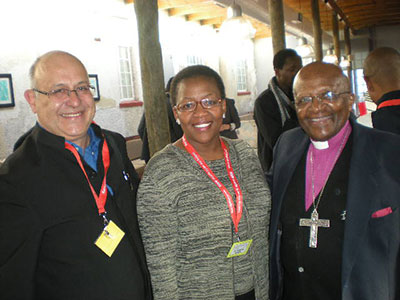
The second day of the meeting was on Robben Island and involved Arch-Bishop Emeritus Desmond Tutu and Michel Sidibe as the facilitators. There were a number of the commissioners there. Details of the commission can be found on www.hivpreventioncommission.com

Prime Circle: Easter 2011

This posting could be entitled ‘Pregnancy, Prime Circle, and Team Building’ as these are the three dominant themes of the past couple of weeks. Most of the Easter weekend has been spent working. I have finally emerged from a mass of administration and planning to resume writing my Swaziland book. ‘A Political Economy of Swaziland’ is what I have optimistically titled it. I am over half way through now and do need to get it to the publishers since it is at least 18 months late. But I have really enjoyed working on it. Swaziland is such an interesting and usual little country, and at the moment, there is a degree of political change which is exciting.

I went to Swaziland for a few days at the beginning of April. Apart from doing some additional book research this was to attend the first Waterford Governing Council (GC) meeting of the year. I have been on the GC since 1994 so have some institutional memory! In 2008, for the first time, since I joined, the GC was faced with having to make a decision around pregnancy. One of the female students, from a poor area, had fallen pregnant. We decided, probably wrongly, that the main concern was the baby. I say wrongly because as Governors our prime concern should always be the well-being of the school. We took a decision that the girl should be sent down for a year, but could return at the end of this. She did and is now a scholarship student at an internationally known university. Having set policy, the Headmaster then took the same decision in 2010 when he was faced with a second pregnancy. The same outcome was reported, the student is back at school and doing well.

At this GC we had a variation on the theme. A pregnant female student, but the father acknowledging his paternity, is also at the school. A policy decision had to be taken. What was most interesting for me is that while we can make a broad policy, we cannot cover every eventuality. What if the girl says she was made pregnant by a male student, but he refuses to acknowledge this? Given that he would face sanction this probably makes sense for him. Do we carry out a paternity test? What do we do if the girl says she was raped? It is clear that while there are in many instances there have to be rules, flexibility is necessary. Of course in other cases there should be no leniency, for example the school has a zero tolerance rule when it comes to drugs.

Back in Durban I have been very busy with work but found time to go to two gallery openings, one at theKwaZulu Natal Art Society Gallery. The main exhibitor was a botanical artist which I do not find terribly exciting. The second at Durban ArtSpace is a very unusual gallery in an industrial area of town next to the railway line.This was entitled wo.man and was way over my head. Most interesting though, I did not know a single person there although I did recognize one, he had been at the KZNA opening. Perhaps this is a little sad!

Cultural activities continued when I went to listen to ‘Prime Circle’ a South African band who described themselves as South Africa’s leading rock band http://www.primecircle.co.za This was at the Gateway shopping Center about 35 km from my flat. I find I drive slowly along the motorway, trying to treat the car with love and respect. It is after all nearly 20 years old now, bought new and registered in 1992. However as it has only done 130,000 km I think it is good for a few more years yet.

We have been looking at ways of building the HEARD staff into a more cohesive unit. Much as I hate the term, ‘team building’ is a good idea. So last Thursday we headed off for a team building experience. The decision was taken to go to cooking school for a half day. Fusion is not very far from our campus in Westville see and they have a great restaurant in Durban We were divided into three teams, and set to the task of cooking Thai style chicken breasts stuffed with various herbs and spices. For the vegetarians stuffed mushrooms were the option.

This slideshow requires JavaScript.

Each cooking station was allocated a student, described as a ‘cooking fairy’ to assist us. It was quite an experience. The key learning for me was that you need equipment and enthusiasm. The desert was banana pancakes skewers lightly brushed with a reduction of sugar and flavorings, including vanilla, and rolled in grated chocolate. A good time was had by all, and certainly I feel less intimidated by the thought of cooking now. To be fair the bulk of the work was done by one or two people on the team.

I am amused to look at my browser and see that I have two websites open one for Fusion and one a classic article by Sidney Kark on the ‘Social Pathology of Syphilis’ published in 1949. It identifies migration as one of the major drivers of sexually transmitted diseases in southern Africa.

This week I have twice been reminded of how nice it is to be fit and young, although it is possible to be young and not fit. I played squash with Jeremy Grest and his son Adam, who is in his early 20’s. Adam gets round the court without stopping, it was only guile that allowed me to win points and he beat me! On Sunday evening I went for a long run (in time rather than distance). Two of the children from the flats were playing by the gate.

“Are you going for a run”, asked one.
“Yes”, I replied.
“My brother has just gone”, he said. This brother being a lean lad of about 14.
“I’ll try to catch up with him”, I responded as I started my standard slow plod.
“He was running much faster than that”, said the boy disdainfully.

I ran up past St Augustine’s hospital to Ridge Road, and then down the bottom of the Pigeon Valley nature reserve. The monkey troop that live there were raiding across the street and looked at me with disbelief. From there to the Howard college campus, then back along what was Manning, and is now Lena Ahren’s, Road. It was the magical hour when the sun has a particular evening tint, and Durban was stunning. Interesting up the hill, security gets tighter, and the dogs bigger, more numerous and louder.

Films

Men who stare at Goats, we bought a DVD of this film a while ago. It was seriously damaged and so unwatchable, but this only became apparent about 40 minutes into it. I hired the DVD the other night and so have finally seen it. I really enjoyed it. It is just about credible that people could behave in this bizarre way in the interests of … what? It is the story of reporter in Iraq who meets Lyn Cassaday who claims he was part of the New Earth Army who employ paranormal powers. George Clooney stars and there is no love interest!

On The Road Again: March 2011

The train journey from London to Norwich is one I have done countless times. On the third Sunday in February I flew from Durban to London, spent Monday at the DFID office in Palace Street (the building actually overlooks Buckingham Palace), then headed for Norwich to spend a few days with the family. It was dark by the time we pulled into Norwich in the late afternoon, I had forgotten how early the night begins in February in the UK. Long summer evenings make up for this to some extent, but it was still a shock.

On Friday I went back to Heathrow to fly to Boston for an International AIDS Society Executive Committee meeting. The railway company advertised wireless access on the train and I decided to try it. It cost only £2.95, which seemed reasonable. The signal was excellent the whole way down, better than mobile phones which fade in mid-conversation! It is a pity the battery on my computer is not keeping a charge at the moment. It is really good to see technology that works well.

I wish the same could be said for Virgin Atlantic. They were flying a small Airbus on the route from Heathrow to Boston, and the only way to get computer power was to spend £50 for a special adapter. The cabin controller explained to me that Virgin had ‘incidents’ when passengers left their laptops on and there was overheating and fires (I think she meant potential fires). I said that my usual carriers KLM/AirFrance and South African Airways did not have this problem, and why was that? There was no sensible answer. I gave her my card and she assured me that the airline would write and explain. I am still waiting for the letter. It may, of course, be that they do actually send a letter and it has gone to Durban, but surely most people use e-mail.

In my few weeks in Norwich in February and March, there was evidence that spring had finally arrived. There were snowdrops and crocuses out in the gardens, looking very pretty, and the daffodils appeared by the time I got back from the second trip. I love the scattering of flowers across the lawn, looking like islands of colour. There is a small pond next to my office window, and this year there were probably four or five pairs of frogs busily laying their eggs in it. There was been a chorus of croaking, which I have not heard before in the UK. It has taken a few years for the frog population to build up to this level. I wonder if part of the causality may be that the cat is older and less likely to hunt them. The pond will be full of tadpoles in a few weeks, then the garden crawls with tiny frogs.

I was in Durban for about five weeks in January and February, although it is hard to believe that looking back. I did get to the beach a few times with my body board, and can confirm that I really don’t know what I am doing. In a 45 minute session I am lucky if I manage to catch one wave! It is time to get a few lessons; fortunately the former boyfriend of one of Rowan’s friends was the KwaZulu-Natal champion body boarder so I know where to go. Learning to surf (well body board) was one of my 50th birthday resolutions. The other two were to learn to fly and ball room dance. It is possible to be bad at body boarding and dancing and I am; flying is another matter.

I normally dread February in Durban, it can be so very hot and humid. This year was surprisingly clement, and although I used the air conditioners, it was not excessive. Towards the end of last year I noticed a small bird nesting in the unit that cools the lounge. It had to be cleaned and serviced before it worked. My decision was to wait until the chicks had fledged and departed. Fortunately the Berea Gym, http://www.fitnesscompany.co.za/FC_home.php which is where I go in Durban, attracts a range of people and my trainer recommended one to do the work. It was at my convenience and a reasonable rate, both hugely advantageous for me. There is now a new wire mesh in place so the birds will have to look for a new site next year, they have been given notice. There are definite advantages in belonging to a good gym that attracts a range of people, from professors (at least three I know) to artisans.

The highlight of relaxing time in Durban (and there was not all that much of this), was going to listen to Mango Grove http://www.mangogroove.co.za at the Botanic Gardens on Monday 14th February, a Valentine’s Day concert. I told the staff at HEARD that this was where I was going and that people were welcome to join me. There were not many takers! Why be surprised though, Valentine’s with the boss is not what people would immediately think of. It was a beautiful evening, not too hot fortunately and not raining, which is always a danger for events there. Sitting listening to great music of Africa with, as background sound, the piping of the tree frogs and the chirps of the fruit bats was a treat. The Gardens are an asset for the city, over 100 years old now.

An unexpected occurrence was the passenger window of my car falling into the door. This is one of the things that happens as the car ages. It is nearly 20 years old, but only has 120 000 kilometres on the clock. Another reason to be grateful for the weather is that the car’s air conditioning stopped working about five years ago. I was told that it was simply not worth getting it fixed, it would cost nearly as much as the car is worth. I don’t mind driving with the windows open though, an environmentally friendly, manual mode of cooling.

The team at HEARD is working really well. We have a large number of academic publications, which is one of the key metrics by which we are judged in a university setting. More than that, I believe that the work we are doing is influencing policy and even making a difference in people’s lives. The direction seems reasonably clear; we have a very good senior management team with Kay Govender having joined us from Psychology for two years as Research Director. Samuel Gormley has been there nearly a year now as the Operations Director. We even had good news, finally, on a grant that we ran for 10 years. The close-out accounting they produced suggested we needed to pay back about $40 000, our figures said we were due about $66 000. Having gone backwards and forwards our figures were finally accepted and this money will pay a salary for a year or more.

I hope that in the course of this year we will see a couple of staff graduate with PhDs, or at least submit them. There is a good chance that some can do this via the publications route. I need to find some time to sit with the CV’s and as we say in South Africa “make a plan”.

Having been in Boston for two cold days on the Sunday I went on to, even colder, Ottawa. Travelling is mostly fun and I am really lucky to be paid to do it. Leaving from Boston encapsulated the human condition with two vignettes. As I went up the escalator to the departure gate I looked back down to the arrivals area. There was a little tot of a girl, bundled up to the nines in a puffy pink coat, pulling her case which, standing up, would have been as tall as she was. She caught my eye, beamed at me and waved furiously. I wonder why? Then at the top of the top of the escalator were two airport staff, both Hispanic. He was weeping, red eyed and desperate; she was standing uncomfortably but clearly wanting to give solace. What was going on there? Airport stories are frustratingly fleeting. There was a US security officer who stood solemnly, watching the passengers who had passed through the screening. What was going though his mind, what a waste of a person. But perhaps not, it is a job and one of the real challenges we face in Southern Africa is employment creation.

From Ottawa I flew to Montréal and then to Geneva, a direct flight which was a blessing. I had the Sunday mostly free, found a gym, had a long workout but also did a great deal of work in the hotel room. I have been going to Geneva for a long time and have always found the hotels to be of a mediocre quality. This is one I had stayed in before, Hotel Rue des Alpes, and I have to say it is transformed. The rooms are comfortable, light and well furnished. Quite a change from the pokey, dark and expensive hotels I stayed in on previous visits.

I returned to the UK via Stansted airport on EasyJet. This was a complete shock; it is years since I was on a budget airline. The way costs are cut seems to be to reduce customer service to a minimum. I had my boarding card, it actually constituted the ticket. Arriving at the airport you are required to print your own baggage tag, not complicated for people who are used to doing this, but as a first timer I found it very stressful. When I get stressed I sweat, not an attractive sight at all.

The next step is to queue up and deliver your luggage to the check-in counter. As an EasyJet passenger you have no access to any lounges and once you board the plane there are no allocated seats. There was a trolley service but you pay for everything. The plane was about an hour late leaving and 30 minutes late getting in to Stansted and then there was a huge queue for the immigration control which I was not expecting. It is clear that budget travel has transformed the way people think about distances. My view is I would rather not travel at all if this is the way I have to do it. However this may be mediated by the fact that at the moment all my travel is paid for. I might have a different view in the future.

I was back in Norwich for a couple of days and we drove up to York for a night. The dog came with us; as did the dog food was in a rather nice Tupperware container. This was unfortunate because in the hotel in York I took a pinch of it and ate it thoughtfully, thinking it was muesli. I don’t know who was more offended, me or the dog. She looked at me with shock. Douglas had a day with a friend, and we went into Scarborough, a Victorian seaside town. It is really nice, and I observe that budget airlines and cheap travel mean that these resorts are battling to sustain themselves, a great pity. The town is nestled in a little hollow on the eastern coast in Yorkshire. There is a ruined castle sitting brooding on one of the headlands. There is a small harbour, which is used by fishing vessels and pleasure craft. The fishing boats ranged from tiny to trawlers with their own rubber ducks.

In mid-March I was invited to present at a briefing for the Africa All Party Parliamentary Group (AAPG) at the Houses of Parliament in London. The title was: ‘Swaziland: a kingdom in crisis? HIV AIDS, gender and rights’. This was a joint meeting between the AAPPG and the Royal African Society. The main speaker was Siphiwe Hlope, the founder and director of SWAPOL (Swazis for positive living). She is a powerful individual who spoke authoritatively and from the heart.

It is always amazing to go to the Parliament, the building is remarkable and to walk through the Great Hall where both Charles I and Guy Fawkes were tried and condemned gives one a sense of history. Today most people simply hurry through, oblivious to the story that the stones, have to tell. My brief intervention was to say: to understand the HIV epidemic in Swaziland, it is important to know the history of the kingdom. I believe, and this is what I am trying to write in my book, that colonialism, alienation of the land, capitalism, apartheid, gender relations, the monarchy and migration have all played a critical role in allowing HIV to get a foothold in the country and to spread so rapidly. If we understand the history we may be able to act.

I had a couple of weeks in the UK and then headed back to southern Africa. I will get to Swaziland for a Waterford Governing Council meeting and HEARD is hosting a number of conferences and trainings in Durban. One is on systematic reviewing; it is something I am very keen to attend as it seems a methodology that we can use in our research. It is a way of getting one’s head around the big picture. We will have someone from the South African Medical Research Council come up to Durban and teach it to over two days. Somehow I have to get going on the Swaziland book and finish it, it is long overdue. So let me end this update here.

Films

RED is the story of ex-CIA agents being hunted down and killed because of an event they witnessed or were involved in decades earlier. It has an all star caste which included Helen Mirran and was great fun. I regard it as perfect airplane viewing.

The American by contrast was excellently made and full of suspense. It is the story of a hit man hiding out in a picturesque Italian village. The characters are well developed and sympathetically drawn. There were only three main characters; the hit man, a prostitute and a priest. The star is George Clooney, which is why I choose it in the first place. This was shown on the Virgin flight and all the entertainment was on a cycle which meant that it was important to be sure that you wanted to watch the film when it started! The ending was quite unexpected and moving.

Black Swan. This is a disturbing film. It is the story of a ballet dancer pushed to the limit. For me the big question was:’to what extent did she have agency’? Was she a helpless pawn in a system that takes people in, uses them, and spits them out or was this what she wanted? What was her mother’s role in this? The director came across as a total shit, but maybe that is the way you have to be if you are leading a company and have to turn out commercially successful productions. I am glad I saw it though and will now try to see ‘The King’s Speech’ which is what I have been looking for on the flights I have taken, but it has not been on.

Love and Other Drugs is a the only film not seen on a plane. It is a 2010 comedy based on the non-fiction book Hard Sell: The Evolution of a Viagra Salesman. The story is of a young man who becomes a medical representative selling a Viagra. He meets and beds the patient of a doctor he visits, she is suffering from Parkinson’s disease. The film describes how they negotiate their relationship and is done sensitively. It is typical aeroplane viewing, but I went to see it in a cinema.

Slow Durban: January 2011

In front of my flat there is a jacaranda tree. Since I am on the third floor I look straight out into the upper branches. The first blossoms begin to appear in October. By November the tree is covered with purple flowers. Gradually the green leaves take over, and today, in early February, there are only two sprays of flowers. The rest of the tree is a verdant green. The birds enjoy it, constantly flitting in between the branches. I have slightly mixed feelings about the birds. I am woken up by the dawn chorus, which begins at about 04:30. By five o’clock it is light. I generally get up soon after this and make my breakfast.

For the last week I have been at my office by 06:30. This has its advantages. One is that the world seems clean and bright at that time of day. Driving up through the bush and nature reserve surrounding the University the other morning I saw the largest gathering of monkeys I have ever seen in Durban. I suspect that a number of troops had joined together, because with all the rain we’ve had food must be abundant. A few minutes later there were two mongeese next to the road.

I have even seen a legavaan. As an aside I note that my computer does not like the word mongeese. What is the plural of a mongoose? Mongeese or mongooses? Nor does it recognize legavaan (a species of monitor lizard) the link is: http://en.wikipedia.org/wiki/Varanus_albigularis.

I got back to Durban in the middle of January, having spent four nights in Johannesburg at a Global Poverty Dialogue. This was organised by the Brooks World Poverty Institute of Manchester University. The out of town delegates stayed at Melrose Arch in a very nice hotel, and the meeting was in Turbine Hall in downtown Johannesburg. This was once the city power station, coal fired and huge. It has been turned into a spectacular and historical conference venue and it was great fine to be there, although having to board buses and go backwards and forwards in rush hour traffic was not so much fun.

I have rather enjoyed Durban. January, February and March can be very difficult months as it is often hot and humid. So far, touch wood, this has not been the case. We’ve had a fair amount of rain but also there have been cool breezes blowing. This was just as well as the air conditioner in the lounge was not working. I noticed a small bird nesting in it just before I left last year. When I switched it on it just blew hot air. Today one of the chaps from the gym came up and pulled a mass of twigs from the inside of the unit and gave it a service, so room is cool and it did not cost me a fortune. I had not switched it last year on as I did not want to disturb the fledglings.

This past month has been marked by two sad events, the deaths of two people who were very much part of our Durban experience. The first was Dinah, who lived in the servant’s quarters at Manor Drive. She had been there for a long time when we bought the house and we allowed her to stay there, as she worked in the neighbourhood. It was a real eye-opener to see how people were treated under the apartheid regime. The room had no ceiling, only one window, no electricity, and no hot water. The walls were of a thinner brick than was used in the main houses. We put in a ceiling, a second window, and ran a power supply to the khaya, as these little houses were called. Dinah retired about six years ago and moved back to her home in the Transkei.

She was in regular touch with her last employer. Apparently he phoned her couple of weeks ago. She asked after his ancient parents. He replied, “they are very tired”.
She said, “yes I am tired too”.

The following evening Dinah went to bed and simply did not wake up. This is not a bad way to go.

By contrast the death of my past time domestic helper has been difficult for everyone. About three years ago she got TB, which was I learnt, because she was HIV-infected. Fortunately in South Africa people with TB and HIV go on to antiretroviral therapy earlier, and although her CD4 count was about 350 she got the medication. Unfortunately some of the drugs have side effects and she was one of the unfortunate few who experience this. In particular a drug called d4t causes difficulty for the peripheral nervous system and makes it very difficult to walk. This affected her. It was clear that she would have to stop working and her other employer and I were discussing what pension arrangements we could make.

Before Christmas she had a bout of flu and never really recovered. She was bed ridden and extremely unwell. Early in the new year the person one whose property she lived took her to a nearby private hospital where they diagnosed dysentery, TB and pneumonia. She was relocated into a government hospital and a few weeks ago transferred to a TB hospital for recuperation. Unfortunately she did not recover. Her daughters were able to visit her the day she died and learnt that the plan was to send her back to the main hospital. She was just not doing well.

She was one of those powerful women who held the family together. She got her two grandsons into good local school in Manor Gardens and was very ambitious for the grandchildren but less patients with her two daughters. I was appalled to learn that her eldest grandson, having had the benefit of an excellent primary education, is currently not in school because his parents have been unable to find a place for him. Had she been well enough she would never have allowed this to happen. While the proximate cause of death may have been TB, I suspect she was simply exhausted. She was about 54 years old, two decades younger than Dinah. You will have noticed I have not written her name, the stigma surrounding HIV means I am very reluctant to identify her.

I had intended to spend my first Saturday of February working. This did not happen. I went to the gym at eight o’clock, and met the person who was to fix my air conditioner. He came to the flat after he had trained, worked out that is – he knew what he was doing with the units. This meant I only left for my office at the university at about 11.00. I discovered that the air-conditioner there was not switched on, and it was far too hot to concentrate.

I came back to the flat and decided to go to the beach with my body board. On the way there I went to the voter registration station. At the moment the government has a campaign to register voters and since I have moved I needed to get on the electoral roll. There are local government elections coming up. This registration was surprisingly painless: an interesting combination of high and low technology. The form was filled in with a pen. Then the identity documents of both the person registering me and mine were scanned by a hand held device. The machine spits out a piece of paper and this is glued (prit) in the ID book, to prove that I am registered and have the right to vote.

I headed for the beach and discovered that there was no one else even thinking about going into the waves. The sea was incredibly choppy and unfriendly. Not a great end to the day.

Books

Malla Nunn, Let the Dead Lie, Simon and Schuster, 2010, 382 pages.

This author lives in Australia, was born in Swaziland, and writes about crime in 1950s South Africa. This is her second book, the first was set in an area just north of Swaziland. The story in this book takes place in Durban. Many of the areas are familiar to me. The key character is working undercover in Durban’s docks and witnesses a murder. The story is about how he solves the crime. The book is set at a time when the apartheid laws are just being introduced and the classification of Emmanuel Cooper, the hero, is ‘coloured’, although at the end it seems he regains his status as a ‘white’ South African. Nunn is an excellent author, she astutely observes the tensions of the 1950s, the rise of the racist regime, and the complexities of relationships in this setting. I look forward to her next book.

David Mitchell, The Thousand Autumns of Jacob de Zoet, Hodder and Stoughton, 2010, 469 pages.

This is a complex and fascinating book. It is set in Japan from 1799 to 1817. It is the story of the Dutch trading center and the interactions between the Dutch and Japanese men and women. The heroes are Jacob, and the woman he falls in love with, Orito Aibagawa. In the course of the book they meet perhaps half a dozen times before she is sent to a monastic order. Mitchell has clearly done a great deal of homework and his depiction of life in Japan in the 1800s is deeply fascinating. The story is initially slow but engrossing.

Looking Back At 2010: December 2010

At the end of the year it is a time to reflect on some of the highlights and lowlights. I have been spending time with Douglas looking at his AS level psychology book, which has been fascinating. On the basis of that I think events can be divided into personal, professional, and ecological (this last meaning what went on around).

The World Cup in South Africa was an absolutely fantastic experience and has to be one of the best things that happened in 2010. I was fortunate enough to see four games. The first was the USA versus UK in Rustenburg. I was invited by the Corporate Social Responsibility people from South African Breweries. It was a great start, one of the smaller stadia, but a fantastic atmosphere. We had an opportunity to look at some of the SAB projects in the area, which was deeply interesting and inspiring. There are communities that are ‘making it’ and it does not take much.

The other three games were all at Durban’s new, Moses Madiba stadium. Over the years we had watched this stadium being constructed, between the Berea Ridge and the ocean, and wondered if it would be finished on time. Indeed that was a theme across the entire country: could we get everything completed? The fact is that we did it! All the infrastructure was delivered on, or even well ahead of, schedule.

I will admit to being prejudiced. I think that our new airport and stadium are the best. The stadium’s the sweeping white lines, the arch, and the majestic and imposing presence all make it quite wonderful. And then, of course, going to watch the games in it was also special. We had been warned that there might be problems in finding places to park, but I was never more than a 35 minute walk away. The match I enjoyed most was the Portugal:Brazil game when I met up with my old school friends David Crush and Owen Sharp. None of the games I saw were particularly inspiring from a football point of view, but all were great fun and the atmosphere amazing.

The airport is quite magnificent and is designed to last for many decades. Although means an extra 20 minutes on the road, I don’t mind. It means that in the course of the next few years we should start seeing direct flights from Durban to European cities. To be able to fly direct without the annoying change in Johannesburg will be convenient.

South Africa came together around this World Cup. We showed that we were a friendly, competent and hospitable nation. Almost everything worked, almost all the time and there was comparatively little crime. The press reported that “only one tourist had been seriously injured, he had been shot in the arm”. But, as though it somehow made it all right: “he had not been in the country for the World Cup”.

One of my personal highlights was having a flying lesson in Swaziland. I have now flown four different types of aircraft, from three airports, with four different instructors. The flight in Swaziland was fantastic for many reasons. The first has to be the beautiful landscape. The countryside was at its green and lush. Second, flying amidst the mountains. The country round Norwich, where I have had most of my lessons, is very flat. It is here that, during the second world war, all the major airfields and bomber stations were constructed. The general flying area in Durban is also flat. In Swaziland if you take off from the airport and turn left, it only takes about five minutes before one is flying in mountains. It was such a thrill to fly with down a valley seeing the mountains on either side. Third was flying over areas that I know well. We flew up to Mbabane and over Waterford school, which we circled twice. I have always wanted to fly over the country and so this was my chance. Finally there are no landing fees at Matsapha airport, so while the cost of the lesson is the same, going and doing circuits will be cheaper. It is something I intend to do next time I am there.

I have completed my list of flights taken during 2010 and I do not seem to have been on the more scheduled flights than usual. Travelling on the new Airbus A380 was a thrill though. I had not expected to be on it, and only realised when, on a rerouted journey from New York to Johannesburg I ended up on the Air France plane from Paris. I asked the steward where my seat was and he said that he would have to look at the map!

Meanwhile back in Durban at HEARD we have had an extremely successful year. I guess that one of the measures is the number of publications produced from the unit. These have shot up and it all the staff are productive. Although this is being led by one or two individuals this is okay. We ended the year with renewed funding for HEARD, which will take us through the next five years, which is really encouraging. Not as much money as before, but that too is a good thing as it means that the staff will have to write grants which are an important part of being a researcher.

At the end of the year we needed to restructure. This meant some downsizing and realignment of activities. Fortunately our new operations director, Samuel Gormley, has shown himself to be extremely able over the past six months. He joined us from Tafta, an old age Association which provides a considerable amount of residential accommodation for the elderly in Durban. He does not know a great deal about HIV and AIDS, although he is learning, but this is not a problem because we did not appoint on the basis of such knowledge. At the very end of 2010 we have made a further four new appointments and I believe that they will give the organization a wide range of strengths.

In Norwich the house and garden continue to give pleasure. My writing is most done here and it is a very conducive environment. Douglas turned 16 and completed his O’ levels. These are the first major public exams a child has to sit in the UK. I had not appreciated that they can also be the only exams in the public sector. Once you have turned 16 education becomes a privilege and not a right. Douglas did us proud. He got the passes that enabled him continue on to A levels. He has registered to do English, psychology, and history. Decades ago I did history, English, and geography A levels, so am pleased by his choice. He and I went to Belgium to look at the First World War battlefields and cemeteries, it was deeply moving and quite bonding experience. My father ran away from school, aged 15 or 16, to join up and serve in the trenches in this war so it was also something of a pilgrimage for me.

Rowan has a new job with an excellent book chain called Waterstones and so gave up her other shop job. She was delighted by this move and is thoroughly enjoying being surrounded by books. This gave rise to a moment which I am still savouring: she sent me a text saying, “Dad I have just sold a copy of your book to a customer”. I thought this was very cool indeed. She will complete her degree next year, before she turns 20 and some of her writing is exceptional.

I am left with just a paragraph to mention the low points of the year. There were not many, and tended to revolve round aircraft not leaving on time, loosing key members of staff, and the frustration of waiting for people to respond to letters and requests. Ironically we have faced problems with two of the organisations I am involved with in a voluntary, or service capacity. In both cases these issues were beyond our control. One was around exchange rates and the other about incompatible staff members. Both required careful thought and input to steady the ship and ensure there was certainty going forward.

In summary 2010 was a good year. I know I am a very fortunate person. I look forward to 2011 and will continue to put occasional posts on to my website along with photographs.

Flying In Swaziland And Boisterous Thunderstorms: November 2010

I have been flying in Swaziland. What a wonderful experience. There is a picture on website. This came after a week of intense travel. I had been in Lusaka for a reference group meeting, then flew down to Johannesburg for a night and spoke at a conference. On the Friday afternoon I was on the Airlink plane to Matsapha. Traveling, and unusually, as a passenger was Derek Harrington, who I had taught St Marks School in 1975. He flies for Airlink so I expect to see him in the cockpit. He had been in Johannesburg to study for his captaincy, and he passed. Of all the people I taught he is the one I envy most: living in Swaziland and flying.

I have been flying in Swaziland. What a wonderful experience. There is a picture on website. This came after a week of intense travel. I had been in Lusaka for a reference group meeting, then flew down to Johannesburg for a night and spoke at a conference. On the Friday afternoon I was on the Airlink plane to Matsapha. Traveling, and unusually, as a passenger was Derek Harrington, who I had taught St Marks School in 1975. He flies for Airlink so I expect to see him in the cockpit. He had been in Johannesburg to study for his captaincy, and he passed. Of all the people I taught he is the one I envy most: living in Swaziland and flying.

My schedule had me at a Waterford school Governing Council meeting all day on Saturday, but Sunday was free. I had been wondering if there was any chance of flying. Seeing Derek was perfect as I asked him if there was a flying school. He pointed across the runway to a Cessna 172 belonging to the Swaziland Aeronautical Academy and suggested I go and talk to the owner Mike Rantf.

I had to wait as Mike was just doing a circuit of the airfield. This gave me a chance to meet his two trainee instructors. Both are females and as with all young instructors, are trying to build their hours. They seemed terribly young. I was glad, in the end, that Mike gave me the lesson. His pupils said he is one of the best teachers in the region.

It is clear that learning in Swaziland has many advantages. The airport does not charge a landing fee for student pilots, there is virtually no traffic, and it is a nice long runway. Mike is a big jovial man. In addition to his captain’s bars he wears the insignia of the Swaziland Defense Force and explained that he does instruction for them and also flies helicopters. Amazing. He was quite happy to arrange the lesson.

So on Sunday morning I went flying. I was at the school by eight fifteen and, after the briefing we took off at about nine. It was amazing. This is the fourth airplane I have flown, both the Cessna and the Piper two seaters are insubstantial; the four seaters are heavier and possibly easier to fly. The controls are different between the Piper and the Cessna: in the former it is a lever one pushes forward and back; on the later it is a knob sticking out of the dashboard. All the principles are the same though.

Once we had taxied down to the end of the runway Mike gave me instructions on the takeoff. Basically at 55 knots I pulled back and off we went. Once airborne he told me to fly along the runway for a few hundred meters to build airspeed and then we were up and off. It was a stunningly beautiful day, the air was clear, the countryside was green, and one could see for miles.

I have now flown from three different airfields and this was the most fantastic experience. It is the first time I have flown in hills. We flew up Ezulwini Valley to Mbabane, then circled Waterford school a couple of times. This was funny because next day, when I saw the headmaster, he asked: ‘where you in that plane that circled us today’. I had to admit that it was me.

From there we flew over the house I grew up in and then down at Pine Valley. How amazing to be flying in a valley with mountains on either side. At the end of the valley we turned back towards the airport flying between and over the mountains. At one point we cleared a ridge by less than 100 feet it was an astounding feeling. Mike also pointed out dagga plantation which was hidden away in a side of valley, quite inaccessible. I think however they will be having a visit from the police helicopter.

Once we had returned to the airport we came in and did one touch and go and then a proper landing. I could have gone on flying for hours, but the plane had to go to Johannesburg for its service and the pilots wanted to get away before the thunder clouds build up too much. This was a sensible point of view because there had been some amazing thunderstorms.

All is well at Waterford, unfortunately we had to begin the Saturday by convening a Governing Council sub-committee to hear an appeal against the expulsion of one of our students. When students are expelled they have the right to appeal to the GC and a number of us hear the appeal. There are some few rules which are strictly adhered to on the campus. Most important is the zero tolerance for drugs policy. If students feel they may be developing a problem they are allowed to enter a contract with the school to try to avoid this. However if they are caught they are out. We do not allow use of alcohol but it is possible to get a warning for a first offense. The third area where there have been recent expulsions is around students having sexual relations on campus. Of course we operate in a complex world and we have to be realistic. There are condoms available on the campus but we should not catch students using them.

The storms have been fierce. On Friday I drove from the airport to meet my colleague Derek von Wissell the head of NERCHA in the Malkerns Valley at the restaurant Marandelas which is next to the amazing venueHouse on Fire. We sat out on the grass overlooking the pineapple fields and watched a storm brewing in the hills towards Hlatikulu. It started to thunder and lightning at the restaurant and we left hurriedly.

I drove up towards the hotel with the storm chasing me up the valley. The dark clouds were roiling and writhing behind me. I got to the hotel, checked in and got to my room just before the storm broke. It was incredibly dramatic. Thunder, lightning and a cloudburst of rain. On Sunday when I went to collect Given and Ilaria from the airport there were storms all around, and I was surprised to see the plane had arrived. Before we went to the restaurant at the hotel I dashed to my room to unplug my computer. Not a good idea to leave it plugged in as fried computers are common in thunderstorms

I desperately wanted to get some exercise, and on Sunday after flying decided to go to the gym. The one at theMountain Inn, where I always stay, is pathetic. One bicycle, one treadmill and a few weights. It is worth going to this website though because it has a view on the valley that I flew up and on the left-hand side are the mountains we flew over.

I decided to go down the hill to the Royal Swazi spa. It too was disappointing: three pre-treadmills, two bicycles and some weights stop. However I spent a happy hour cycling and reading and then went up the hill to watch the students doing their end of year dance show. This was billed as ‘short and sweet’, but lasted approximately an hour and 15 minutes.

There is no doubt that this weekend was amazing and I feel very lucky to have had it. Flying in mountains and with a different instructor was most interesting and has been quite inspiring. I think my next posting will only be in the New Year, so if you are looking at this before then I send greetings for the holiday period.

My Australian Experience: October 2010

I have been invited to speak at the Australasian AIDS conference on a number of occasions. This year, the invitation came early, there were no clashes in my diary, and I was able to plan a trip. As a way of reflecting on and sharing the experience, I have written this ‘blog’, the formal trip report is extremely tedious. I’ve tried to capture some of the highlights. This posting cannot hope to capture all that went on, but let me give it a try. There are three broad themes: people, places, and miscellaneous snippets.

Australia is a long way from anywhere. I decided if I were going such a great distance, then I’d at least plan a week in Melbourne so that I could take in more than just the conference venue in Sydney. The jet lag was appalling (both ways). I did the right thing by spending the Monday after I arrived just walking around the city: across the Darling Harbour Bridge; to the Sydney Opera House; through the magnificent Botanic Gardens to Kings Cross (the red light area according the novels I have read, in particular those of Jon Cleary who died in July this year; and back to the hotel. I could feel blisters starting to develop, so I took the monorail for the last couple of kilometres: bitter experience is this is not a good way to start a trip. People are right when they say that Sydney is beautiful. This was definitely one of the times when I regretted not carrying a camera! It is a spectacular, clean, liveable city. Interestingly, the tap water in both cities was incredibly tasty and lacked the chlorine that we get in most of Africa.

I packed as though I was going to a Durban climate, so found myself unprepared for the cool weather. In Melbourne, it was downright chilly in the evening! The lightweight African shirt had only one outing, as I was determined to wear it for my keynote speech. I was generally surprised by the number of men wearing ties and suits, even at the conference. There seems to be an innate conservatism in Australian businessmen and professionals, although my evidence is not up to ‘Randomised Control Trial’ standard.

Everyone living in Australia will inevitably face the distance issue. This challenge is related to not only the physical demands of getting anywhere, but also to the major time difference for overseas family and colleagues. People in Europe, South Africa and the USA are asleep when you want to talk to them! When I was contemplating a position in Melbourne, one of the people on the interview panel gave me some sound advice: “If you come here, you need to commit to Australia.” I also heard the professional scene described not as ‘big fish in a small pond’ but as ‘minnows in a tear’-a delightful metaphor. One Australianism which amused me was ‘fair suck of the saveloy.’ Saveloy is a type of sausage and the phrase itself meaning equity or possibly redistribution.

I stayed in three hotels and no less than five rooms over the two weeks. The conference hotel in Sydney was at Darling Harbour, a touristy part of the city with restaurants and gift shops. Think Victoria and Albert Waterfront in Cape Town and you will have the picture. I ate there a number of times and the meals varied from outstanding to quite ghastly. The hotel was a reasonable Novotel, but, and this was my experience across the country, the window did not open. What is it with modern hotels and their objection to fresh air?

In Melbourne I stayed in the north of the city and opposite the Royal Melbourne Children’s hospital, just up the road from the Women’s and General Hospitals. This was a really bad hotel. The design was Soviet-a soul-less block of a building with purple patterned carpet. I stayed in three rooms during my six nights there. The first had a faint odour of talcum powder and faeces, but the window opened a bit so I thought it would be ok. The next morning I had to tell the staff that it was too noisy. It overlooked a major road which had a tram track down the middle! The combination of the rattle of trams, numerous ambulances (hardly surprising given the location), and boy racers in souped up cars and motorbikes made it impossible to sleep. They moved me to a room facing the inside of the gulag. I gave up my bath in exchange for a shower that produced a trickle of water, which changed temperature whenever anyone flushed a toilet in the building – or perhaps even in the neighbourhood.

The talcum powder smell persisted and indeed seemed to permeate the pillows. I understood the reason for this on the Monday when, I saw for the first time, the coach. This hotel was the destination for coach tours for elderly people, and of course women predominate in the cohort. They tottered along the corridors and down the stairs in clouds of powder. Each day a different group, but the same odours, halos of permed hair, and frailty.

I was ok with the hotel, it was convenient for most of the meetings I was attending and just ten minutes away from a nice little gym in a vibrant neighbourhood. I managed to train a good few times, and really enjoyed the jog to the gym. The houses were typical for Melbourne, row or terraced houses with wonderful wrought iron on the porches; very similar to parts of Pietermaritzburg, which makes sense since it was the same era. What is different though, from the colonial periods, is the scale. Durban is just one city; Melbourne and Sydney were many municipalities, each with its own town hall, post office and centre. There is far more variety.

It was great to know so many people in another otherwise foreign city. On the Saturday evening Kate Taylor and her fiancé, Rod, took me out for a Thai dinner and then to a jazz club. Sadly we ended before the music did. They also invited me to dinner in their house (with her mother and father), so I got to see the inside of a typical central Melbourne house. It does smack of South African colonial architecture. The space (and probably building material) allowed them to build single story brick terraced homes, but the need to get to work restricted the sprawl and meant that the old suburbs radiate out along the tram tracks. The new suburbs are typical of any city in the (warm) western world, they sprawl for kilometres along the freeways and lack charm, although the good rains made it verdantly green.

On my last day I got back to the hotel to discover they had, unilaterally, without telling me, changed my room. I was furious because I had unpacked everything, and my sweaty gym kit had been festering on the floor for the previous two days. This had been put, with all my clean clothes, into my case, which was then zipped shut and left in the room. Of course, it meant everything smelt faintly of ammonia. Fortunately the hotel had a do-it-yourself washing machine. The receptionist on duty did not like confrontation so we had to escalate up to the duty manager. I pointed out that they had seen me every day and that I was willing to move, but would have wanted to pack my suitcase myself. The proposed new room was facing the road and the trams, so we negotiated yet another one, even smaller, and still no bath, but the shower actually worked really well! In the end they did not charge for one night’s accommodation, which is why I have not named them (but if you read this you know who you are).

I went to Sydney on Friday to avoid a really early start on Saturday. This stay was in an ‘apartment’ hotel, which meant no food. They sold ‘breakfast packs,’ two chocolate biscuits, cartons of long life milk, cereal, and fruit salad. However to get a bite to eat I had to walk up to a little row of shops. The area was Bantry Bay municipality and it was clearly a working class area. There were food outlets: pizza, Chinese and Thai take-aways and kebab shops.

The worst meal I had was so-called Lebanese, but it owed more to grease than any other national cuisine. This was when Zahed and Shamim Cachalia, who had been a year below me at Waterford School in Swaziland and I arranged to meet for a drink and then decided on the spur of the moment to get supper. Zahed works for ABC TV, for which I had a four minute and thirty two second spot (on ABC news 24). Looking at it again I find myself asking am I really that fat? But the powder really made me look good; yes powder has its place! I also did a radio show with other guests for Late Night Live with an amazing presenter called Phillip Adams-he really had done his homework and asked a series of very sensible questions. I also mentioned I like the sea and surfing and had to clarify in the discussion that I did not mean ‘standing-up-on-a-board’ surfing but ‘lying-on-a-body-board’ surfing.

A week later in Melbourne, I encountered another old friend, Alan Herman, from Swaziland days. He was a paramedic for many years, and now runs his own business and is a pastor. It was really good (and astonishing) to catch up with people I said goodbye to 35 years ago. Would I have recognised them? Probably, and we certainly did not run short of conversation.

It was clear that Waterford was a defining moment in our lives. I was sent there because it was our local school. The Herman family fled Cape Town and washed up in Mbabane where the dad was taken on to teach music, while the mum worked as a cook at the school. They were political exiles without papers. Shamim had been sent to Waterford by her Moslem parents as one of the very few girls to be admitted. She was hundreds of miles from home.

There are so many stories that need to be told about the circumstances under which students attended at Waterford. I was not really aware of the backgrounds of many of the kids and their parents. Mind you it emerged as we talked this lack of awareness was not unique to me. With few exceptions, most of us were insulated and isolated as students. All of it rings as drastically different from today’s world of instant communications.

Overall, the travel was quite exhausting, but I was in business class – using airmiles! I would hate to have to do it in economy. I voyeuristically walked to the back of the plane and there were quite a few empty seats. It would really annoy me if I had paid for a premium economy seat and then discovered that in the back I could lie across three seats. On the flight back to Johannesburg there was a fair amount of turbulence on the way out of Sydney and the purser made a unique announcement:
“Would all passengers please make sure their seatbelts are on, and their children are safely stowed”… [a pause and an embarrassed giggle], “I mean secured.”

The trip was, from my point of view, very successful. I gave five talks and took part in a number of other events, including a really fun debate at the main conference. The debate centered on whether testing and treating was a viable option for ‘our region’. I went first for our team, which meant defining some of the positions. I think we won with a convincing swing because we had actually talked it through and prepared our presentations. I visited four universities in the two cities and walked mile and miles.

Would I, could I live in Australia? It is a hugely attractive country and it works. The informality grates a bit. I was surprised to have the hotel receptionist to glance at my booking and say: “Hello Alan, how are you doing?” I will be thinking about it for some time to come. The next posting will try to capture some more of my processed thought about the country. Because I was spending so much time travelling I have quite a number of books and films to review as I have done below.

Films 

Greenburg.
I decided to watch this on the way to Sydney because I rather like Ben Stiller. It is the story of a carpenter who moves into his brother’s home on the west coast of the USA to look after the house while the family are on holiday. I think it is set in Los Angeles. Stiller’s character has had a mental breakdown and this story is about him falling in love. I watched it most of the way through and was not impressed. So as with books, I skipped to the end and still did not find it appealing.

Kick-ass.

I chose this film because it had Nicholas Cage as one of the leads. It is the story of a teenager who decides to become a super hero but with no special powers. It was a great action comedy and I really enjoyed it. Good escapism.

Books

Sue Monk Kidd, The Secret Life of Bees, Penguin, 2002, Harmondsworth, 302 pages. 

The story is set in a Southern state in 1964 at the time of the beginning of the civil rights movement. It tells of a young girl who runs away from her father with her African American nanny. They find the women who took in her mother a generation previously. The household comprises August the matriarch, and her sisters, June and May. May is somewhat disturbed, and commits suicide in the course of the story. The title of the book is based on the women’s jobs as bee keepers and honey makers. The theme of bees and how they operate carries throughout. It is a wonderfully observed book about powerful women and is well worth reading. I was quite surprised to discover that the book was first published in 2002, as it only really hit airport bookshops recently, and I became aware of it. I bought it from a second-hand bookshop.

Dave Warner, Exxxpresso, Picador, 2000, Sydney 376 pages. 

In the same a second-hand bookshop I asked for any good Australian crime writing and this was recommended to me by the owner. It is the story of a man who is released from prison and decides to go in to the cafe business, making and selling coffee. The storyline is extremely complicated but it is a rollicking good book. It is set in western Australia between Perth and Kalgoorie; the characters spend a considerable amount of time driving the highway between the two cities. A good read and I shall look for other books by the same author.

T. C. Boyle, The Women, Penguin, New York, 2009, 451 pages. 

Frank Lloyd Wright is one of the best architects of the 20th century. Many years ago I was brought to look at some of the buildings he designed in Chicago and was very taken with them. Of course, as with many people of his time, he designed more than buildings. This is a work of fiction but is based on facts surrounding the three main women who shared his life and were his muses. He seems to have lived a completely chaotic life with rocky finances and a series of lovers, one of whom was quite clearly deranged. The book purports to be written by one of his Japanese pupils/apprentices who observes the scene. The only minor failing of the novel is that it does not take us into Lloyd Wright’s head as well as it portrays the women’s perceptions. It is quite hard to read, but well worth persisting.

Gill Schierhout, The Shape of Him, Vintage Books, London, 2009, 210 pages.
As is often the case with reading a book written by someone you know, it was a pleasure to read Gill’s work. It was not however what I expected. The story is of a middle-aged woman, Sarah, who is making a living in South Africa by managing a boarding house. She spends most of her time reflecting on the past including her love affair with a diamond digger. He has what seems like Huntington’s disease, a progressive genetic neurological disorder, and is hospitalised during the book. It seems as though he has a daughter and that this child is sent to Sarah who proceeds to look after her. A twist in the tale is when Sarah has an affair with an Indian textile factory manager called Hafferjee. The book is set in Cape Town, some of the small mining towns of the Transvaal, and the diamond diggings. It is beautifully observed both from the point of view of scenery and characters, and was quite thought provoking.

Imran Coovadia, High Low In-between, Umuzi, Roggebaai, 2009, 268 pages. 

There are a small number of Durban novels that I consider to be excellent for capturing the nuances of the city. There are others which don’t – I found it impossible to read Sally Anne Clarkes ‘Small Moving Parts’ even though it is set in Umbilo, a neighbourhood I know well. I have really enjoyed Barbara Trapido’s books – Frankie and Stankie and Sex and Stravinsky. Coovadia tells the story from the point of view of an Indian photographer who has lived outside the country for many years. He returns for his father’s funeral. It is initially believed that his father committed suicide but transpires that he was murdered by a colleague. Set against the Indian background and in the medical school and hospital of Durban, this is partly based on the real events of kidneys being sold and transplanted in the city (from poor Brazilians to rich Israelis). It is gripping. Most characters are believable and his writing about AIDS and race relations in South Africa is accurate and perceptive. I savoured the last few chapters, and did not want it to end.

Dan Ariely, Predictably Irrational, Harper Perennial, New York, 2010, 349 pages. 

This book is of a similar genre to those of Malcolm Gladwell and Nicolas Taleb. It is thought provoking but easily readable. The author has two Ph.Ds-one in cognitive psychology and the other in business administration. In this book he looks at how and why we make decisions which so often seem irrational. Examples of chapters include: ‘The cost of social norms: why we are happy to do things but not when we are paid to do them’; ‘The cycle of distrust: why we don’t believe what marketers tell us’, and ‘The effect of expectations: why the mind gets what it expects’. It is worth reading, probably best with a pen in one’s hand to pick up the key points.

ABC News Australia Interview

ABC News Australia Interview

I was a speaker and chaired a session at this year’s Australasian HIV/AIDS Conference which was held from 20-22 October in Sydney. ABC News (Australia) interviewed me and I spoke about the epidemic in sub-saharan Africa.
I will be in Melbourne next week where I will present as various universities including the University of Melbourne and La Trobe University.

To read more about the conference, click here.