Christmas 2011

The end of 2011 was something of a blur. I got to the UK from Boston on 4 December, landing in London, and taking the train up to Norwich. Because the flight from Boston to London is so short I had not bothered to try sleep. I was quite lucky because there were no major delays on the underground or the mainline trains, although there was a commuter train to Ipswich instead of the usual comfortable Inter-city carriages. Normally on Sundays the engineering work is carried out, and in the worst case, instead of trains, there are buses.

I had barely unpacked my bag when I repacked (a smaller bag though), to travel up to Glasgow for an ‘away day’ with the team at the Department for International Development (DFID). This was great fun and, as always, I learnt a lot deal from everyone, and hope I was able to contribute.

Having travelled up to Glasgow with colleagues on the train from Euston, I had to return to Norwich via London. The day I travelled saw gale force winds and flooding in Scotland and the North West of England. The train was three and a half hours late arriving in London and there were times when we were progressing at just five miles an hour. An interesting psychological twist is that to be moving forward, even very slowly, gives the impression of progress, and is better than standing still. It also gave us plenty of time to look at the muddy rivers in full spate, the extensive stretches of water where they had burst their banks and the sodden and deserted countryside.

Because we were so late into London I had to get a peak time train up to Norwich and I did not have a ticket for this. It is much more expensive to travel at this time. I was so impressed when the people from the train company (Virgin Trains, and given my moan in my last posting about the airline, it is nice to be able to say something nice about a Virgin company), simply stamped the back of my ticket at Euston. The conductor on the train to Norwich, a different rail operator, since the railways were privatised and broken up, accepted this without question.

All travel to Scotland and the north of England was severely disrupted and there was a little vignette on the tube that impressed itself on me. Standing opposite me was a businessman who was talking on his phone. He was probably in his mid-40s and it was clear from the conversation that he was supposed to be travelling to Edinburgh by air from one of the London airports, Stansted.

“I don’t know if the planes are flying,” he said, talking to his personal assistant. “But I have to get to Edinburgh tonight. Please will you call the airline and let them know I am on my way.” Pause! “Yes I know that won’t affect the chances of the flight, but please do it anyway.” At the end of the call his eyes filled with tears and his chin wobbled as he gazed blankly through me. I wonder what the back story to that was.

Another quick chance to unpack and repack and I went down to London for a two-day meeting of United Kingdom Funders of Health Systems, hosted by, among others, the Welcome Trust, DFID and the Economic and Social Research Council. This was deeply interesting. The UK-based organisations face the same problems we do at HEARD with regard to getting research into policy and practice. I think though that we are a ‘best practice’.

I got back to Norwich on 14 December knowing that I would be here for a decent period of time. There was still a fair bit going on: two conference calls, one of which lasted two hours, and general thinking about management, both what we have done and what we need to do. After all this was done then I was able to take time for other things.

I can’t say I did very much that was productive from an academic point of view in the run up to Christmas. However I completed the gathering of material for my UK tax return. Because I have an income, and am considered a resident in South Africa and the UK, I have to furnish returns in both countries. I find it extraordinarily stressful. Gathering all the pieces of paper, receipts, details of where I have been and when (which is required for making judgements on residential status) and all that goes with this makes me sweat. I had lost one of vital piece of paper and had to make a number of phone calls to get duplicates. As I say, huge stress, obviously this is not totally necessary, but avoiding it would require careful thinking all year and a system of gathering information. I do not think I am capable of that sadly.

My sister Gill came up to Norwich from her home in London on Thursday, 22 December and stayed with us for just under a week. We did not do as much with her as we could or should have, but we did do some interesting things. The current pro Vice Chancellor of the University of East Anglia Tom Ward lived in Swaziland with his family in the 1970s and was at Waterford Kamhlaba School at the same time as Gill. They had reconnected via Facebook, and he very kindly invited us over for dinner. His family live, it turns out, about four streets away from us in the same suburb and the children went to the same schools all the way from the first school to sixth form college. We had a most interesting evening which involved a great deal of reminiscing about the school and Swaziland. We were so lucky to grow up there.

On Christmas Eve we went to the Christmas procession with carols at Norwich Cathedral. This is an amazing building. The foundation stone was laid in 1096, over 1000 years ago. It is huge and complex and was built from gorgeous Caen sandstone quarried in Normandy, France, shipped over to Yarmouth, and then brought up the river to Norwich. There was a special canal which led directly into the masons’ yard. There is a good website www.cathedral.org.uk which gives a picture of the history of the cathedral and a tour of it as it is today.

When I look at buildings like this I always wonder about the vision that went into planning and executing it. The people who designed it knew they would not live to see it completed, yet they still went ahead. I really enjoy the cathedral and was delighted to see it was absolutely packed; the citizens of Norwich making use of it. The way the service worked is that the choristers, cathedral officials and clergy, Mayor of Norwich, and Bishop processed through the building, stopping at various points for readings and hymns. It was quite a sight. Although we had to stand for the first part of the service we were allowed to sit where the choir had been as they progressed though the church.

The second reading was from the Nave Pulpit. From here they made their way to the Pelican Lectern in the Crossing for the third reading. This is where the two transepts meet across the nave: the cathedral is built in the shape of a cross, and the 95 metre spire is above this. This caused me some amusement because a pelican crossing is a piece of street furniture and the juxtaposition of the words was I suspect unintentional.

On Christmas day we went to the Baptist church attended by Tom and his family. The days of hymn books appear to be over in most churches because they now project the words on a big screen above the Alter. I find this slightly disturbing, but I do appreciate the large print that is easy to read. The background music was provided by the expected organist, but there were also two violins. It was a real family service, was short, and alarmingly the sermon was illustrated with Power Point slides, using the screen! We then went home, opened gifts and enjoyed the Christmas meal. The first year I have not listened to the Queen’s speech.

On Boxing Day Gill was invited to visit friends from London staying in Gunthorpe Hall about 20 miles away from Norwich. It can be seen at www.gunthorpehall.co.uk . This is a magnificent hall used for weddings and corporate functions. Over Christmas the owners had over 30 personal friends as guests. Gill had been to visit two years ago when she last came to Norwich for Christmas. What a contrast, then we had snow and the roads were quite icy, on this occasion the temperature was about 10°c. The small problem is that the car has a highly computerised engine system and it is very sensitive. We drove over a cattle grid and now the electronic warning signs are telling us we have an engine fault. The mechanic will diagnose is a displaced sensor I suspect. Rowan has an older and simpler Peugeot, and she remarked that she much prefers a car which ‘just breaks down and does not tell you it is going to’. Ailsa and I went to collect Gill and had a cup of tea in the large, almost industrial-style kitchen. Apparently one of the notable features of the Christmases is the amount of food that everyone eats.

spent some time over the past few days cutting wood for our fire and managed to nearly asphyxiate everyone by putting some very green logs on it. We had to open all the windows and doors which rather defeats the object of having a fire in the first place. It takes a long time to cut logs to a size that means they can be burnt; it is alarming how little time it takes to burn them. We have trees and fence posts that can be used as firewood, but given that the woodburner is quite small it takes a lot of work. Douglas considers himself to be in charge of making and lighting the fire and keeping it burning. He and I have been cutting wood together as I want him to appreciate how much effort it takes to get the logs in the first place.

My sister left on the 28th, but we were not off the hook because Douglas’s girlfriend arrived from the North of England to spend a week in Norwich. She is actually a very bright young woman; I had not met her before but at our dinner conversation she held her own on feminist literature which was pretty impressive. She is a year younger than Douglas and seems confident and personable.

In the last few days before 2012 I am going to spend time cleaning out my office, planning my year ahead, and even thinking further than that. I have always enjoyed the opportunity to make plans. A new diary and blank calendar fill me with eager anticipation. The sad part is to come to the end of the year and realise how little was actually achieved in terms of what one had intended. Nonetheless I have every expectation that 2012 will be an important year and a number of critical decisions will be made. I am reaching the point when I know there is a countdown factor in my working life – rather like the builders of Norwich cathedral there are some things that I need recognise will have long lead times, for example taking on PhD students.

It is alarming to realise how vulnerable people are. We have watched our neighbour across the road become rapidly less capable. She was admitted to hospital the week before Christmas and will have been there for over two weeks by the time I send this posting off. Her husband died 18 months ago. I thought that she was the stronger person in the relationship but it has become clear that she was very dependent on him for many things. It is by no means certain that she will be able to return to home. She has two young dogs that need care. Although her two children take it in turns to let them out and feed them they have to drive some distance to do this. We are going across to give them company. We also take them for walks with Deedee. She (Deedee) is not impressed with these two interlopers and growls at them and generally demonstrates she is ‘top dog’. They are powerful little animals and have managed to cause me to pull a muscle in my arm.

And so the last posting of 2011, this was finished on Saturday 31st December 2011. Perhaps though it would be more accurate to describe it as the first posting of 2012. I will have a good look at this website with the view to making some improvements to it towards the end of January. If you have read this far then please do come back and have a look in a couple of months.

Books

Michael Lewis, The Big Short: Inside the Doomsday Machine, Penguin Books, 2010 London 270 pp.

The first book I read by Michael Lewis was called Liars Poker and described his time in Wall Street in the late 1980s just before the first financial collapse. In this book he revisits the money market between 2000 and 2010. It is a story of irresponsible and criminal activity. The criminals are those who should have controlled the financial markets and failed to do so. In essence, as I read it, the financial markets created debt, and encouraged millions of Americans to borrow beyond their means. They then packaged this debt and sold and resold it. The whole activity was premised on the idea that house prices would continue going up, thus creating a sense of affluence even if it wasn’t real. And then the music stopped. Yet, as Lewis shows, people who benefited from this were not held responsible. I find this an extraordinary book and depressing beyond belief because there still seems to be no holding people to account. This, and indeed all his books, will reward the reader.

Jeff Shaara, To the Last Man, Ballantine Books, 2005 New York 635 pp.

Shaara provides a very interesting postscript where he discusses what happened to the characters in the book, obviously only those who survived. It is interesting to note that even the young men who lived through the war did not last long. I suppose part of the reason I enjoyed it so much was because of my and Douglas’s visits to the battlefields last year. Of course my father fought in this ‘war to end all wars’. I think he was deeply scarred by the experience and it came out in various ways which I could not begin to understand.

Richard Russo, That Old Cape Magic, Vintage Books, 2010 London 339pp.

I have really grown to enjoy the writing of Richard Russo; most recently I read and reviewed his book Empire Falls. This, his latest story is set on Cape Cod, in the North East of the United States. It begins during a wedding of a friend of the daughter of Jack and Joy Griffin, who honeymooned here are some 34 years previously. The story is told mainly from the viewpoint of Jack the husband. At the beginning of the book he reflects on his parent’s dysfunctional marriage. In the course of the weekend he manages to alienate his wife to the extent that they separate. A year later they are back to see their daughter, their only child marry and have to be polite to each other during this time. The book ends with a feeling of hope because Jack recognises his boorish behaviour, and asks for a second chance. There is a great deal about how couples relate, the inevitability of some of the gendered dance that goes on: for example, as I read recently somewhere, “women need to feel loved to have sex; men need to have sex to feel loved”. It is astutely observed but gives those of us who struggle to understand ourselves and each other little comfort. Russo raises big questions about what happens to us in the course of a lifetime; how we grow up and relate to our friends and parents; how we partner; and ultimately what happens towards the end of our lives as we grow old and introspective. Interestingly the main characters in his books seemed to be only children, perhaps an artifice that allows for more reflection. With siblings the edges get knocked off and families are very much more complicated. I recently had lunch with a long standing friend who described his family as ‘emotionally incontinent’; the converse of this is ‘emotional constipation’. Wonderfully apt.

Kjell Eriksson, The Princess of Burundi, Allison and Busby, London 2006, 410 pp

This is the latest of the Scandinavian crime books I have read. Set in Uppsala in winter, it is a murder and police procedural novel. It was an enjoyable read and I shall look out for more by this author (and translator). There is not much more to add to this as it was a light read (in as much as Nordic crime can be light)

Pirates and Snow

I was invited to give a plenary presentation at the Caribbean AIDS conference in Nassau in the Bahamas in November 2011. I had never been there, reason enough. An additional incentive was that Roger MacLean, of the University of the West Indies, who invited me, is someone we have worked with in the past and he is a really solid academic. It was too good a chance to pass up. Of course it fitted in very well with other travel plans – invitations to New York and Boston and a meeting HEARD was hosting in Washington. I had a week between meetings and was wondering what to do with the time, as I did not want to travel back to either the UK or Durban. It takes about six days for me to get over the jet lag, and then it would be time to set off again.

Continue reading →

Christmas 2011

The end of 2011 was something of a blur. I got to the UK from Boston on 4 December, landing in London, and taking the train up to Norwich. Because the flight from Boston to London is so short I had not bothered to try sleep. I was quite lucky because there were no major delays on the underground or the mainline trains, although there was a commuter train to Ipswich instead of the usual comfortable Inter-city carriages. Normally on Sundays the engineering work is carried out, and in the worst case, instead of trains, there are buses.

I had barely unpacked my bag when I repacked (a smaller bag though), to travel up to Glasgow for an ‘away day’ with the team at the Department for International Development (DFID). This was great fun and, as always, I learnt a lot deal from everyone, and hope I was able to contribute.

Having travelled up to Glasgow with colleagues on the train from Euston, I had to return to Norwich via London. The day I travelled saw gale force winds and flooding in Scotland and the North West of England. The train was three and a half hours late arriving in London and there were times when we were progressing at just five miles an hour. An interesting psychological twist is that to be moving forward, even very slowly, gives the impression of progress, and is better than standing still. It also gave us plenty of time to look at the muddy rivers in full spate, the extensive stretches of water where they had burst their banks and the sodden and deserted countryside.

Because we were so late into London I had to get a peak time train up to Norwich and I did not have a ticket for this. It is much more expensive to travel at this time. I was so impressed when the people from the train company (Virgin Trains, and given my moan in my last posting about the airline, it is nice to be able to say something nice about a Virgin company), simply stamped the back of my ticket at Euston. The conductor on the train to Norwich, a different rail operator, since the railways were privatised and broken up, accepted this without question.

All travel to Scotland and the north of England was severely disrupted and there was a little vignette on the tube that impressed itself on me. Standing opposite me was a businessman who was talking on his phone. He was probably in his mid-40s and it was clear from the conversation that he was supposed to be travelling to Edinburgh by air from one of the London airports, Stansted.
“I don’t know if the planes are flying,” he said, talking to his personal assistant. “But I have to get to Edinburgh tonight. Please will you call the airline and let them know I am on my way.” Pause! “Yes I know that won’t affect the chances of the flight, but please do it anyway.” At the end of the call his eyes filled with tears and his chin wobbled as he gazed blankly through me. I wonder what the back story to that was.

Another quick chance to unpack and repack and I went down to London for a two-day meeting of United Kingdom Funders of Health Systems, hosted by, among others, the Welcome Trust, DFID and the Economic and Social Research Council. This was deeply interesting. The UK-based organisations face the same problems we do at HEARD with regard to getting research into policy and practice. I think though that we are a ‘best practice’.

I got back to Norwich on 14 December knowing that I would be here for a decent period of time. There was still a fair bit going on: two conference calls, one of which lasted two hours, and general thinking about management, both what we have done and what we need to do. After all this was done then I was able to take time for other things.

I can’t say I did very much that was productive from an academic point of view in the run up to Christmas. However I completed the gathering of material for my UK tax return. Because I have an income, and am considered a resident in South Africa and the UK, I have to furnish returns in both countries. I find it extraordinarily stressful. Gathering all the pieces of paper, receipts, details of where I have been and when (which is required for making judgements on residential status) and all that goes with this makes me sweat. I had lost one of vital piece of paper and had to make a number of phone calls to get duplicates. As I say, huge stress, obviously this is not totally necessary, but avoiding it would require careful thinking all year and a system of gathering information. I do not think I am capable of that sadly.

My sister Gill came up to Norwich from her home in London on Thursday, 22 December and stayed with us for just under a week. We did not do as much with her as we could or should have, but we did do some interesting things. The current pro Vice Chancellor of the University of East Anglia Tom Ward lived in Swaziland with his family in the 1970s and was at Waterford Kamhlaba School at the same time as Gill. They had reconnected via Facebook, and he very kindly invited us over for dinner. His family live, it turns out, about four streets away from us in the same suburb and the children went to the same schools all the way from the first school to sixth form college. We had a most interesting evening which involved a great deal of reminiscing about the school and Swaziland. We were so lucky to grow up there.

On Christmas Eve we went to the Christmas procession with carols at Norwich Cathedral. This is an amazing building. The foundation stone was laid in 1096, over 1000 years ago. It is huge and complex and was built from gorgeous Caen sandstone quarried in Normandy, France, shipped over to Yarmouth, and then brought up the river to Norwich. There was a special canal which led directly into the masons’ yard. There is a good website http://www.cathedral.org.uk which gives a picture of the history of the cathedral and a tour of it as it is today.

When I look at buildings like this I always wonder about the vision that went into planning and executing it. The people who designed it knew they would not live to see it completed, yet they still went ahead. I really enjoy the cathedral and was delighted to see it was absolutely packed; the citizens of Norwich making use of it. The way the service worked is that the choristers, cathedral officials and clergy, Mayor of Norwich, and Bishop processed through the building, stopping at various points for readings and hymns. It was quite a sight. Although we had to stand for the first part of the service we were allowed to sit where the choir had been as they progressed though the church.

The second reading was from the Nave Pulpit. From here they made their way to the Pelican Lectern in the Crossing for the third reading. This is where the two transepts meet across the nave: the cathedral is built in the shape of a cross, and the 95 metre spire is above this. This caused me some amusement because a pelican crossing is a piece of street furniture and the juxtaposition of the words was I suspect unintentional.

On Christmas day we went to the Baptist church attended by Tom and his family. The days of hymn books appear to be over in most churches because they now project the words on a big screen above the Alter. I find this slightly disturbing, but I do appreciate the large print that is easy to read. The background music was provided by the expected organist, but there were also two violins. It was a real family service, was short, and alarmingly the sermon was illustrated with Power Point slides, using the screen! We then went home, opened gifts and enjoyed the Christmas meal. The first year I have not listened to the Queen’s speech.

On Boxing Day Gill was invited to visit friends from London staying in Gunthorpe Hall about 20 miles away from Norwich. It can be seen at http://www.gunthorpehall.co.uk . This is a magnificent hall used for weddings and corporate functions. Over Christmas the owners had over 30 personal friends as guests. Gill had been to visit two years ago when she last came to Norwich for Christmas. What a contrast, then we had snow and the roads were quite icy, on this occasion the temperature was about 10°c. The small problem is that the car has a highly computerised engine system and it is very sensitive. We drove over a cattle grid and now the electronic warning signs are telling us we have an engine fault. The mechanic will diagnose is a displaced sensor I suspect. Rowan has an older and simpler Peugeot, and she remarked that she much prefers a car which ‘just breaks down and does not tell you it is going to’. Ailsa and I went to collect Gill and had a cup of tea in the large, almost industrial-style kitchen. Apparently one of the notable features of the Christmases is the amount of food that everyone eats.

spent some time over the past few days cutting wood for our fire and managed to nearly asphyxiate everyone by putting some very green logs on it. We had to open all the windows and doors which rather defeats the object of having a fire in the first place. It takes a long time to cut logs to a size that means they can be burnt; it is alarming how little time it takes to burn them. We have trees and fence posts that can be used as firewood, but given that the woodburner is quite small it takes a lot of work. Douglas considers himself to be in charge of making and lighting the fire and keeping it burning. He and I have been cutting wood together as I want him to appreciate how much effort it takes to get the logs in the first place.

My sister left on the 28th, but we were not off the hook because Douglas’s girlfriend arrived from the North of England to spend a week in Norwich. She is actually a very bright young woman; I had not met her before but at our dinner conversation she held her own on feminist literature which was pretty impressive. She is a year younger than Douglas and seems confident and personable.

In the last few days before 2012 I am going to spend time cleaning out my office, planning my year ahead, and even thinking further than that. I have always enjoyed the opportunity to make plans. A new diary and blank calendar fill me with eager anticipation. The sad part is to come to the end of the year and realise how little was actually achieved in terms of what one had intended. Nonetheless I have every expectation that 2012 will be an important year and a number of critical decisions will be made. I am reaching the point when I know there is a countdown factor in my working life – rather like the builders of Norwich cathedral there are some things that I need recognise will have long lead times, for example taking on PhD students.

It is alarming to realise how vulnerable people are. We have watched our neighbour across the road become rapidly less capable. She was admitted to hospital the week before Christmas and will have been there for over two weeks by the time I send this posting off. Her husband died 18 months ago. I thought that she was the stronger person in the relationship but it has become clear that she was very dependent on him for many things. It is by no means certain that she will be able to return to home. She has two young dogs that need care. Although her two children take it in turns to let them out and feed them they have to drive some distance to do this. We are going across to give them company. We also take them for walks with Deedee. She (Deedee) is not impressed with these two interlopers and growls at them and generally demonstrates she is ‘top dog’. They are powerful little animals and have managed to cause me to pull a muscle in my arm.
And so the last posting of 2011, this was finished on Saturday 31st December 2011. Perhaps though it would be more accurate to describe it as the first posting of 2012. I will have a good look at this website with the view to making some improvements to it towards the end of January. If you have read this far then please do come back and have a look in a couple of months.

Books

Michael Lewis, The Big Short: Inside the Doomsday Machine, Penguin Books, 2010 London 270 pp.

The first book I read by Michael Lewis was called Liars Poker and described his time in Wall Street in the late 1980s just before the first financial collapse. In this book he revisits the money market between 2000 and 2010. It is a story of irresponsible and criminal activity. The criminals are those who should have controlled the financial markets and failed to do so. In essence, as I read it, the financial markets created debt, and encouraged millions of Americans to borrow beyond their means. They then packaged this debt and sold and resold it. The whole activity was premised on the idea that house prices would continue going up, thus creating a sense of affluence even if it wasn’t real. And then the music stopped. Yet, as Lewis shows, people who benefited from this were not held responsible. I find this an extraordinary book and depressing beyond belief because there still seems to be no holding people to account. This, and indeed all his books, will reward the reader.

Jeff Shaara, To the Last Man, Ballantine Books, 2005 New York 635 pp.

Shaara provides a very interesting postscript where he discusses what happened to the characters in the book, obviously only those who survived. It is interesting to note that even the young men who lived through the war did not last long. I suppose part of the reason I enjoyed it so much was because of my and Douglas’s visits to the battlefields last year. Of course my father fought in this ‘war to end all wars’. I think he was deeply scarred by the experience and it came out in various ways which I could not begin to understand.

Richard Russo, That Old Cape Magic, Vintage Books, 2010 London 339pp.

I have really grown to enjoy the writing of Richard Russo; most recently I read and reviewed his book Empire Falls. This, his latest story is set on Cape Cod, in the North East of the United States. It begins during a wedding of a friend of the daughter of Jack and Joy Griffin, who honeymooned here are some 34 years previously. The story is told mainly from the viewpoint of Jack the husband. At the beginning of the book he reflects on his parent’s dysfunctional marriage. In the course of the weekend he manages to alienate his wife to the extent that they separate. A year later they are back to see their daughter, their only child marry and have to be polite to each other during this time. The book ends with a feeling of hope because Jack recognises his boorish behaviour, and asks for a second chance. There is a great deal about how couples relate, the inevitability of some of the gendered dance that goes on: for example, as I read recently somewhere, “women need to feel loved to have sex; men need to have sex to feel loved”. It is astutely observed but gives those of us who struggle to understand ourselves and each other little comfort. Russo raises big questions about what happens to us in the course of a lifetime; how we grow up and relate to our friends and parents; how we partner; and ultimately what happens towards the end of our lives as we grow old and introspective. Interestingly the main characters in his books seemed to be only children, perhaps an artifice that allows for more reflection. With siblings the edges get knocked off and families are very much more complicated. I recently had lunch with a long standing friend who described his family as ‘emotionally incontinent’; the converse of this is ‘emotional constipation’. Wonderfully apt.

Kjell Eriksson, The Princess of Burundi, Allison and Busby, London 2006, 410 pp

This is the latest of the Scandinavian crime books I have read. Set in Uppsala in winter, it is a murder and police procedural novel. It was an enjoyable read and I shall look out for more by this author (and translator). There is not much more to add to this as it was a light read (in as much as Nordic crime can be light).

November And December Highlights At HEARD

It’s been a few months of intense traveling and presenting research for HEARD staff. I participated in various conferences commemorating the 30th anniversary since HIV and AIDS was first discovered. Below are some of the event highlights and information on forthcoming conferences I will be attending.

2011 Caribbean HIV Conference

The 2011 Caribbean HIV Conference was held in the Bahamas from 18 – 21 November. The focus this year was given to sharpening the focus on HIV in the Caribbean, the region with the world’s second highest adult HIV prevalence. As a panelist at event, I presented What is Realistic ‘Sustainability’ within the Context of a Multi-country Regional HIV Response?: A Perspective from southern Africa. This conference presentation was prepared with the support of HEARD research intern Natashya Pillay and was well received. The key points were that the Caribbean has succeeded in controlling their epidemic and should be commended for this, the price of success is continued vigilance. There is diversity between the countries. One key lesson both ways is to build on regional organisations.

Focal points of the presentation:

  • Background/Introduction
  • An epidemiological comparison of hyper-epidemic countries in the Caribbean and sub-Saharan Africa.
  • Methodology/Experience
  • Sustainability; regional versus multi-country efforts; prevention, treatment and impact mitigation.
  • Results/Good Practices
  • In particular, lessons can be learnt from Swaziland, the sub-Saharan country with the highest adult HIV prevalence rate.
  • Conclusions/Recommendations
  • Efforts need to be concretized and regional integration is a way to achieve this. It will allow HIV and AIDS efforts to be mainstreamed.

Economic Reference Group Meeting (ERG) in Washington

HEARD organised the World Bank and UNAIDS ERG in Washington on 29 and 30 November. This meeting was attended by HEARD researcher Ilaria Regondi and Professor Whiteside. The meeting looked at financing of the AIDS response and the results of the RethinkHIV project.

Guest of the School of Public Health at the University of Alberta

In late November I travelled to Edmonto and was hosted by David Zakus, who is a Professor and the Director of Global Health in the Division of Community and Occupational Medicine Engagement of the Department of Medicine at the University of Alberta.I gave four presentations consisting of two lectures presented to a class of students: Aid for AIDS and Making Hard Choices: Prevention in the Global Crisis; and two public lectures Economics and HIV in Africa: Costs and Consequences and A Safe Sex/No Sex Month: Could it work? Innovative Responses for Preventing HIV Transmission.

AIDS @30 Symposium at the Harvard School of Medical Health- 1 and 2 December

I was also invited as a participant together with other international health leaders, elected officials, scientists, artists and activists. The meeting was convened to reflect on what we have learned from AIDS and how to apply those lessons towards ending the epidemic. There were presentations from among others, Julio Frenk the former Mexican Minister of Health and currently Dean of the Harvard School of Public Health and Anthony Fauci who is the Director of the US National Institute of Allergy and Infectious Diseases. Durban academics were well represented at the event.

Health Systems Workshop at the Wellcome Trust London

This workshop will take place on the 13 and 14 December 2011. This is the UK health funders workshop on health systems research in low and middle income countries.

Changing Seasons, Changing Continents: October 2011

I have had a good writing period. I have been trying to write a definitive Political Economy of Swaziland for a number of years and have finally made significant progress. I have almost completed the first five chapters, and am about 75 percent of the way through remaining five (or possibly six) chapters depending on how the final structure looks.

Everyone who knows me is well aware how much I want to write this book. Swaziland has such a special place in my heart. The book tells the story of the country over the last 100 years and tracks how, in some ways, the HIV epidemic was inevitable. It warns that it is ‘one minute to midnight’. I feel quite privileged to have the knowledge and links in Swaziland to write this. The publisher is looking for readers to go through the first five chapters in order to draw up a contract. Hopefully I can deliver it in the new year. My personal goal is to have it completed in January 2012, although the publication process will take at least another nine months.

I am giving the first option to the publisher who did my very first book, in 1989, James Currey. This was an edited collection with the, not very riveting, title Industrialisation and Investment Incentives in Southern Africa. I actually found it a very interesting project in 1987, how things change! I can’t help thinking how different the writing process was then and now. Today I write, and if I am missing a piece of information, go on the internet and get it. I think to myself, for example: ‘Swaziland does not have access to the IDA money from the World Bank does it’, so simply look it up and there is the material I need. The answer, by the way, is Swaziland is too rich to get IDA money. Back in 1988 everything was gathered, and then one wrote. I think both methods have their benefits, but I really enjoy being able to chase facts down with such ease.

As an aside I remember saying at the launch of the Industrialisation book, “When we arrived in South Africa in 1983, things were bad and they have since gotten worse.” I could not immediately work out why people found it funny. There are pictures of this launch in my personal archive and I will dig them out and post them. Book launches are now usually done in a fantastic second hand bookshop called Ike’s Books and Collectables on Florida Road (Durban, South Africa). The tradition is the author signs the wall with a thick black pen. I am delighted that my signature is there with JM Coetzee and many famous authors.

I went to Washington on Saturday 24th September for a meeting of the Copenhagen Consensus. This asked ‘How should we spend $10 billion over five years on HIV/AIDS in Africa to get the best returns’. I will post a separate note about the meeting on the HEARD and this website in a while. I was in Washington for nearly a week then had the weekend in Norwich before heading back to Durban in early October. It is good to get back to longer days, however the weekend in Norwich was most amazing weatherwise. On Saturday and Sunday it was 29°C, hotter than in Durban. Monday was slightly cooler, but not much. Rowan said it felt a bit like Armageddon, and there was a hot wind, similar to a berg wind.

Earlier we had a team of people from HEARD in the UK for a series of meetings and a conference. I played host, or part host, at four restaurants. The first, in London was in the area my colleagues were staying. I remembered a curry house called Salaam-Namaste near Coram Fields, (this is the play area where adults are only allowed if accompanied by a child). We walked over, were able to get a table, and were served an excellent meal.

We needed to host a formal dinner in a private setting. In the past the Royal Commonwealth Society (RCS) has provided an excellent venue and good food. I have to say that in terms of service and setting it would be hard to beat the RCS. Unfortunately the initial choice of wine was not available; apparently another function had bought all the bottles of South African wine. In addition, in their drive to nouvelle cuisine they have lost sight of the importance of taste and quantity.

In Norwich we had two meals. I had booked a table at the Belgian Monk for 10 people. When I made the booking I was told that it would depend on there being enough demand for the upstairs restaurant to be opened. My reaction was that with ten it would surely be worth it. When we got to the restaurant we faced two problems: the first was not all the party had arrived, one or two were still travelling up from London; and the second that one of our number had other engagements but wanted to sit and have a drink with us before going on. The staff member charged with looking after us was not helpful. She seemed quite unhappy that not everyone was there when we had booked for a given time. We were told people were not allowed to sit in the restaurant unless they were eating. Indeed we were even given instruction on what they had to order – not just a starter! We were told it was: “To do with the licensing laws”. So much for the service ethic!

Finally we went to Pizza Express with a very large party. My expectations were low, but I have to say I was hugely impressed. Not only was the food and service good, but the setting is superb. It is in the ultra-modern Forum building which is home to the Norwich main public library and an (horrible word but it fits) information hub. The Forum is right opposite St Peter Mancroft. This is a truly wonderful parish church. http://www.stpetermancroft.org.uk The present building was completed in 1455 but there has been a church on the site since 1075 – built by a Norman after the conquest of 1066 – I wonder what sins he was atoning for.

I want to post this to the website so let me end with one final snippet. I recently had an evening appointment at Howard College. I had to be on a telephone conference call and so drove up early and took the call on my cell phone, sitting in the quadrangle of the Memorial Tower Building. This is full of trees, greenery, and has a café. In the evening it is deserted. Unusually I was doing more listening than talking and was sitting very still. I was surprised and delighted to see family of banded mongooses, about 20 adults and babies appear. They are most interesting little animals, the Wikipedia reference is: http://en.wikipedia.org/wiki/Banded_mongoose. They pretty much ignored me as they dived into the rubbish bins to forage for left-over food. I wish I had had a camera as the sight of all the little furry faces with their bright button eyes and pointed noses, peering out of the black bin liner was quite unique. I felt blessed by having had that experience.

Film Reviews

Lots of long flights means both time to work and watch films so here are a number of reviews.

The Beaver is about a man Walter Black, played by Mel Gibson, sinking into depression, losing his family, seeing his company collapse and facing what Winston Churchill called ‘the black dog’. As he clears the family home he put many things including toys in the bin. But he goes back and picks out a beaver glove puppet, the euphonious Mr Beaver, of the film. Black is about to commit suicide, jumping from a window, when the beaver intervenes and becomes his alter ego. This relationship, with him mouthing the beaver’s thoughts, in a ‘wide-boy’ British/Australian accent, becomes increasingly complex. I won’t say what happens close to the end of the film in case you see it, but it was unexpected and violent. The movie ends with the main character in hospital and, it seems, slowly recovering. The reason I choose it was it was directed by Jody Foster, who played the long suffering wife.

Little Big Soldier is a Jackie Chan movie and was in Chinese. It is set during the pre-unification civil wars of the 2nd century BC. It follows the adventures of a farmer forced to become a soldier. He is the last survivor of three brothers and his goal is to settle down with ‘five acres of land’ – which is quite enough for him, and continue the family name. In the opening scene of the film two armies, the Liang and Wei factions, clash and Chan captures an injured general from the Wei army. The reward will be enough for his farm. The story follows them as they flee through the bandit ridden and fought over countryside so Chan can hand over the hostage in Liang. It was bloody and desperate but quite riveting. Probably on a big screen it would have fantastic because the country side in which it was filmed was quite spectacular. If that is what parts of China look like I really would like to visit.

Bad Teacher with Cameron Diaz and Justin Timberlake is about a woman driven by the need to have money. She is dumped by her fiancé and sets out to hook another man with (financial) assets and earn enough money for a boob-job to, pardon the expression, enhance her chances. It was mildly amusing. Her teaching style was benign neglect. I can imagine teachers like her, indeed I think had some, but the plot was weak. Definitely an aeroplane film only.

Black Butterflies is the biography of South African poet Ingrid Jonker, and was deeply moving. She was born in the little town of Douglas near Kimberley in 1933. This means she will have had an upbringing that my mother would have understood well, since my South African family moved to Kimberley in the 1890s. There is a Wikipedia page but the link I will give is http://southafrica.poetryinternationalweb.org/piw_cms/cms/cms_module/index.php?obj_id=11226 as this also gives access to some of her poetry. The first stanza of one featured most often in the film, and quoted by Nelson Mandela in 1994, is below.

The child who was shot dead by soldiers in Nyanga
The child is not dead
the child raises his fists against his mother
who screams Africa screams the smell
of freedom and heather
in the locations of the heart under siege

Book Reviews

Gillian Butler and Freda McManus Psychology: A Very Short Introduction, Oxford University Press, Oxford 2000 176 pages.

I am a great fan of the VSI series since they published my one on HIV/AIDS. The idea is that each book offers a concise yet cogent introduction to a particular subject. They are supposed to be written by experts, not exceed 37500 words and give pointers for further reading. I really enjoyed this book. The reason for reading it is that Douglas is doing AS level psychology and I wanted to get my head round the subject. I shall probably look for other readings they suggest.

Richard Russo, Empire Falls, Knopf, 2001, 496 pages 

A few months ago I finished Bridge of the Sighs published in 2007. I so enjoyed it that when I was in Washington I went back to my favourite second-hand bookshop to see what other books they had. I picked up Empire Falls which was his Pulitzer Prize winning novel, first published in 2001. I enjoyed it but it is extremely interesting to see how his writing skill has developed. Without a doubt the 2007 novel is better written and observed. It left me wishing it were longer. With Empire Falls I was glad to finish it. It is the same theme; a small town in New England, but in this case one that is in rapid decline.

Jussi Adler-Olsen, Mercy, Michael Joseph 2011,400 pages.

Continuing in the tradition of Scandinavian crime fiction, here is a Danish author. I think it is the first of the books to be translated. It has an improbable hypothesis to begin with, a woman imprisoned in a diving bell for year, and discovered and released through careful detective work by a troubled Danish policemen Carl Morck. He has been assigned to investigate cold cases, and takes this on. It took a little getting into but I will be happy to read other works by this author. Are crimes worse in Scandinavia – certainly they are very much more complex and darker than in other countries’ detective fiction.

Swaziland, The Beloved Country Bleeds: August 2011

Swaziland has been high on my agenda for the past few weeks. I travelled there in late July before returning to Durban. There were two main reasons for my Swaziland visit. First was to meet up with my colleagues at theNational Emergency Response Council on HIV and AIDS (NERCHA), a body formed by the government in order to respond to the epidemic. I have been working with them since they were established. The second was to go to Waterford Kamhlaba School for a number of events including our mid-year Governing Council meeting.

I flew into Matsapha airport, and as usual, picked up a car. Driving through the industrial estate, I found myself behind a mini bus with five large colour photographs in the back window. Moving from left to right they were of: Che Guevara, Osama Bin Laden, Muammer Gaddafi, Robert Mugabe and Julius Malema. The last may need some introduction; he is the young firebrand leader of the African National Congress Youth League who makes frequent intemperate and irresponsible speeches. Most recently he and his comrades called for the overthrow of the Botswana government as it is “led by capitalist lackeys”. This did not go down very well in South Africa, and of course was even less appreciated in Botswana! I wonder why the driver put up those particular photographs, and in that order. It was clearly a message but it went over my head.

The visit to NERCHA was, as always, inspiring. The staff are an excellent bunch and I am proud to be associated with them. The country is facing a crisis which is the subject of two separate postings on this website. The first is a briefing that I am putting up on this website separate from my usual monthly blog and the other was co-authored with Jacqui Hadingham for the Royal African Society.

When I was in Mbabane (and this is reflected in the postings) the talk was of imminent government bankruptcy. Swaziland had asked the South African government for a E1.2 billion loan as the International Monetary Fund and the African Development Bank had turned them down. On my return to Durban the news came that the King secured an E2.4 billion loan from South Africa on quite favourable terms. He was hailed in the (government owned) media as the saviour of the nation. The Swazi opposition and some of South African unions are outraged. Quite what will happen next is not clear: it is not time to give up.

I was invited to open the student’s annual art exhibition at Waterford. It was a flattering invitation. I took it seriously and carefully prepared my brief opening remarks. There was, I hope, one key message: hard work and practice are necessary for good art. I hung the message on the example of Lucian Freud who died the previous week. His obituaries described how long it took for him to complete his portraits. The second example I gave was that some years ago I exhibited a piece of work as part of the annual ‘Member’s Exhibition’ at the KwaZulu-Natal Society Gallery. This convinced me that, as an economist, I do not have an artistic bone in my body but also good art requires good craftsmanship. I was told that my remarks were well received and appreciated.

The Governing Council meeting was long but productive. For the first time in a long time there were no major issues or crises to deal with. The school is running well. It looks as though there is more demand and then there are places and the calibre of the applicants remains high. Big issues we had to consider were at what level to put the fee and salary increases at for next year. This is always the task of the July GC meeting. There was a discussion of the economic crisis and the effect it will have on Swazi parents. The best way forward may be the creation of a ‘hardship fund’ of some description. We already give a significant number of bursaries, cannot set differentiated fees, and need to be pro active and imaginative.

Films and books

Lincoln Lawyer (2011) based on a book by Michael Connelly, this is the story of a lawyer, Mickey Haller, who works from his car in Los Angeles County. He is employed to defend a wealthy Beverly Hills playboy, Louis Roulet, accused of beating up a prostitute. Initially the lawyer believes his client was in the wrong place at the wrong time. He then sees similarities to an old case where he persuaded the client to plead guilty. Haller decides Roulet was guilty of this killing but cannot divulge this because of attorney-client confidentiality rules. He gets Roulet off on the case he is retained on, but manages to get him arrested on the earlier charge. The book is good and this film is an excellent courtroom drama that I found gripping. 8/10.

Green Hornet (2011) is what we would have called a ‘skiet and donner’ movie. Literally a ‘shoot and beat up’ film. It was not my first choice on the plane. Even given the heightened emotions of travelling, it turned out to be fun and quite thought provoking. It begins with the relationship between a boy and his wealthy father who publishes an influential paper. The son inherits the paper and, with a former employee of his father (a kung fu expert) the two join forces to fight crime. . The son Britt Reid creates a superhero persona for himself, ‘The Green Hornet’. At one level this is a simple film packed with action. On another, it looks at father son relationships; the relationship between the two young men (platonic); how one can be spoiled by having too many resources; and the role of the press. Of course the classic study of this topic is Edmund Gosse’s Father and Son, published in 1907, which was one of our set books at school. 6/10

Eat, Pray, Love (2010). Based on the runaway best seller by Elizabeth Gilbert this is the story of discontentment. Julia Roberts plays Gilbert, a young married woman with everything a modern woman could want – a husband, a house and successful career, yet, she finds herself lost, confused and searching for what she really wanted in life. She gets a divorce and travels for over a year to three destinations spending four months in each: Italy (eat), India (pray); and Bali (love). It is the story of a journey of self-discovery. I read the book some years ago and found it interesting but indulgent. The sequel Committed is more interesting but

Swaziland: The Crisis Continues: 5 August 2011

In May 2011 I was asked by the Royal African Society (RAS)2 to prepare a short commentary on the current political situation in Swaziland. There had been an increase in attention towards the country with news of protests and economic decline. The analysis was intended to stimulate discussion on whether political reform was likely.

At the end of July, I spent a few days in the Kingdom. The primary reason was to attend a Governing Council Meeting at Waterford Kamhlaba School but I also took the opportunity to meet with a number of people outside this community. I spent time with the National Emergency Response Council on HIV/AIDS (NERCHA) and presented an update on recent events, including the IAS Pathogenesis Conference.

We were briefed on the Swazi economy; the political situation; and the rule of law. On the basis of all of these meetings, and other observations, I am reporting on the situation. It does not make happy reading. If I were in the prediction business then I would say in the next six months the crisis will reach its peak.

The Economy

The economy is in dire straits and the country is bankrupt. Earlier this year, the International Monetary Fund suggested the government declare a ‘fiscal state of emergency’ and offered support subject to Swaziland following a road map of measures. This would have included laying off staff and reducing government expenditure. The government declined to do this. There was a view that the country would not meet its July 2011 salary bill but it has in fact done so. The civil service and security forces are now under pressure to take cuts in pay.

The country has seen a 60% fall in revenue, primarily because the South African Customs Union (SACU) payments have dropped (SACU members are Botswana, Lesotho, Namibia, South Africa and Swaziland). This was not a surprise. The government, international agencies, donor community and Swaziland watchers have been aware of this expected fall for many years. See for example our brief and longer article on our website. Brief at: www.heard.org.za/downloads/health-expenditure-implications-of-sacus-revenue-volatility-in-blns-countries-issue-brief.pdf.

In early August the King went to South Africa, cap in hand, asking for emergency funding. The country has received R2.4 billion. South Africa has put conditions in place for better fiscal governance (but there are few on democratization, this has caused great unhappiness among South African unions and others). This loan is a stopgap. Until such time as there is good economic governance there will no new investment in the country. At best the economy will slowly contract, with debt rising steadily.

Politics

Swaziland is the last absolute monarchy in Africa. King Mswati III seems oblivious to pressures to reform; the suffering of his people; and does not understand basic economics. Quite how the country operates politically is unclear, even to informed Swazis. It is a nepotistic, autocratic, kleptocracy where the ruling elite treat the national treasury as their own personal bank. The election system of tinkundla is Byzantine and impenetrable. Although there were constitutional reforms in 2006, political opposition remains banned. Nonetheless there are a growing number of protests and the trade unions – possibly with help from across the border – are flexing their muscles.

The Legal Situation

There is a crisis of law and the independence of the judiciary is under threat. Chief Justice Michael Ramodibedi was appointed as Chief Justice by King Mswati. He is from Lesotho and also sits on the appeal court in Botswana. He issued an order preventing anyone from “directly or indirectly” suing the King. He then suspended High Court Judge Thomas Masuku. In a case filed recently with the Judicial Service Commission, the Law Society accused Ramodibedi of sexual harassment. The Judicial Services Commission banned Swazi press from publishing details of the complaint.

There is an excellent source on Swaziland at: http://swazilandcommentary.blogspot.com.

What Does this Mean for HIV/AIDS?

Swaziland has the world’s highest HIV prevalence. In the last ante-natal clinic survey 42% of women tested were HIV-positive. The 2006 Demographic and Health Survey (DHS) found that 26% of all Swazis between 15 and 49 years were infected; among men prevalence was 20% and among women 31%. Overall HIV population prevalence was 18.8% across the nation meaning about 200 000 Swazis are infected. The response, coordinated by NERCHA, ironically is one of the country’s few success stories.

NERCHA was created through an Act of Parliament, in 2001 under the Prime Minister’s office. It is charged with coordinating and facilitating the HIV/AIDS response and implementation of the national strategic plan. Its main sources of funding are government and the Global Fund to Fight HIV/AIDS, Tuberculosis and Malaria, and it acts as a conduit. The second major source of funding in the country is the US government. PEPFAR provided $38 million in the 2011 financial year.

The exceptional measurable progress is that approximately 70% of those who should be on anti-retroviral therapy are receiving the drugs. This is 65 000 of 84 000 people and therapy is administered at the 350 or lower CD4 cell count level which is extremely impressive. There has been great success in the area of prevention of mother to child transmission. Approximately 97% of women visit the ante-natal clinics, and 85% of those who need drugs are started on therapy. Prevention has been slow to show results. There is a major programme of medical male circumcision with over 30 000 men circumcised in the last three years. Various other initiatives are also in place.

Threats

The lack of government money means that NERCHA’s funding is under threat. They asked for E63 million3 for the April 2011 to March 2012 financial year. They were allocated E47 million (about E4 million per month). For the four-month period ending 31 July 2011 they have only received E4 million of the E16 million allocated. There is no indication as to when, or indeed if they will get the next subvention.

Swaziland was unsuccessful in its last Global Fund bid. Globally there are concerns about US funding. The US House of Representatives Appropriations Subcommittee Bill would cut 9% from current global health funding levels and 18% from President Obama’s FY2012 budget request. It is not clear how this will operationalise in Swaziland.

The Ministry of Health is charged with implementation but government is creaking and it is unclear as to how sustainable the response will be.

Conclusion

As early as 1993 we were warning of the potential social and economic consequences of this epidemic for Swaziland. While it has taken longer than anticipated, the AIDS epidemic in combination with the failure of governance and economic contraction means Swaziland faces a bleak future. Ironically the glimmer of hope is in the response to HIV and AIDS where civil society is powerful and the receipt and disbursement of outside funding is efficient and honest.


1Alan Whiteside grew up in Swaziland and maintains close links with the country. He has written extensively about Swaziland, and is working on a book The Political Economy of Swaziland intended for publication in early 2012
2The RAS undertakes research, analysis and host lectures and meetings of African interest. Its website with commentary is African Arguments
3The Swazi Currency the Emalangeni (sing. Lilangeni) is on a par with the Rand, and Swaziland is in a Common Monetary area with South Africa.

Saturdays Starting 2 July 2011 (An Attempt at Writing Around a Day)

Saturdays Starting 2 July 2011 (An Attempt at Writing Around a Day)

I was asked a week or so ago if I still wrote and posted items on my website. This provided the incentive for a new posting, so here it is. The finest description of a squash game I have ever read is in Saturday by Ian McEwen. The whole book is about the events of just one day. It is generally brilliant, but the squash game stands out. As I sat and thought about this letter/blog the book came to mind. My experiment is to centre it on Saturdays. I begin with 2nd July, the day I left Montreux.

The big event in the city was the 45th Jazz Festival, but that, sadly, is not why I was there. I was attending a consultative meeting, organised by the Global Fund for AIDS, TB and Malaria, to look at their new strategy. While interesting, and a chance to catch up with many old friends it was not as entertaining as the jazz. The town was crowded with people having a great time: old Americans of all colours who looked as though they had played with Louis Armstrong; young French men and women both wearing the minimum clothing; and everyone in between.

I was unusually sensible when checking into the hotel. On one side of the building was a stage where some of the music events were going to be held. Having made a mental note of this, I said to the check-in clerk: “Please can you put me on the street side – I would rather have sirens, trams and traffic, than music until the small hours.”
He did, and the traffic was not too bad. Judging by the bleary eyed expressions of a number of the other delegates, this was a good decision!

I travelled from Durban, leaving behind a city engulfed in (for Durban) cold weather. It was so cold that it marked two firsts. It was the first time I have ever had a heater in my office! I borrowed one of the electric bar heaters and had it on full power. The disadvantage of being on the top floor of a, not very well built, building is the wind finds its way insidiously through all the ill fitting doors and windows. It was not pleasant. The second new event was I had my flat air-conditioning unit turned onto the heat mode, I not even know if it would work. One evening, after putting on all clothing possible, I tried it and it blew out warm air! I left my flat wearing four layers: vest, shirt, jersey and jacket, and still felt cold, so at the airport I bought a tee-shirt. In Johannesburg it was – 2° C, the chill seemed to grasp at our legs on the air bridge. What a contrast with a very warm Europe.

The flight over to Amsterdam was uneventful I watched a film, drank wine and slept. I just had time for a shower, and then caught the flight to Geneva and the train to Montreux. Rather good that the train was at the platform and pulled away two minutes after I boarded it. Swiss efficiency I thought! This was spoiled on the journey back to Geneva after the meeting. The train was barrelling though the valley at a good pace when suddenly the brakes came on and we came to a halt in a most dramatic, albeit controlled manner. The smell of burnt brake pads wafted down the carriage; there was a stunned silence; and no platform was visible on either side of the train. I looked out of the window and saw a number of passengers gingerly climbing down to the path beside the track.
When the conductors came through I asked, “What happened? Was that an unscheduled stop?”
“The driver forgot he was supposed to stop at that station”, they said, clearly rather embarrassed.

I thought I might have a headache on Saturday. On the Friday night there were only three delegates left in the hotel: myself, Thomas an epidemiologist from Tulane University in New Orleans, and John from The Futures Institute in Hartford Connecticut. We decided to go out together for supper. As it happened John had a stinking cold, came down to tell us he was feeling grim and then crawled back up to bed. I did not know Thomas so it was a bit of a ‘blind date’. We walked to the kiosks that lined the edge of the lake to cater for the music lovers; bought food and went up the seating area to sit and order wine – which came in minute plastic glasses. We started with the reasonable wine but moved swiftly to the cheapest! The conversation was about malaria and being academics in the US, UK and South Africa. The economic crisis is being felt nearly everywhere and demands are increasing: publish; get research grants; and have a profile. The wine was not too bad and I had no headache the next morning which surprised me.

I had always believed that aircraft are at their emptiest on Saturdays. I was wrong, the airport in Geneva was heaving. Checking in and getting through security took well over an hour. But on the plus side I was given an ‘involuntary’ upgrade to business class! This had happened on the way out as well, so it was quite a score! This was not the only good thing to happen as part of my travelling. A week later at Heathrow on my way to Rome via Amsterdam, the check-in staff told me to go to the ticket desk because there were weather problems in Holland. I was given a seat on a direct flight to Rome on Alitalia. I got in three hours earlier than expected!

Part of the writing for this blog was done in the very back row of the Alitalia plane. It is worth sitting at the back in economy, it is not very popular and there are generally empty seats. The wine served in this part of the plane is headache in a bottle though. Alitalia is a Pepsi airline – which means that the drink they offer is Pepsi or diet Pepsi. How does this marketing and branding work, who makes these decisions and how? This was offered with either a pathetic little packet of almond biscuits or sort of breadsticks! No proper food even though the flight was from 4.30 to 7.pm. The issue of space on planes is interesting. One can’t mind sitting next to other people. The intimacy is something one has to grin and bear. However on one recent flight I found myself sitting in economy next to a chap, who, like me was wearing a short sleeved shirt. The light touch, and even mingling of arm hairs, with a stranger is a familiarity too far!

On getting home from Switzerland on Saturday evening we had a family meal. Rowan came over and we went out to the local Indian take-away to get supper for everyone. I had two evenings in London and ended up at Italian restaurants near Victoria station on both occasions. The first was not a great success as the ‘vegetarian’ pizza arrived with ham on it! The second meal was with Department for International Developmentcolleagues which was fun. We had spent the day in an airless, windowless, bunker in the bowels of the Ministry building doing the work planning.

This slideshow requires JavaScript.

The Saturday in Rome was busy. The reason for being there was to attend the Executive Committee and Governing Council meeting of the International AIDS Society. We meet twice a year – at a conference and then in retreat for a few days. The purpose is to provide direction for the organisation and deal with any issues. One quite interesting discussion has been about the size of the Council, at the moment 25 people elected from five regions of the world. The decision will probably be to reduce the number to 20, which will make it more manageable and cheaper. This has to go into the bye-laws and be approved by the members, which will take time. It was good to see a level of fiscal conservativism among my colleagues. Perhaps three years of my presenting treasurer’s reports and stressing the need for economy has borne fruit.

Rowan, her man Ben, and Douglas spent a Saturday at a festival. They were there for three nights camping, with the rain and mud; music and fun; lack of toilets and showers. The result I would imagine is spending time being cold, tired, wet, dirty, smelly, bad tempered and possibly constipated as the communal toilets are very basic. They had a great time. Then on Tuesday 19th July – a break from the Saturday theme – we went to the University of East Anglia and attended the graduation ceremony where Rowan got her BA (Hons) degree. It was such a good day and we felt so proud watching her go up on the stage, shake the Vice Chancellor’s hand and collect the award. Also how funny that this same hall is the one my parents sat in 33 years ago when I graduated. Rowan has managed to get her degree, work part time and have fun at university. She is not quite 21 and so has time to think about what she wants to next. I think she could possibly make a living writing, she is good. However she would need to practice.

Books and Films

Books

Richard Russo, Bridge of Sighs Alfred A Knopf, 528 pages, 2007. This is an excellent book; the ‘bridge’ is both in Venice and in the small rural town in New England where the bulk of the story is set. It is a ‘growing-up’ novel about an introverted boy Louis C. Lynch, who, from day one at school is called Lucy, as the teacher makes a mistake in the roll call. He is an only child of a powerful single minded mother, Tessa, and a father who is portrayed as rather a wimp. The story tells of changes in livelihood ‘strategies’ as the tannery, the economic mainstay of the town closes; relationships; and the tension between finding contentment in micro or the macro. It is well observed, and having grown up in a small town, Mbabane in Swaziland, I could identify many of the types of people Russo writes about. Lucy tries to befriend Bobby Marconi, the eldest son of a large family, where the father abuses the mother. The story centres on a relationship that does not really exist except by implication and persistence. I had enjoyed previous books by Russo and will certainly add him to my ‘order on line’ list. I am told the librarians in Helesdon appreciate the way I use the library.

Kate Atkinson, Started Early, Took My Dog, Black Swan, 2011, 496 pages. The story begins with ex- policewoman buying a child off a drug addict at the shopping centre where she is head of security. The character from previous novels Jackson Brodie, another ex-policeman is in the area searching for the roots of a client in New Zealand. Also introduced is Tilly an elderly actress facing Alzheimer’s disease. The story is excellent and the book speeds up the end. As one review says: “All three characters learn that the past is never history and that no good deed goes unpunished”.

The two other books I mention are both authors I have enjoyed but the most recent books are is formulaic, badly written and unbelievable. The first is Cut and Run by Matt Hilton. The story and series are set around an ‘avenger’ by the name of Joe Hunter. The second is Payback by Simon Kernick which brings together two characters: Dennis Milne a former cop, now an assassin DI Tina Boyd a British Policewoman. It is set in Manila. Of course it is easy to be critical and it is worth remembering that there is a publisher who thinks this will sell, and the author is actually producing the words which I envy and I wish I were better at that!

Film

Paul. This is science fiction film released in early 2011. It is the film I watched on the plane from Johannesburg to Amsterdam. It took me a long time to recall the title – the neural pathways in my brain were simply not firing in the right way to bring this back into my brain! The actors are superb Simon Pegg plays Graeme Willy who, with his friend, Clive Gollings are two English comic book nerds and best friends who are in the US attending the annual Comic-Con convention. They are visiting all the sites of major extraterrestrial importance, when a car crashes and an alien named Paul enters the story. They take him to meet up with a space ship that rescues him. and the film centres on events along the way. It is very funny and something of a take off and a homage to Steven Speilberg.

UNAIDS High-Level Commission On HIV Prevention, Cape Town 2 – 3 May 2011

UNAIDS High-Level Commission On HIV Prevention, Cape Town 2 – 3 May 2011

I was invited to this important meeting. On 2nd May was a gathering in Stellenbosch University where papers were presented on how social media and mobile technology might be used for HIV prevention. What is significant is an extremely rapid spread of mobile technology across Africa. Furthermore a number of innovations have been developed in Africa including the mobile phone banking and ‘please call me’ SMS. An interesting point made was people with a mobile should always be able to access help in an emergency: there can be a ‘panic button’ on the phone.

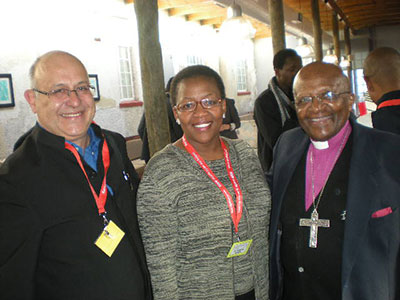
High Level Commission on HIV Prevention Robin Island - 3rd May 2010

The second day of the meeting was on Robben Island and involved Arch-Bishop Emeritus Desmond Tutu and Michel Sidibe as the facilitators. There were a number of the commissioners there. Details of the commission can be found on www.hivpreventioncommission.com