The Draft is Finally Done

It is hard to believe that it is over six years since we first saw cases of COVID-19, although it was some months before we realised the enormity of the event. By March 2020 the world had entered a lockdown that was enforced with different levels of enthusiasm, restriction and periods depending on the country.

There were many dreadful consequences of the pandemic. But I will be the first to admit that I did not suffer as many people did. There was loss of livelihoods; deaths of family and friends; and psychological impacts, for many being cooped up in a flat or similarly small living space and not sharing significant events with others.

The worst effect for me was that my departure from working life did not go as planned. In December 2019 I taught my last class in Waterloo and travelled to Norwich for Christmas and a sabbatical year. I had set up visits to universities all over Germany to begin in April 2020. We all know what happened to travel: it came to an abrupt halt. The university in Waterloo was trying to get rid of more expensive academics and offered a generous package to encourage our departure, so that took care of 2021, and I was then officially retired but without clear direction.

However, I had to go back to Waterloo to pack up my flat, ship the things I wanted to the UK and sell or give away the rest. I travelled back to Waterloo at the beginning of 2021. It was a bizarre experience; I was one of only three or four passengers on the plane across the Atlantic. On arrival in Toronto, I had to go to a quarantine hotel for a few days, and when I got back to my apartment, I had to isolate myself once again!

The local health authorities took this very seriously and sent an inspector to check I was obeying the rules. He came to the door and said “I am here to check you are on your own”. I assured him I was and invited him in to inspect the place. He replied saying he was not allowed to come in at all. It was very Canadian and quite bizarre. When he said that I turned and called into the flat, “It’s alright you can come out now!” Luckily, he was mildly amused!

During the first year of the pandemic, I replaced my occasional meandering blog with a weekly COVID-19 bulletin. This basically set out for friends and family and allowed me to process where I thought we were in the pandemic; what we knew and did not know; where the science was; and what we might expect. This was well received, reproduced and widely disseminated. It ended as knowledge grew and people understood more.

The confluence of the pandemic, the isolation, and the retirement of the boomer generation has resulted in many people writing memoirs or autobiographies. I am no exception. I started in 2020. In November 2025 I sent the last few chapters of what will be a two-volume tome to my editor. I am paying to have it knocked into shape for publication. The first part covers family history; my birth in Kenya; our move to Swaziland; schooling at St Marks and Waterford; and my years in Norwich in England (from October 1975 to October 1980), mainly at university. It takes me up to age 24 and my departure to my first professional job in Botswana. There is not much controversy in this, the next volume will not be chronological but on themes and will probably have to be read by a lawyer.

I know I can write as an academic, I have published numerous articles and over 10 edited and co-edited books. My CV is available! The most important (and difficult) book was HIV and AIDS: A Very Short Introduction, first published by Oxford University Press in 2008 and revised and reprinted in 2016.

The word count of a VSI can be no more than 37,500 words, hence the ‘Very Short’. This was professionally, intensively and extensively edited by the OUP editors, and, my word, I learnt a lot from the process. That experience meant that I knew that I would need help with the memoir. Furthermore, having an editor should make sense in terms of getting a publisher, as the manuscript will, hopefully, need less work.

The ‘memoir’ was started in 2020 and last week I wrote ‘The End’ and sent it off. I recognise there is a great deal of work to be done! As my daughter, Rowan, says, ‘Writing is rewriting’. Initially I sat down and simply wrote. Once an outline was ready, I began to research the material and that has been eye opening. I have discovered, or been made aware, of some family secrets. They are in the manuscript, but I will give a ‘taster’ of three here.

My father was born in North Walsham, the son of a railway labourer, in 1899. His mother died giving birth to her fifth child in 1907. He had, by any standards, an interesting and fulfilled life and died aged 90. He got a scholarship to the local grammar school, The Paston School, but lead us to believe he also attended the even more prestigious Gresham’s School in Holt. I could find no record of this but managed to contact an alumni officer, who, it turned out, worked in this role for both the schools! She confirmed dad had been at The Paston, but there was no record of him attending Gresham’s. Why was there this little lie? My speculation is that he applied to Gresham’s, but lied about his age to enlist, aged 16. He served through the First World War!

I knew my grandmother, Olive, was adopted. Talking to relatives I have pieced together the story. She was born, out of wedlock, in 1893. Her father was a sailor travelling from the Newcastle ports to North and East Europe. I don’t know much about her mother, yet. She was taken as a baby to Kimberley by the Slaughter family, presumably to avoid the stigma of the time. Here is the absolute kicker though, which I only learnt from a cousin a few weeks ago. When Olive was 16, she was fighting with her father and said, in fury “I wish you were not my father”. He, unforgivably, said “Well I am not”.

And finally, my partner and I took part in a clinical trial, run by the University of East Anglia to assess if taking cranberry extract could delay dementia. This involved baseline data collection and, at the end of the trial, many tests and activities, including a brain scan. We were told if there were abnormalities our GPs would share and discuss these.

In my case there were, and my GP invited me for a consultation. He informed me there were two issues: my cholesterol was elevated, and the brain scan had shown some scarred and atrophied areas. Cholesterol is easily dealt with; the brain issue was a bit more concerning. I thought about it and suggested it could have been caused by the encephalitis I had when I was six. He consulted a neurologist friend and phoned me that afternoon to confirm his colleague concurred on the cause. As it was not recent, and I was functioning normally, we agreed it was not a cause for alarm. Though, to my great amusement he said, “Alan, we were right, it was the encephalitis”.

So, the next steps are to get the edited manuscript back and work through it. I need to get friends and influential people to write blurbs and possibly even an introduction to the book. In the UK it is standard to submit it to agents, and so far, I have not had much interest. In South Africa people normally go straight to the publishers and I have not started down this route yet. It has been really interesting and revealing and I will keep you posted on progress. My overarching conclusion is that I have had an incredibly blessed and fascinating life. Obviously, readers will make up their own minds.

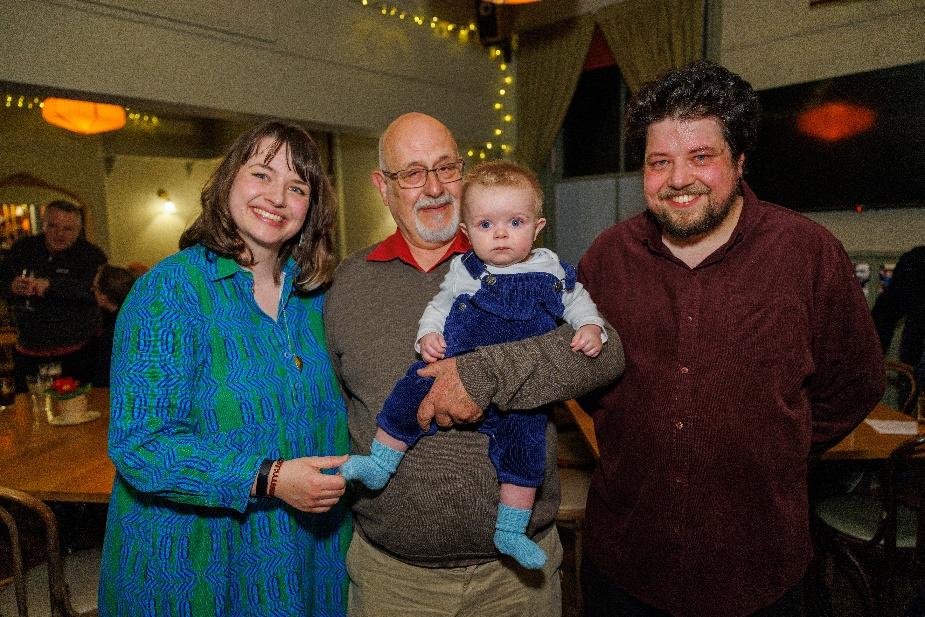
I have been in Durban for just over two months and soon head back to the UK for Christmas and the winter. I really hate Durban’s humidity and heat from January to early April and would far rather be in Norwich. It will be a chance to work though the book and spend time with the family. I left when the grandson was just about a month old. The means of communication we have at our disposal are incredible, so I have been able to follow his progress and, my word, he is changing rapidly. It will be good to get back and see him.

Finally, my monthly blogs are normally about 1,500 words. The reason was, when I began, there were a few relatives who did not have access to email. This is just two pages long, in other words both sides of an A4 sheet, which was the right length and, more importantly, was under 10 grams when posted! Given this now goes on the web I am allowing myself some latitude on words. Thank you for reading this, feedback is always welcome.

Spring turns to summer

Every Sunday morning, when I am in Durban, I drive to the beachfront. It only takes 14 minutes, provided most of the lights are green. I park next to the iconic Joe Cool’s bar and nightclub, and try to walk for 10 kilometres. The route is to the Point, which is at the harbour mouth. It is only an 8 km round trip, even if I walk down all the piers. I add on a bit by walking past the car towards the Suncoast Casino. This casino, a monument to Mammon and lost hopes, is a blot on the landscape. It was designed as a bit of Las Vegas on the beach. The less said about that the better.

Continue reading

Theatre and Short Breaks

This somewhat meandering blog began in Paternoster, a small former fishing village on the Cape West Coast. My contribution to grandparenting is limited at this stage, so I decided to head for South Africa for a spell. As people who read this regularly know, I avoid Durban from January to April/May; it is just too hot and humid, so this was the last chance to visit for a while.

Continue reading

The dog days of August

A goal of my blogging is to not write too much that is personal. However, this month I must break that rule. A couple of weeks ago my daughter gave birth to her first child, and therefore our first grandchild. The boy and mother are doing well, and we have seen them briefly. This new life is quite miraculous. I had forgotten how tiny and fragile newborns are!

Continue reading

Durban winter is the best time of the year

I have just had 10 glorious weeks in Durban. I travelled over in mid-May and came back to the UK at the end of July. I barely left Durban during this period. The only trip from the city was to Hilton, just outside Pietermaritzburg for lunch with people who attended Waterford. Most were a year or two younger than me, and I had not seen some for more than 50 years. It affirmed the value of the Waterford education and values for all of us.

Continue reading

Warm by day and cool by night

The weather in Durban has been glorious, warm days (22-24°C) with cool nights. One bonus of this is there are few mosquitoes, which is unusual. What normally happens is I am just dropping off to sleep when there is a piercing hum in my ear. A mosquito, and it can’t be ignored. The little bastards are persistent, and action has to be taken. I have spray and mat to deter them. I had a friend and former colleague stay with me for just under a week. He is a good friend whom I have known for over 40 years. We played touch rugby with academics, trade unionists and people who wanted a good run around, once a week for many years. He and I did a couple of road trips which appear in blog archives (here and here).

Continue reading

Cool Nights and Warm Days

May is one of the best months to be in Durban. The day-time temperature is in the low to mid-twenties, it is cool enough at night for a light blanket, and the days are gloriously sunny. Having said that, I recently started my day in a short sleeved light shirt and shorts, by lunchtime I was wearing a long-sleeved shirt and trousers and wondering if a jersey might be necessary! Fortunately, the day warmed up.

Continue reading

Summer is Starting

I normally make notes for my monthly post jotting down interesting or unusual events from life or world news. This month I pondered my opening paragraph and decided to begin by talking about ‘the yips’. It is a phrase I have not heard in an age. In one of his more bizarre statements Donald Trump referred to peoples’ responses to his curious policies as ‘getting the yips’. The Miriam-Webster dictionary defines it as ‘a state of nervous tension affecting an athlete (such as a golfer) in the performance of a crucial action.’

Continue reading

Old Friends and Long Walks

At the end of March 2024, I spent most of a day in London with my friend Simon Dalby. He was appointed to the Balsillie School of International Affairs (BSIA) in 2013 just before me and was in the office next to mine. He retired a couple of years ago and lives on Mayne Island, off the coast of British Colombia. He was in Europe for a series of meetings and to contact and visit family members he had never met or not seen for decades.

Continue reading

Finally, the Memoir’s First Draft is Finished

In the last week of February, I finished the first draft of my memoir. It is nearly 90,000 words and has 15 chapters, but is far from complete. I must read it through a few more times and, ideally, get it to a professional editor.

I am not precious about having someone pull it apart constructively. I know how very helpful it can be! In 2008 I wrote the Very Short Introduction on HIV and AIDS for The Oxford University Press. When the manuscript came back from the editor there was not just a correction on every page but every paragraph. I felt offended thinking: ‘But I know how to write’.

Continue reading