Thanksgiving!

There are many places in Ontario named after English towns. Not far from Waterloo, there is a Norwich and down the road, the small town of Stratford hosts, perhaps predictably, an excellent Shakespeare festival. The other day I told a colleague I needed to leave the meeting we were at: I was travelling to London.

“Oh”, she responded, “So am I”.

The difference was she had to drive for an hour while my journey was to Pearson Airport, Amsterdam, and a connection to Heathrow.

Continue reading

What can donors learn from HIV in responding to ebola

Since the first case of Ebola appeared last year, the virus has infected nearly 10,000 people. The epidemic is concentrated in Liberia, Sierra Leone, and Guinea — post-conflict countries with incredibly weak health systems. It stands to have severe health, social, and economic consequences and is arguably the most pressing challenge to global health security the world has faced in decades.

Read the full article…

Domestic Funding For the HIV and AIDS Response

Commentary: Global Fund Observer

There are just two years remaining on the clock for developing nations to achieve the Millennium Development Goals, including Goal Six, targeting the global fight against AIDS, TB and malaria. While some progress in some parts of the world has been made, it looks increasingly clear that the goal – of halting and reversing the spread of HIV; of achieving universal access to treatment by 2010; and of halting and reversing the incidence of malaria and other major non-communicable diseases – will not be met. Click here for the complete article.

November And December Highlights At HEARD

It’s been a few months of intense traveling and presenting research for HEARD staff. I participated in various conferences commemorating the 30th anniversary since HIV and AIDS was first discovered. Below are some of the event highlights and information on forthcoming conferences I will be attending.

2011 Caribbean HIV Conference

The 2011 Caribbean HIV Conference was held in the Bahamas from 18 – 21 November. The focus this year was given to sharpening the focus on HIV in the Caribbean, the region with the world’s second highest adult HIV prevalence. As a panelist at event, I presented What is Realistic ‘Sustainability’ within the Context of a Multi-country Regional HIV Response?: A Perspective from southern Africa. This conference presentation was prepared with the support of HEARD research intern Natashya Pillay and was well received. The key points were that the Caribbean has succeeded in controlling their epidemic and should be commended for this, the price of success is continued vigilance. There is diversity between the countries. One key lesson both ways is to build on regional organisations.

Focal points of the presentation:

  • Background/Introduction
  • An epidemiological comparison of hyper-epidemic countries in the Caribbean and sub-Saharan Africa.
  • Methodology/Experience
  • Sustainability; regional versus multi-country efforts; prevention, treatment and impact mitigation.
  • Results/Good Practices
  • In particular, lessons can be learnt from Swaziland, the sub-Saharan country with the highest adult HIV prevalence rate.
  • Conclusions/Recommendations
  • Efforts need to be concretized and regional integration is a way to achieve this. It will allow HIV and AIDS efforts to be mainstreamed.

Economic Reference Group Meeting (ERG) in Washington

HEARD organised the World Bank and UNAIDS ERG in Washington on 29 and 30 November. This meeting was attended by HEARD researcher Ilaria Regondi and Professor Whiteside. The meeting looked at financing of the AIDS response and the results of the RethinkHIV project.

Guest of the School of Public Health at the University of Alberta

In late November I travelled to Edmonto and was hosted by David Zakus, who is a Professor and the Director of Global Health in the Division of Community and Occupational Medicine Engagement of the Department of Medicine at the University of Alberta.I gave four presentations consisting of two lectures presented to a class of students: Aid for AIDS and Making Hard Choices: Prevention in the Global Crisis; and two public lectures Economics and HIV in Africa: Costs and Consequences and A Safe Sex/No Sex Month: Could it work? Innovative Responses for Preventing HIV Transmission.

AIDS @30 Symposium at the Harvard School of Medical Health- 1 and 2 December

I was also invited as a participant together with other international health leaders, elected officials, scientists, artists and activists. The meeting was convened to reflect on what we have learned from AIDS and how to apply those lessons towards ending the epidemic. There were presentations from among others, Julio Frenk the former Mexican Minister of Health and currently Dean of the Harvard School of Public Health and Anthony Fauci who is the Director of the US National Institute of Allergy and Infectious Diseases. Durban academics were well represented at the event.

Health Systems Workshop at the Wellcome Trust London

This workshop will take place on the 13 and 14 December 2011. This is the UK health funders workshop on health systems research in low and middle income countries.

Swaziland: The Crisis Continues: 5 August 2011

In May 2011 I was asked by the Royal African Society (RAS)2 to prepare a short commentary on the current political situation in Swaziland. There had been an increase in attention towards the country with news of protests and economic decline. The analysis was intended to stimulate discussion on whether political reform was likely.

At the end of July, I spent a few days in the Kingdom. The primary reason was to attend a Governing Council Meeting at Waterford Kamhlaba School but I also took the opportunity to meet with a number of people outside this community. I spent time with the National Emergency Response Council on HIV/AIDS (NERCHA) and presented an update on recent events, including the IAS Pathogenesis Conference.

We were briefed on the Swazi economy; the political situation; and the rule of law. On the basis of all of these meetings, and other observations, I am reporting on the situation. It does not make happy reading. If I were in the prediction business then I would say in the next six months the crisis will reach its peak.

The Economy

The economy is in dire straits and the country is bankrupt. Earlier this year, the International Monetary Fund suggested the government declare a ‘fiscal state of emergency’ and offered support subject to Swaziland following a road map of measures. This would have included laying off staff and reducing government expenditure. The government declined to do this. There was a view that the country would not meet its July 2011 salary bill but it has in fact done so. The civil service and security forces are now under pressure to take cuts in pay.

The country has seen a 60% fall in revenue, primarily because the South African Customs Union (SACU) payments have dropped (SACU members are Botswana, Lesotho, Namibia, South Africa and Swaziland). This was not a surprise. The government, international agencies, donor community and Swaziland watchers have been aware of this expected fall for many years. See for example our brief and longer article on our website. Brief at: www.heard.org.za/downloads/health-expenditure-implications-of-sacus-revenue-volatility-in-blns-countries-issue-brief.pdf.

In early August the King went to South Africa, cap in hand, asking for emergency funding. The country has received R2.4 billion. South Africa has put conditions in place for better fiscal governance (but there are few on democratization, this has caused great unhappiness among South African unions and others). This loan is a stopgap. Until such time as there is good economic governance there will no new investment in the country. At best the economy will slowly contract, with debt rising steadily.

Politics

Swaziland is the last absolute monarchy in Africa. King Mswati III seems oblivious to pressures to reform; the suffering of his people; and does not understand basic economics. Quite how the country operates politically is unclear, even to informed Swazis. It is a nepotistic, autocratic, kleptocracy where the ruling elite treat the national treasury as their own personal bank. The election system of tinkundla is Byzantine and impenetrable. Although there were constitutional reforms in 2006, political opposition remains banned. Nonetheless there are a growing number of protests and the trade unions – possibly with help from across the border – are flexing their muscles.

The Legal Situation

There is a crisis of law and the independence of the judiciary is under threat. Chief Justice Michael Ramodibedi was appointed as Chief Justice by King Mswati. He is from Lesotho and also sits on the appeal court in Botswana. He issued an order preventing anyone from “directly or indirectly” suing the King. He then suspended High Court Judge Thomas Masuku. In a case filed recently with the Judicial Service Commission, the Law Society accused Ramodibedi of sexual harassment. The Judicial Services Commission banned Swazi press from publishing details of the complaint.

There is an excellent source on Swaziland at: http://swazilandcommentary.blogspot.com.

What Does this Mean for HIV/AIDS?

Swaziland has the world’s highest HIV prevalence. In the last ante-natal clinic survey 42% of women tested were HIV-positive. The 2006 Demographic and Health Survey (DHS) found that 26% of all Swazis between 15 and 49 years were infected; among men prevalence was 20% and among women 31%. Overall HIV population prevalence was 18.8% across the nation meaning about 200 000 Swazis are infected. The response, coordinated by NERCHA, ironically is one of the country’s few success stories.

NERCHA was created through an Act of Parliament, in 2001 under the Prime Minister’s office. It is charged with coordinating and facilitating the HIV/AIDS response and implementation of the national strategic plan. Its main sources of funding are government and the Global Fund to Fight HIV/AIDS, Tuberculosis and Malaria, and it acts as a conduit. The second major source of funding in the country is the US government. PEPFAR provided $38 million in the 2011 financial year.

The exceptional measurable progress is that approximately 70% of those who should be on anti-retroviral therapy are receiving the drugs. This is 65 000 of 84 000 people and therapy is administered at the 350 or lower CD4 cell count level which is extremely impressive. There has been great success in the area of prevention of mother to child transmission. Approximately 97% of women visit the ante-natal clinics, and 85% of those who need drugs are started on therapy. Prevention has been slow to show results. There is a major programme of medical male circumcision with over 30 000 men circumcised in the last three years. Various other initiatives are also in place.

Threats

The lack of government money means that NERCHA’s funding is under threat. They asked for E63 million3 for the April 2011 to March 2012 financial year. They were allocated E47 million (about E4 million per month). For the four-month period ending 31 July 2011 they have only received E4 million of the E16 million allocated. There is no indication as to when, or indeed if they will get the next subvention.

Swaziland was unsuccessful in its last Global Fund bid. Globally there are concerns about US funding. The US House of Representatives Appropriations Subcommittee Bill would cut 9% from current global health funding levels and 18% from President Obama’s FY2012 budget request. It is not clear how this will operationalise in Swaziland.

The Ministry of Health is charged with implementation but government is creaking and it is unclear as to how sustainable the response will be.

Conclusion

As early as 1993 we were warning of the potential social and economic consequences of this epidemic for Swaziland. While it has taken longer than anticipated, the AIDS epidemic in combination with the failure of governance and economic contraction means Swaziland faces a bleak future. Ironically the glimmer of hope is in the response to HIV and AIDS where civil society is powerful and the receipt and disbursement of outside funding is efficient and honest.


1Alan Whiteside grew up in Swaziland and maintains close links with the country. He has written extensively about Swaziland, and is working on a book The Political Economy of Swaziland intended for publication in early 2012
2The RAS undertakes research, analysis and host lectures and meetings of African interest. Its website with commentary is African Arguments
3The Swazi Currency the Emalangeni (sing. Lilangeni) is on a par with the Rand, and Swaziland is in a Common Monetary area with South Africa.

UNAIDS High-Level Commission On HIV Prevention, Cape Town 2 – 3 May 2011

UNAIDS High-Level Commission On HIV Prevention, Cape Town 2 – 3 May 2011

I was invited to this important meeting. On 2nd May was a gathering in Stellenbosch University where papers were presented on how social media and mobile technology might be used for HIV prevention. What is significant is an extremely rapid spread of mobile technology across Africa. Furthermore a number of innovations have been developed in Africa including the mobile phone banking and ‘please call me’ SMS. An interesting point made was people with a mobile should always be able to access help in an emergency: there can be a ‘panic button’ on the phone.

High Level Commission on HIV Prevention Robin Island - 3rd May 2010

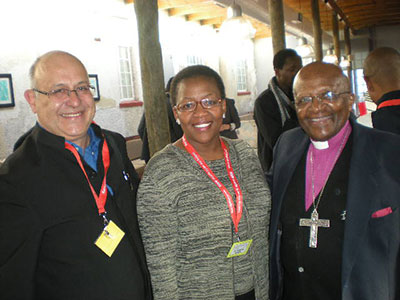
The second day of the meeting was on Robben Island and involved Arch-Bishop Emeritus Desmond Tutu and Michel Sidibe as the facilitators. There were a number of the commissioners there. Details of the commission can be found on www.hivpreventioncommission.com

Back In Durban January – February 2010

A quick look at my Website tells me that I haven’t posting anything for nearly two months. So let me bring you up to date with what I’ve been doing. Christmas and New Year were spent with the family in Norwich. It was cold but a lot of fun and generally enjoyed by all. My sister came up from London for the Christmas period but we were on our own for New Year.

Douglas and I spent a great deal of time working on various essays, reviews and other pieces of course work for his GCSE exams. This was productive and, I hope, bonding.

“Read it aloud, and if you have take a breath, it needs a comma or a full stop”, I kept repeating as we went through essays. I am afraid that the HEARD staff are getting the same treatment as I review their work.

Douglas and I also went to the gym together, and although he is not yet 16, we went to the exercise room instead of just the pool, sauna and steam room as we have done in the past. It was deeply interesting to sit beside him on the rowing machine and look in the mirror and see the similarities and differences. Would that I were his weight.

I returned to South Africa on 11th January. I actually delaying my journey by 24 hours as there was heavy snow and major disruptions on the Saturday and I thought it was not worth risking traveling by rail, (services are always disrupted on a Sunday anyway), and getting frustrated. The journey was quite straightforward, I got to Heathrow Airport at 5.15pm and asked the check-in staff if they could get me on the earlier flight, at 6.00 p.m. rather than at 8.30pm.

The lady asked me, “can you run”.

“Yes” I said.

I made it plane with plenty time although I didn’t stop to buy anything to read which was a bit of a pity.

It was good to get back to Durban, especially since winter has been unrelenting in the UK. My flat was spick and span courtesy of Madeline who acts as my personal PA and Angel the domestic worker; the office was set for me. I spent about week in the Durban before going to Cape Town for a Council for Foreign Relations meeting on “Rolling out treatment across South Africa”.

I now have more relatives in Cape Town as Derek my brother his wife Lynn and their three children, Emily, Sarah and Katie have emigrated to South Africa and are living in Hout Bay. I spent two nights in central Cape Town, went and had lunch with my uncle and aunt and then spent the Friday night with Derek. He is currently negotiating having teenage children who want to go to nightclubs in central Cape Town. I do not envy him. The family has a magnificent house in the valley in Hout Bay with a beautiful view of the mountains.

The main task in HEARD has been to get our new strategy document ready. This along with a business plan, budget and logframe (I really hate logframes and am glad we have an expert to prepare it) will form the basis of our request for funding for the next few years. We have had positive indications so I am confident that HEARD will continue at until 2014, and given the HIV prevalence rates in this part of world, it certainly should. Beyond that I would like to see more emphasis on health issues and not just HIV.

In the third week of January it was back to the UK, leaving Durban on a Friday and returning to it on the following Wednesday. The purpose of this meeting was to review five special papers from the aids2031 Project that are being prepared for publication in The Lancet. The meeting was organized by The Imperial College Group. It was extremely interesting and I was privileged to be part of a small high-powered group. My task was to look at the “drivers of the epidemic” paper written by a colleague, Justin Pathurst, at the London School of Hygiene and Tropical Medicine. I liked reviewing it as I was able to have some fun with it.

I spent the weekend in Norwich with the family and, apart from being rather tired, enjoyed it greatly. I went to London on the Monday back to Norwich on the Tuesday and flew to South Africa on the Wednesday.

One irritation was that on the way over I had watched a film “Secondhand Lions” with Michael Caine and Robert Duval. It was made in 2003 and is described as a ‘coming of age’ movie. The story is set in the mid-West and tells of a boy who is sent to live with his uncles by his rather scatty mother. These old men have led amazing lives the film is about their developing relationship. It is well worth watching and I thought I was going to enjoy it. However an hour and nine minutes into the film the picture and sound went out of synchronization. It was impossible to watch. Having had a sufficiency of wine I decided quite simply to go to sleep as it seemed pointless despite numerous attempts at resetting the seat to watch it.

I was delighted, on the return trip, to see that the in-flight entertainment system was showing the same films and looked forward to now watching this movie through to the end. I got a glass of wine, fast-forwarded the video and at the appropriate time pressed play. You can imagine my dismay when the same thing happened.

I think I was on the same aeroplane. This makes sense, it would have taken me over on the Friday, returned to South Africa on Saturday, to England on the Sunday, to South Africa on the Monday, to London on the Tuesday and then been there on the Wednesday to bring me back. I watched another film, a mindless thriller called “The Whole Nine Yards”. On Saturday I went to the local DVD store and got a copy of the video took it home and watched the last half hour.

Since getting back to Durban I have been extremely busy with HEARD management. This is the third weekend in a row that I have worked. Being here lends itself to physical activity and I have been engaged in squash and going to the gym. My gym is curious place because it is mainly inhabited by serious fitness people who do not look at each other, other than to correct posture or weight lifting. We collectively feel this is a place to get fit not to pose. Their website is http://www.fitnesscompany.co.za/FC_home.php I have had a trainer at the gym, (yes a personal trainer), for some years now and when I work in a sustained manner with him I do see the weight and inches falling off. His name is Wade and being weighed by Wade is always an interesting process. He is only allowed to train out of hours or at lunch time. He does train me on a Sunday afternoon with permission from the owners. The gym is officially open from 4.30 to 6.30pm but we meet at 3.15 and I have the entire place to myself. I realized the other day that this is pretty cool, and I can choose the music. I think I am going to a Dolly Parton CD in to train to!

It is the height of summer in Durban and the temperature has been 30 degrees and more during the day. The flat is on the top floor and as a result it tends to be rather warmer than the ones below. Fortunately it has air-conditioning units in the lounge and bedroom. We recently had a power failure. This was a real pain as it meant that I was unable work or run the air-conditioner. I also discovered I did not have any matches to light my candles. I had to go to one of few smokers in the block to get a light.

Summer also means that the sun rises at about 5.00am. One morning I woke at 4.30 and despite trying to go back to sleep could not. I got up at 5.00 put on my running shorts and shoes and ran for 40 minutes. I go straight up the hill along and then down and then gradually back. I know I am not running fit because the route that normally takes me 35 minutes took me 38 this morning. I had to walk up the steepest hill at the end which was a blow to my pride.
A Response to ‘Experts want African aid funds channelled away from HIV’

I was quoted in a recent article which appeared in the Observer and published on guardian.co.uk However, the news article bears little resemblance to the headline, which I find sensational and does not reflect my views as I emphasised that AIDS spending is crucial “for those already on or requiring treatment”.

Click here to read the news story and here for my official response.

At last, progress in developing an AIDS vaccine

According to recent media reports, an experimental HIV vaccine has for the first time cut risk of infection. I was invited by OUPblog to post my views on this recent development. OUPblog is Oxford University Press’ blogosphere for learning, understanding and reflection. To read the posting, click here.