I wrote this post after travelling to Kenya and concluded it was a rather depressing trip in some ways. The reason for the travel was a board meeting for AIDSpan a small NGO whose mandate is to watch and support the Global Fund for AIDS, TB and Malaria. I went over from the UK on Wednesday and returned to Norwich on a late flight on Saturday evening arriving back on Sunday. The flight from Nairobi to Amsterdam is longer than the one from Toronto to Amsterdam. I don’t think I appreciated that Canada was so close, or maybe that Nairobi was so far.
Category Archives: Blog
All of my blog posts.
Still Snowing!
Trying to start a new chapter is a challenge. I think though, the place to begin is to be grateful to have the chance to do it.
I arrived back in Waterloo in late March with the goal (other than work) of finding and buying a property. This has been made much easier by amazing modern technology. We have been able to look at properties online, mark them as favourites or possibles, and take virtual tours of the houses and flats. It is remarkable. Then, when it is bought, I will (I assume), be able to put a link on the website, and anyone who is interested will be able to have the same access.
Alps
I got back to Canada on 18 February after a short visit to the UK. It was, in my view, just long enough to thaw out. Of course most of the west of the UK was experiencing some of the worst floods on record. It looked quite desperate for many homeowners and farmers. Fields in the Somerset levels are still under water.
There was more snow in Waterloo and it continued to be bitterly cold. The time there on this visit was a little curtailed. I am getting a sense of the place, and what I need and want to do. Buying a car and finding somewhere to live is the next order of business.
Assault and Battery
I spent my first month in Waterloo starting in mid-January, and came back to the UK for 10 days in February. On the Saturday before I left, for the first time, the temperature climbed to 0°C. It has been as cold as -25°C. The town was covered by a white blanket. This is beautiful and has the effect of muffling sound; it makes everything seem very peaceful. There is a downside; it took me at least half an hour to dig the snow off the drive so I could get the car on the road. There is a snow plough that comes down the cul-de-sac where I am living that clears the road, leaving banks of snow across the driveway. The snow shovel is large and, although snow is light, I was sweating by the time it was cleared.
New Beginnings
The past month has been hectic but rather fun. I left Durban, as promised, on 19 December 2013. That was sad. The last days involved clearing out my office, deciding what needed to be shipped to Canada, stored in the flat, put in the suitcase, or given away. I know that to some extent, I keep my life in boxes. The University of KwaZulu-Natal box is now closed, and, hopefully, the important residual parts are in transit. There is a lot to reflect on, of course. How could there not be after 30 years?
I am extremely lucky to have had the opportunities I did, to connect with people, to build an organisation and support my team’s contribution to knowledge and science which, hopefully, makes a positive difference. I am proud of my own substantial publishing record.
The Final Post of the Year and ‘last post’ from Durban
This is the last posting to be written in my incarnation of Director of HEARD. It is a time of change, and the passing of Nelson Rolihlahla Mandela has really shaken the country and me. It is taking time for this to sink in, but I will try to write about it.
Governance and Gales
At the end of October I was involved in a series of Board meetings. The first was my final one as Executive Director of HEARD. This was held in our offices on 18 October. It was a bit unusual for us to hold it in Durban as we usually met in Johannesburg. This involved the least travelling for the Board members.
Lakes and leaves
Most of the postings on my website get started or finished on aircraft. This is no exception. It was started on the flight from Amsterdam to Johannesburg. Unfortunately I was sitting in economy (well to be honest, premium economy, right at the front, with enough room to do yoga poses should I want to). The reason it was a problem is that there is no power at these seats which meant I had a limited amount of computer time.
I left Durban towards the end of August and went to Norwich to be home for Rowan’s birthday. My proud boast, until last year, was that I had never been away on a child’s birthday, although the footnote is that sometimes I left or arrived on the day. I hope I am back on track now.
On Scots and Skye
Ailsa and I have just returned from a few days break in Scotland. We went on the web and found reasonably priced tickets from Norwich to Edinburgh with Flybe. This was surprising given the Edinburgh Fringe was on, but we booked and planned a trip. We flew up to Edinburgh on Monday and picked up a car and drove to the Isle of Skye. Google maps said the journey could be done in five hours but, given two stops, for tea and supper, it took us close to eight.
The first few hours were familiar territory as last year we went up to Inverness, Aberdeen and Edinburgh. This was really enjoyable but grey. On this drive we turned west 20 or so miles north of Pitlochry and immediately entered a world of lochs and mountains. The whole trip was defined by colours. The grey of cloud and mist blanketing the mountain peaks like a shifting table cloth; the reflections in the water which in turn ranged from gun metal grey to deep blue. The hill and mountains were green and purple, the peaks barren and rocky and scars of shale tipped carelessly down the sides.
Ailsa had been on the web and found a self-catering apartment on the Ullinish Peninsula, a place called Fir Chlis. It has its own website and the pictures there are brilliant. There was one big room and bathroom, but immaculately furnished, decorated and very well provisioned with essentials in the fridge and a generous mini-bar with low prices. We arrived just before 10pm and collapsed into bed.
The next morning we woke up to the most amazing view with sea, islands and cliffs. The apartment had big picture windows and so it was possible to lie in bed and look out at the scenery. Because we had driven there in the dark it was even more wonderful when we woke up. There was a full moon reflecting on the water on the clear evening, quite ethereal. And just for our entertainment, rabbits with their noses pressed against the window, although they rejected the carrots!
There was some light rain on Tuesday, and indeed the only rain during the entire trip. We walked from the studio to the end of the Oronsay Peninsula, crossing a tidal causeway en route. The view from the top was amazing. Looking south were the bay and lighthouse, and with a scattering of white isolated crofts nestling against the hills with the Cuillin mountains glowering in the distance. Out to sea was the Isle of Waiy, a green lump in the ocean with its skirting of cliffs. In the distance were the outer Hebrides, I think, the Island of South Uist. It was beautiful and energising. This was a good two hours of walking and scrambling. Excellent exercise and stunning scenery.
After the morning’s walking we headed into the little village of Straun for lunch. This was at a little second-hand bookshop and café Mor Books and Windrush Café. It is an atmospheric place with some unusual ‘customers’. The owners seem to do a huge amount including refashioning and selling local clothing – wonderful tweed jackets. We were served a simple but excellent lunch of cheeses, salads and home-made chutneys. The restaurant in Dunvegan was run by an interesting Scotsman from Glasgow. He had spent his life installing suspended flooring all over the UK and possibly Europe. He said he loved the area and when he stopped installing flooring he moved up to Skye and took a lease on the Misty Isles Hotel. This has a number of terrible reviews on Trip Advisor but I had the freshest and nicest haddock I have ever eaten, that day’s catch straight off the boats.
We drove across the island to Portree after lunch on the first day. From there we spent the rest of the day driving round the top of the island. This was my first experience of driving on single track roads. These are winding narrow roads, snaking up down and along the hill sides. There are passing places every 50 yards or so but driving is very slow and wearing. The worst part is seeing a white van looming in the rear view mirror. One knows it is a local tradesperson who knows the road and is cursing the tourists in front ‘Who don’t know how to drive!’.
Words fail me in trying to describe the Island of Skye. It is the most astonishingly beautiful place and the views to Scotland and the other islands are outstanding. The colours were constantly changing and the blues of the sea and sky contrasted with the purple heather and green bracken. There will be a few photographs on my website in the course of the next couple of weeks. I am going to post some pictures of the scenery and two of myself. The reason for photos of me (the first was taken in 1978), is the mustard coloured corduroy hat with ear flaps, (just reading that makes it sound really unattractive, but I really thought it was cool when I bought it as a student all those years ago). It has been part of my life for 35 years. This is, I think, something of a record and the hat is just as tasteless today as it was then.
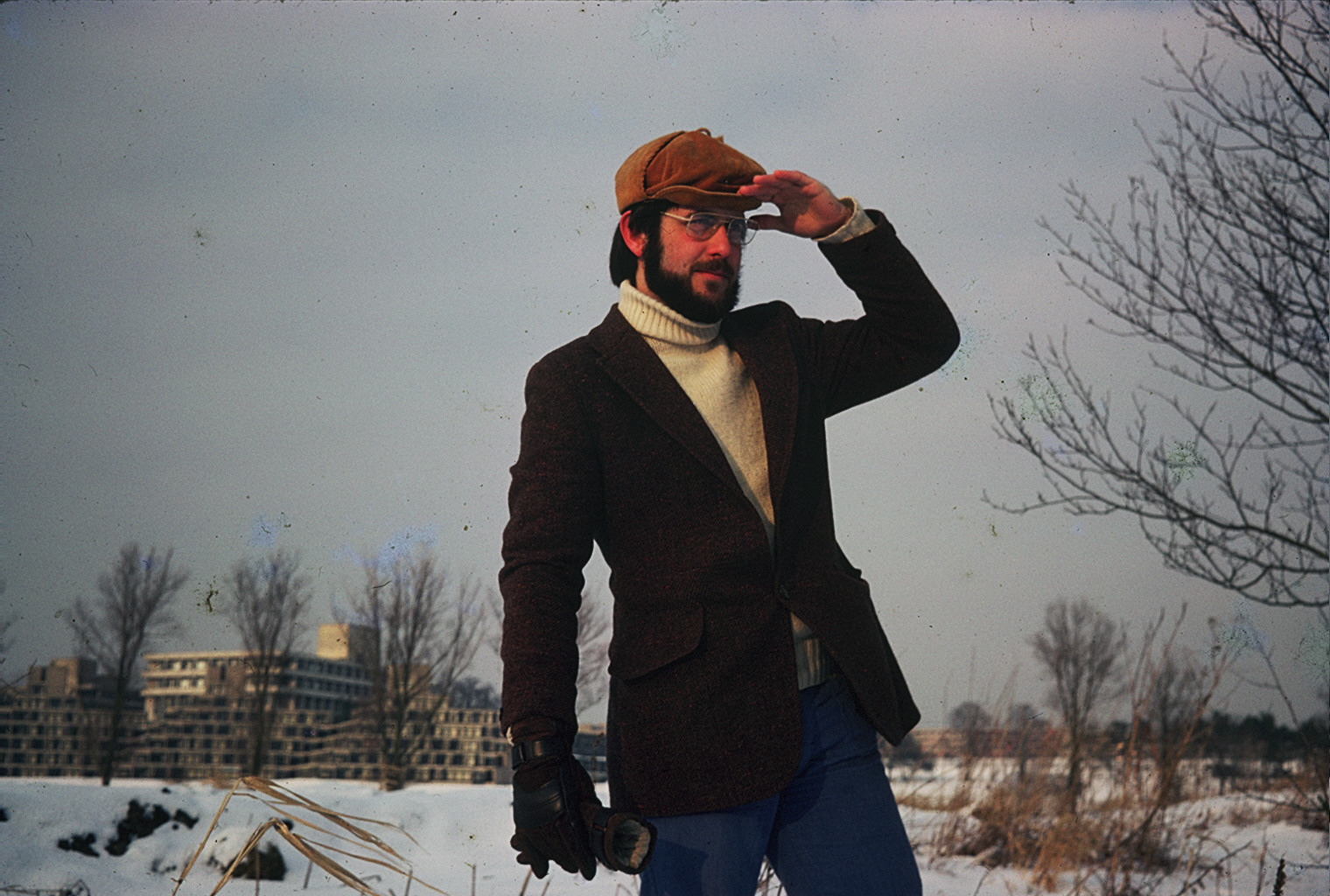
Norwich 1978
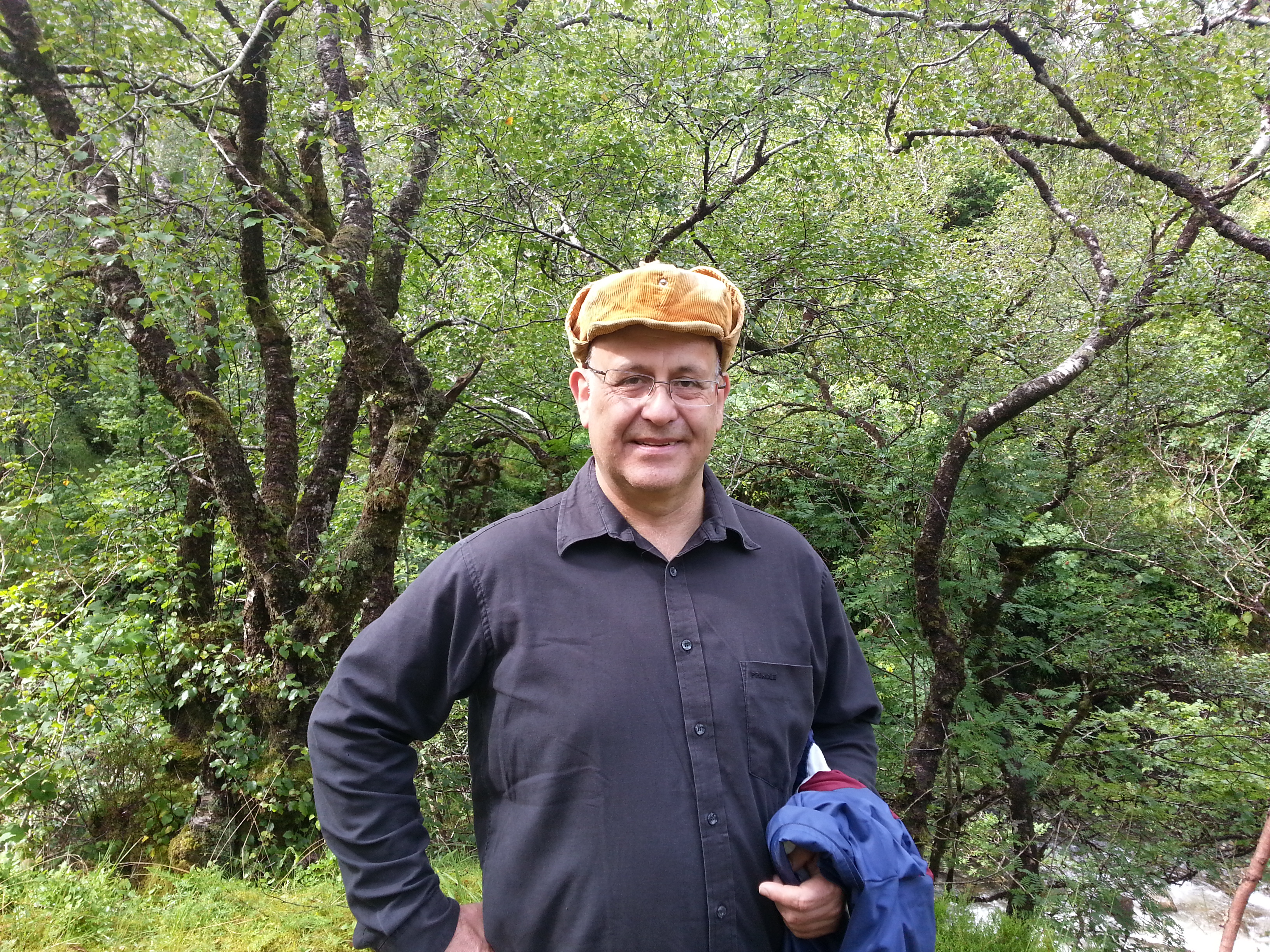
Scotland 2013
On Wednesday we headed for the village of Elgol on one of the southern peninsulas, pausing on the way to walk up a mountain beside a stream. This was about an hour’s walk going up and little bit less coming back. It had poured with rain the previous night although the day was bright, sunny and warm. We did try to take a foot path beside a loch, but it was completely flooded hence the ramble up the mountain. Parts of the path were extremely boggy and I sank to the ankle in the mud at one point. We both had plimsolls or ‘takkies’ on our feet and inevitably they got wet, or in my case soaked. This came back to haunt us as we drove to Edinburgh. We could not work out why the car initially smelt like a farmyard, and then as the journey went on it became more of a septic tank odour. The pong from the shoes was unbelievable. They were banned to the boot of the car and then wrapped in several layers of plastic for the flight back to Norwich. Lots of washing and some bleach may rehabilitate them.

Waterfall the Road to Egol Scotland
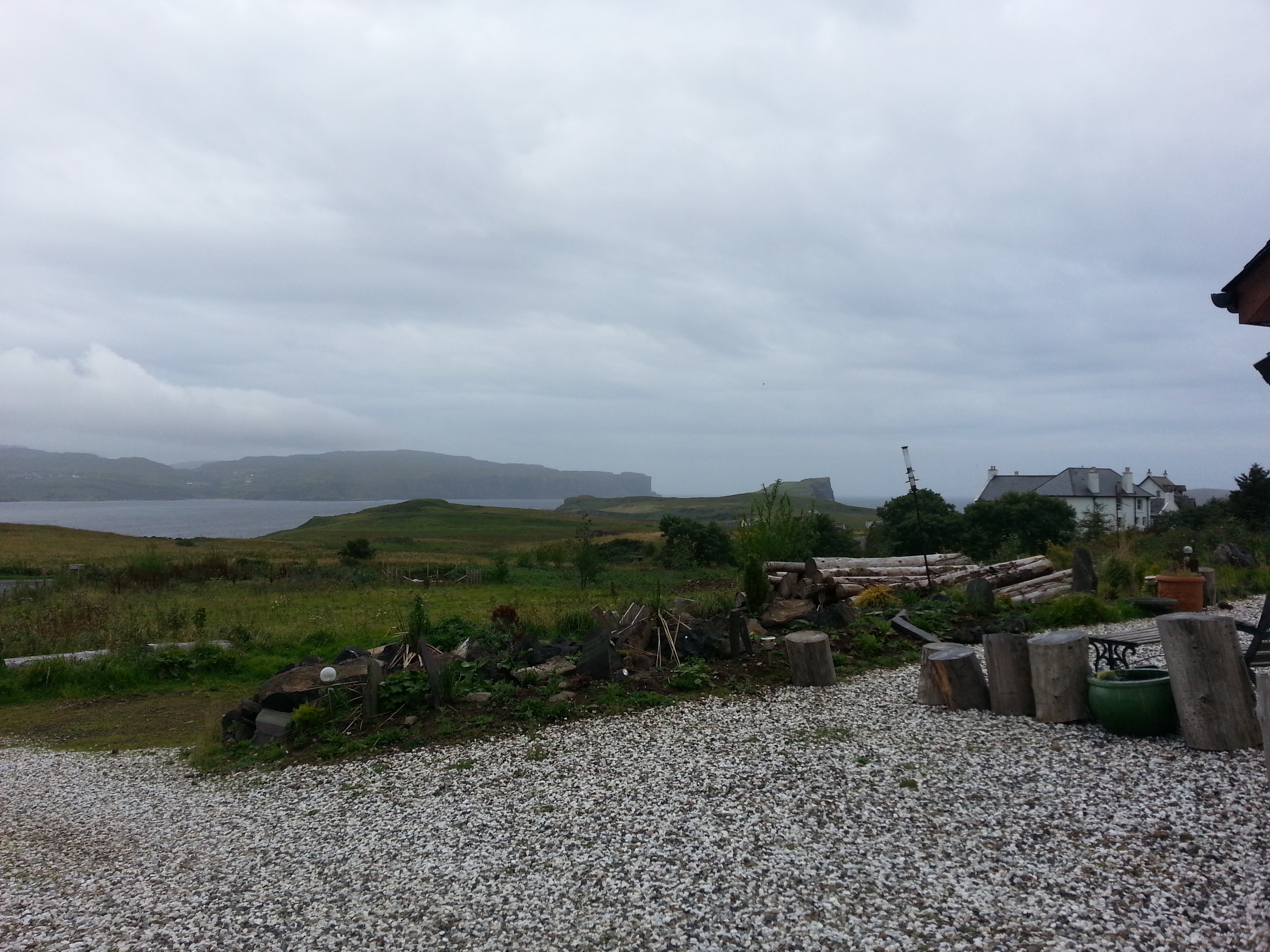
View from Apartment Ullinish Skye
At the end of the holiday we took a slow drive back to Edinburgh, staying there on Thursday night at a Premier Inn near the airport. The route was through Fort William, across the Rannoch moors. We stopped in Stirling and walked up to the castle but as it was evening were not able to go in. Again stunning views and a Presbyterian little city that was beautiful in an austere way.
In total we drove over 750 miles and really enjoyed it. The weather was kind, the scenery amazing, the people very friendly, and the accommodation excellent. I would certainly go back to that part of the world without any hesitation.
It was interesting to try and get a sense of how the economy works in Skye. It seemed in that part of Scotland every second house is a bed and breakfast. Every café has a second-hand book section. Many of the people running the tourist businesses seemed to be expatriate English folks, who had come up to Skye with some capital and lots of dreams and optimism. There were a fair but not excessive number of visitors, and this must have been one of the busiest weeks of the year. How do they make a living? I suspect that in the winter the inhabitants must stay with each other and read their books in front of the fire. Clearly money is not the only motivator for the business people. Equally it must be tough to be a local person without money or a job with all these apparently well off visitors clogging the roads, taking pictures and standing with their mouths open.
Scotland has a reputation for midges, small biting insects that can make life miserable. We watched a photographer on the beach doing the midge dance. This consisted of setting his camera up on the tripod then slapping his face and neck followed by a flapping movement. The next step was to move the camera and repeat. Fortunately the breeze kept them away for most of the time. Unfortunately I seem to attract them more than most people! So I quickly learnt the ‘midge two step and five flap’ and am available to share this knowledge.
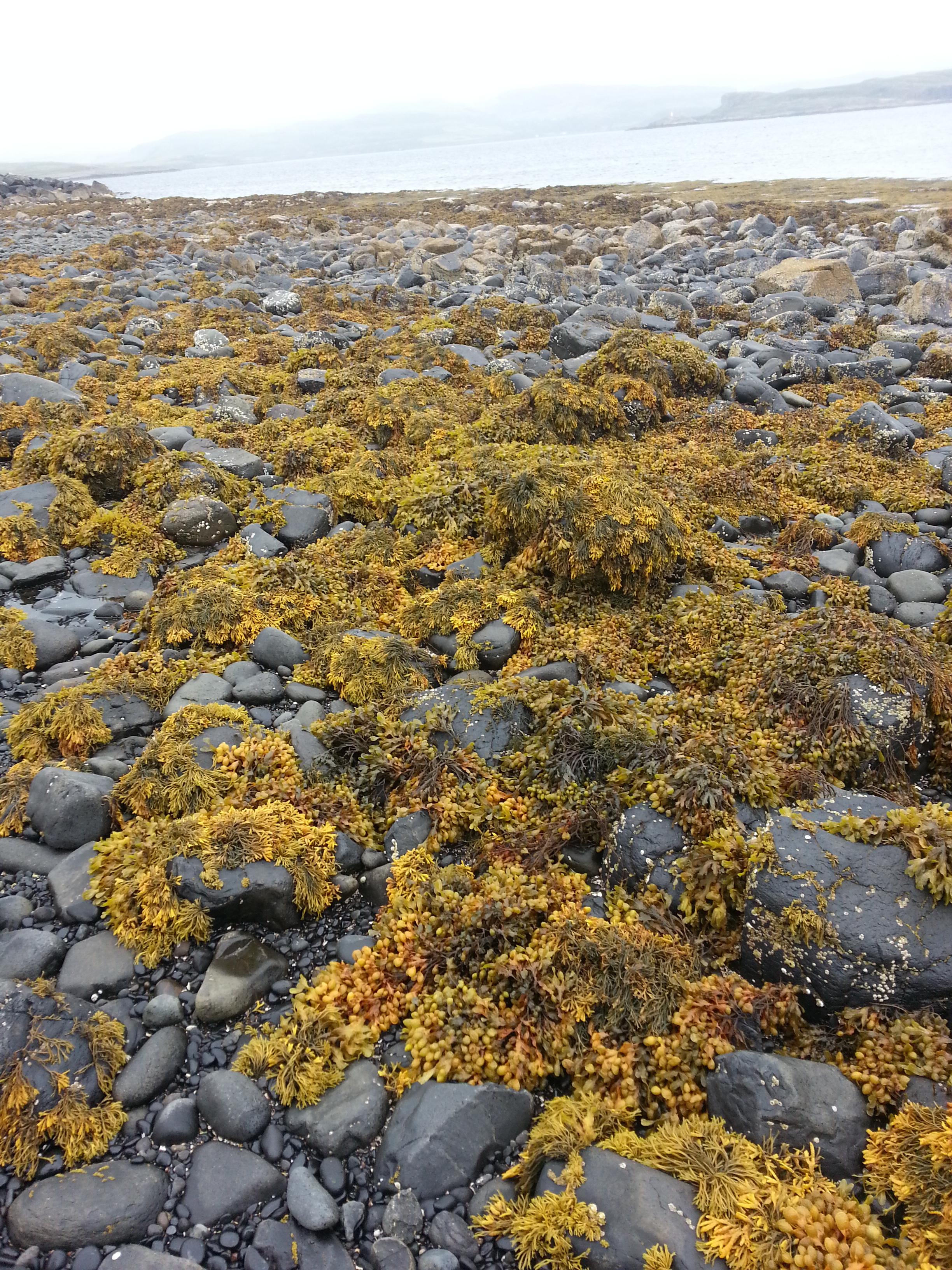
Seaweed Skye
Back in Norwich it rained at last. The garden really needs this. I travel to Waterloo on Tuesday and will be there for about a month. The next instalment of the new episode!
Cradles of Humankind: Maropeng and Delhi
July was a busy month and I did a great deal of traveling. This began with a weekend in Johannesburg with school friends. We have been getting together every so often for about seven years now. Owen and I flew up to Johannesburg to see David who had organised a packed weekend which included a visit to the Cradle of Humankind at Maropeng ear Pretoria, listening to Prime Circle at Gold Reef City and going to the Apartheid Museum. The flight up was easy, it was negotiating the wonderful Gautrain ( the rapid transit link between the airport and Sandton) that we found tough. It is an amazingly efficient mode of transport but is hi-tech.
The Cradle is essentially a museum looking at early human history and I found it a little disappointing. Perhaps if we had also visited the Stilfontein Caves, the site of the archaeological dig, it would have meant more. It might also have been that I was caught out again by the Highveld winter. The trouble is that when one flies from Durban in winter the temperature is usually around 20° and in Johannesburg it is 10 or more degrees cooler. I did not have enough warm clothing but now have a new t-shirt from the Cradle, which I bought and put on under my shirt in the store. It is neither very nice nor very warm but did the job.
The Apartheid Museum is amazing and extremely moving. Having lived through much of this, I found myself moved to tears at various points in the walk around. It was also interesting to realise how much the government of the day had kept from its citizens and the world. I was in England when the Soweto uprising began and vividly remember a fellow student from the township, with whom I had chatted in Afrikaans, saying that he could no longer speak the language. Looking back at a time when news was not instant, (I had to book a telephone call to my parents in Swaziland if I wanted to talk to them), it must have been extraordinarily stressful. The end of ‘legal’ Apartheid began soon after we arrived in South Africa, but was protracted and extremely brutal.
At the end of the weekend I went to Pretoria, using the Gautrain again, to facilitate a meeting for the British Department for International Development (DFID), looking at their AIDS position paper. This was the second in a series of three meetings, the first one having been in London. The Permanent Under-Secretary for State, Lynne Featherstone MP, was at both meetings. It was interesting to see how little formality there was around her participation as compared with many other nationalities’ ministers who have security entourages and inflated egos. Is this a sign of mature democracies?
The following week I hopped on an Emirates flight to Dubai and then connected through to Delhi to run the third and final DFID workshop. I left Durban on Tuesday night and got back on Saturday evening. These seemed long flights but I watched four films, two of which I would recommend, and did a fair amount of work. It is probably 14 years since I was last in India. Delhi is transformed from what I remember. The parts of the city that I saw were clean; there was little pollution; and a sense of hope and progress. Even the traffic seemed to move better. The hotel was slightly shabby, but as one would expect there were huge numbers of staff with infinite talents, including the ability to repair my computer, which did not want to talk to their Internet wireless system. I was able to get to one of the ‘Emporia’ shops and buy some shirts, bed sheets and a few gifts. I also bought a carpet which was packaged on the spot in a hessian bag for shipment.
Emirates is a great airline and I was deeply fascinated to see the multinational composition of the cabin staff. These included a number of South Africans of all races. My ability to speak Zulu is very limited but I did greet the obviously Zulu named stewardess (a name like Ncgobo is a giveaway). What was particularly striking is that these people, mostly in their 20s, do not have the hang-ups about race that I do. They are simply young professional people doing a great job, in an accepting environment. It was so refreshing. This is the direction that our nation needs to go in.
I had to spend a night in Dubai on the way back and I am ashamed to say that I checked into the airport hotel and stayed there. In my defence it is the height of summer and apparently it was 40° and humid outside the building. One of my fellow passengers warned me about this and also remarked that it was very uncomfortable. The hotel was very adequate and a good night’s sleep was much appreciated. They even had a small, but well equipped gym, with a power plate, an astonishing piece of equipment that, I believe, almost does the exercise for you. I would be very happy to travel on Emirates again, perhaps that will be my route from Canada to South Africa in the years ahead.
At the end of the month I drove up to Swaziland for a Waterford Governing Council meeting. It’s a long drive, and so I left ahead of schedule to drive halfway back and stayed overnight at Mkuze. There will be more on Waterford and event in the next posting since that is where I am going in a few weeks for the ‘decade’ reunion to mark the 50th anniversary of the school. There are some new photos in the gallery.
Films
Alceste A Bicyclette, a delightful French film about a TV star going to Ile de Ré to persuade a friend who has become reclusive, to star in his new production of Molière’s infamous comedy of manners ‘The Misanthrope’. The place does not get very good press, it seems to rain there more than one would expect. The way the characters are portrayed is excellent and most of the story is dialogue-driven and about character development.
The Sapphires is an Australian film based on the true story of four aboriginal women who get together to form a group to entertain the American and Australian troops in Vietnam. They have to overcome racial prejudice and function in a war zone. The way these people were treated in Australia is quite shocking. At the end there were pictures of the women as they are now, I found that extremely moving.
Jack Reacher is a straightforward film about the character created by Lee Child. Reacher is a former military policeman who is now a drifting investigator. Five people are shot in a seemingly random manner by a sniper. The police take a ministry veteran into custody, he is beaten up in jail and spends the period of the film in a coma but requests that Jack Reacher be called in before this happens. Reacher then investigates and discovers that one of those killed was being targeted. This is a thriller and great for watching on airplanes. There is unusually no love interest at all!
Admissions is a feel good comedy. A Princeton admissions officer risks and loses her job getting a young man admitted to the university. She does this because she is led to believe that he may be her son, given up for adoption some 20 years before. The film does capture some of the conflicts faced with unwanted pregnancies and families. Her mother is portrayed as a feminist who was quite unbending. Again this is a good film for traveling.
Felix is on a similar theme. The story is about Felix Xaba, a 14-year-old black boy living in a township outside Cape Town who is admitted to a private school. His mother is a domestic worker. Felix dreams of becoming a saxophonist – like his late father. This is a South African feel good film but quite interesting to think this may be the experience of some of the children we admit to Waterford. I really enjoyed it and would recommend it of all the films I saw as it is well made and thought provoking.
 Alan Whiteside